

When the Window Becomes the World
Why Modern Consciousness Mistakes Its Lens for Reality


The Crisis Beneath the Crises
One of the most important facts about human consciousness is also one of the easiest to overlook.
Human beings do not simply perceive reality.
We perceive reality through frameworks of interpretation.
The remarkable thing is not that we possess such frameworks. Human beings cannot function without them. The remarkable thing is how quickly they disappear from awareness.
Over time, the frame disappears from awareness. What began as an interpretation gradually acquires the feeling of reality itself. The glass becomes invisible. All that remains is the view.
The window becomes the world.
What if anxiety, polarization, loneliness, spiritual confusion, ideological extremism, and declining trust are not separate crises at all? What if they are symptoms of a growing mismatch between the complexity of reality and the capacities available to human beings for inhabiting it?
We typically discuss these developments as though each requires its own explanation. Anxiety, polarization, institutional decline, secularization, loneliness, and declining trust are often treated as separate phenomena, each assigned to its own field of expertise. Yet there are moments when the sheer number of simultaneous crises begins to suggest that something deeper may be occurring beneath them all.
Human beings now inhabit environments of extraordinary complexity. We navigate technological systems, global information networks, competing moral frameworks, unstable identities, unprecedented personal freedom, and rapidly changing cultural conditions. Yet despite the increasing complexity of the world we inhabit, many of the ways we perceive and interpret reality remain surprisingly narrow.
This tendency is not confined to any particular ideology, religion, political movement, or intellectual tradition. It appears across the contemporary landscape. The activist notices structures of power. The therapist attends to psychological wounds. The economist examines incentives and markets. The religious believer interprets spiritual forces at work. The scientist investigates mechanisms and measurable processes.
Each perspective reveals something genuine.
Each perspective also obscures something.
Problems emerge when a useful lens gradually becomes a total explanation. The world shrinks until only one dimension remains visible.
What increasingly concerns me is that modern culture often rewards this narrowing. Institutions frequently train specialists rather than integrators. Public discourse favors certainty over complexity. Digital platforms reward simplified narratives capable of generating rapid emotional responses. Under such conditions, the ability to sustain awareness of multiple dimensions of reality simultaneously becomes increasingly rare.
Perhaps the central challenge of modernity is not informational but developmental. The question is not simply whether human beings possess enough knowledge to navigate an increasingly complex world. It’s whether they practice the capacity to remain in relationship with realities that exceed their preferred explanations.
Yet that may be precisely what the future requires.
Reality Is Larger Than Our Explanations

The founder of psychosynthesis, Roberto Assagioli, described a capacity he called tri-focal vision.
Assagioli was an Italian psychiatrist whose work sought to move psychology beyond the treatment of pathology toward the development and integration of the whole person. Unlike approaches focused primarily on dysfunction, psychosynthesis explored how human beings might integrate psychological growth, ethical development, creativity, meaning, and spiritual experience into a larger process of human maturation. Although the phrase emerged within that particular tradition, the insight behind tri-focal vision reaches far beyond psychology.
At its core, tri-focal vision refers to the ability to perceive multiple dimensions of human existence simultaneously without reducing one dimension to another. It represents a way of seeing that resists simplification.
What makes Assagioli particularly interesting is that he anticipated a problem that has become increasingly visible in modern life. He recognized that human beings routinely reduce experience to a single dimension. Psychology becomes detached from meaning. Spirituality becomes detached from psychology. Social analysis becomes detached from both. Tri-focal vision represented an attempt to hold these dimensions together without collapsing one into another.
Tri-focal vision emerged from the recognition that human life cannot be adequately understood through any single lens.
Human life unfolds within at least three overlapping fields of reality.
The first is the personal dimension. This is the realm of thoughts, emotions, desires, memories, aspirations, fears, and identity. It is the domain most familiar to modern psychology because much psychological suffering emerges here. Trauma, attachment patterns, emotional regulation, and self-awareness all belong within this field.
The second dimension consists of relationships, communities, institutions, cultures, and social systems. Human beings are never merely individuals. We emerge within families, inherit languages, absorb cultural assumptions, participate in institutions, and occupy historical moments that shape our possibilities in ways we rarely perceive fully. Sociology, anthropology, political theory, and systems thinking all illuminate aspects of this reality. Personal experience can never be understood completely apart from these larger contexts.
The third dimension concerns existential and transpersonal questions. Here we encounter meaning, purpose, mortality, beauty, truth, conscience, mystery, and the search for orientation within existence itself. Whether approached through philosophy, spirituality, contemplative traditions, religion, or existential inquiry, this domain addresses aspects of human life that cannot be reduced entirely to either psychology or social conditions.
This third dimension is often the most difficult for modern consciousness to navigate. The personal and social dimensions remain widely recognized through psychology and sociology. The existential dimension has become less stable because the religious frameworks that once organized it have weakened.
Many people leave religion and assume they have left behind the questions religion attempted to answer. Yet the disappearance of an explanation does not eliminate the reality it was attempting to explain. Meaning remains. Mortality remains. Wonder remains. Beauty remains. The search for orientation remains.
As a result, contemporary culture often oscillates between two unsatisfying extremes. Some retreat toward rigid forms of certainty. Others conclude that because inherited answers no longer persuade them, the questions themselves must be meaningless. Human experience becomes increasingly interpreted through psychological and social categories alone. The self becomes psychological. The world becomes social. The existential dimension gradually disappears from view.
Yet human beings continue asking what makes life worth living, how suffering should be understood, what obligations we owe one another, and how we are to face death. These are not merely theological questions. They are existential questions. The third lens persists whether we acknowledge it or not.
The significance of tri-focal vision lies not in the number three. The deeper insight concerns the inadequacy of reduction.
Human beings exist simultaneously within multiple realities that continually interact with one another, yet modern consciousness repeatedly compresses that complexity into single explanations.
Psychological suffering may have social causes. Social conditions may generate existential crises. Existential beliefs may shape psychological experience. Reality rarely respects the boundaries imposed by academic disciplines or ideological frameworks. The more carefully we examine human experience, the more difficult it becomes to isolate any single cause, category, or explanation.
The challenge, therefore, is not simply acquiring more knowledge. It involves developing the capacity to perceive complexity without immediately collapsing it into simplicity. Tri-focal vision represents one expression of that broader developmental task.
What interests me most about tri-focal vision, however, is not simply the recognition of multiple dimensions. It is the kind of consciousness required to remain in relationship with them. The challenge is not seeing multiple realities, but developing the capacity to hold them without reducing one to another.
Modern culture often assumes that misunderstanding results primarily from ignorance. We imagine that better education, stronger arguments, or greater access to knowledge will naturally produce wiser human beings. Yet the longer I study human development, the less convinced I become that knowledge is the central issue.
Human beings routinely encounter realities they cannot comfortably hold. Uncertainty, freedom, mortality, ambiguity, contradiction, and responsibility place demands upon consciousness. When those demands exceed available capacity, perception narrows. Complexity is compressed into explanations that feel more manageable.
The question is not simply what people know. The deeper question concerns what people can bear.
Seen from this perspective, tri-focal vision points toward a larger question. Why do some individuals remain capable of perceiving multiple dimensions of reality simultaneously while others become increasingly dependent upon single explanations? Why do some people tolerate ambiguity while others rush toward certainty? Why do some remain open to complexity while others retreat into reduction?
These questions move us beyond perception and into development.
They point toward what I increasingly describe as existential health.
Existential health concerns the capacities required to remain in relationship with reality. It concerns the ability to encounter uncertainty without immediately converting it into certainty, complexity without reducing it to ideology, freedom without fleeing into dependency, and suffering without demanding immediate resolution. From this perspective, tri-focal vision is not merely a perceptual skill. It is one expression of a broader capacity for reality.
This distinction matters because many of the crises we associate with modernity may ultimately be developmental rather than informational. The problem is not simply that people believe different things. The problem is that the realities confronting modern human beings increasingly exceed the capacities available to hold them.
The Development of Mono-Focal Consciousness
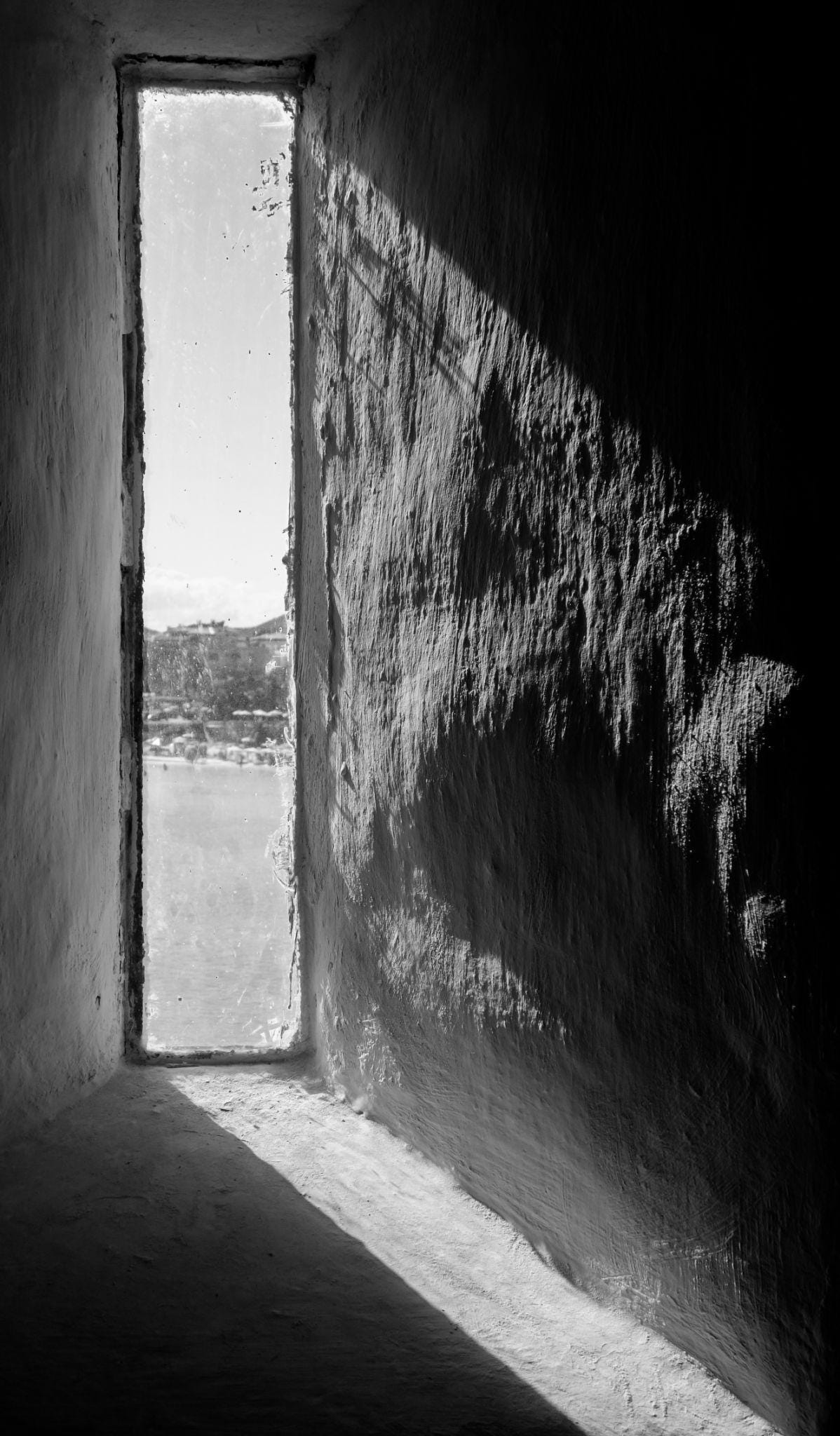
If tri-focal vision represents an expanded mode of perception, much of contemporary culture appears to encourage its opposite. Increasingly, human beings are trained to inhabit what might be called mono-focal consciousness. Rather than maintaining awareness of multiple dimensions of reality simultaneously, attention becomes organized around a single interpretive center. One perspective gradually expands until it occupies the entire field of vision.
Imagine standing at a large window overlooking a landscape. At first, the window itself is obvious. You notice the glass, the frame, perhaps even the fingerprints on the surface. You know you are looking through something. The distinction between the window and the world remains clear.
Over time, however, something changes. Your attention shifts entirely toward the landscape beyond. The mountains, the trees, the weather, the movement of people in the distance become the focus of awareness. The frame recedes. Eventually you stop noticing it altogether. The window does not disappear because it is absent. It disappears because it is always present.
At that point a subtle confusion becomes possible. What you see through the window begins to feel identical to reality itself. The frame no longer appears as a frame. It becomes invisible. The perspective through which you are looking ceases to feel like a perspective. It simply feels like the way things are.
Something similar occurs within consciousness. A useful perspective gradually becomes mistaken for reality itself. The individual no longer experiences a lens through which they are looking. They experience direct contact with the world.
This tendency extends far beyond ideology or psychology. Human beings repeatedly confuse representations with the realities they represent. Maps become territories. Symbols become facts. Models become reality. Religious doctrines, political theories, economic systems, psychological frameworks, and cultural narratives all begin as attempts to describe aspects of reality. Problems emerge when the representation itself becomes invisible. At that point, what was once a lens becomes indistinguishable from the world it was meant to illuminate.
The most influential lenses are rarely the ones we consciously choose. They are the ones we forget we are looking through. What began as an interpretation gradually acquires the feeling of reality itself. Intelligence does not necessarily protect against this tendency. It often increases the sophistication with which existing assumptions are defended.
Every civilization inherits symbolic systems that help organize reality. Human beings cannot function without them. Problems emerge when these systems disappear from awareness as systems. Once a representation no longer appears as a representation, it begins to feel like reality itself.
What follows is rarely outright falsehood. More often, a partial truth gradually expands into a total explanation. Reality appears increasingly coherent because inconvenient dimensions have disappeared from view. Certainty grows while contact with reality often declines. Maps become territories. Models become reality. Interpretations become indistinguishable from the realities they were intended to describe.
Therapeutic culture provides one example. The growing emphasis on psychological well-being has generated valuable insights regarding trauma, attachment, emotional health, and personal development. Yet the therapeutic lens sometimes expands beyond its proper boundaries. Questions that may involve ethics, community, responsibility, purpose, or social participation become interpreted primarily through psychological categories. Discomfort becomes pathology. Conflict becomes trauma. Meaning becomes emotional regulation. The language of psychology begins absorbing dimensions of existence it was never designed to explain fully.
Political and ideological frameworks often display a similar pattern. Complex human realities become interpreted primarily through narratives concerning power, oppression, privilege, identity, economics, nationalism, or historical struggle. Genuine insights frequently emerge from these analyses. Yet when political frameworks become total explanations, individual agency, psychological complexity, existential longing, and personal responsibility begin disappearing from view. Human beings become representatives of systems rather than participants in a larger reality.
Spiritual traditions can fall into similar forms of reduction. Questions that may require psychological work or social engagement become interpreted through exclusively spiritual language. Suffering becomes karma. Injustice becomes divine purpose. Psychological wounds become opportunities for transcendence. Spiritual explanations sometimes illuminate dimensions of reality neglected elsewhere. They can also function as sophisticated forms of avoidance.
Why Modernity Makes the Problem Worse
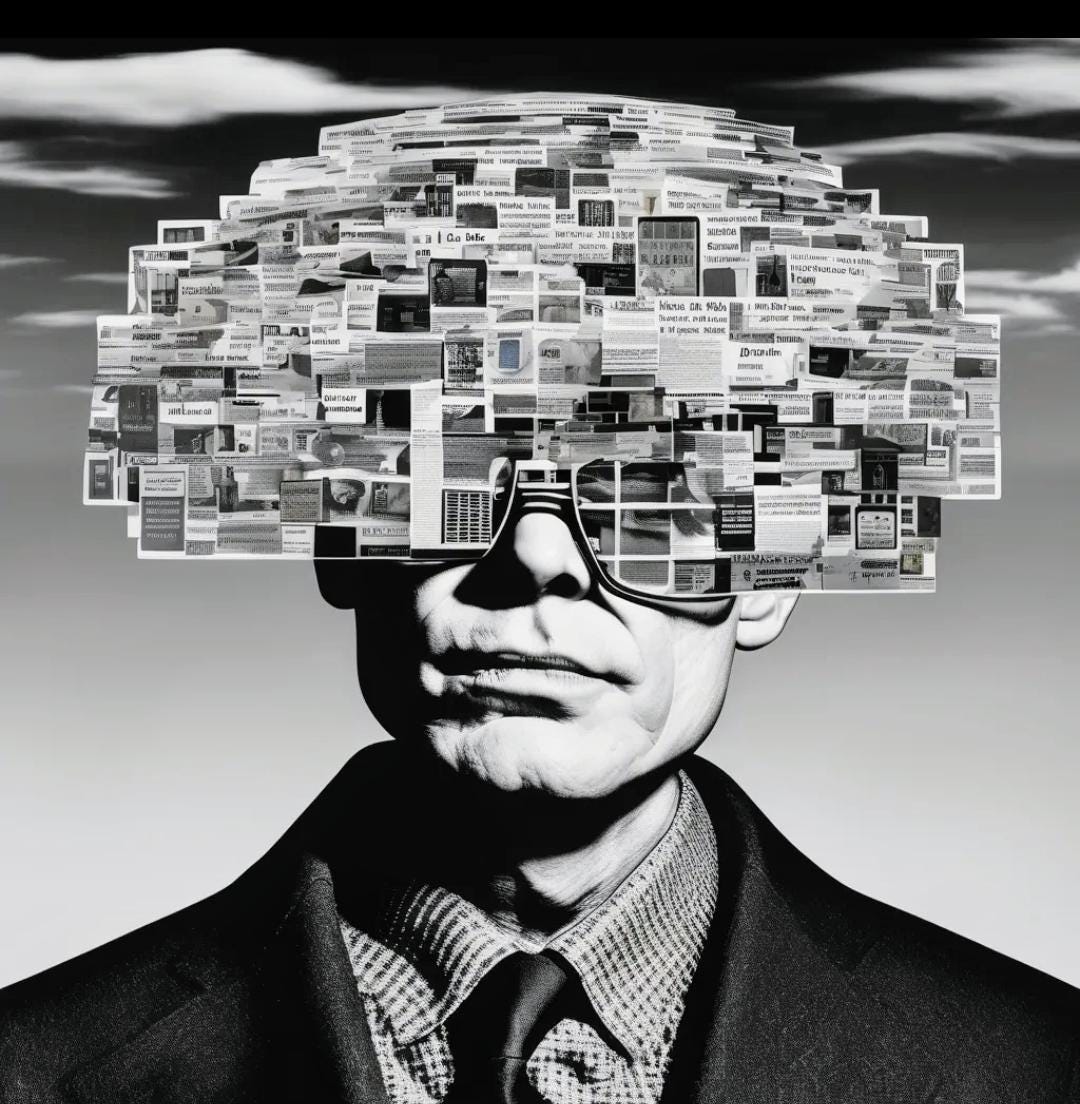
The challenge of mono-focal consciousness is not new. Human beings have always been susceptible to reductionism. What is new is the environment within which contemporary consciousness must operate. The conditions of modern life place demands upon perception that previous generations rarely encountered in the same form.
For much of human history, meaning arrived embedded within inherited structures. Individuals were born into communities, traditions, identities, and systems of interpretation that provided a relatively stable framework through which reality could be understood. These inherited structures often imposed significant constraints upon freedom. They could be authoritarian, exclusionary, and resistant to change. Yet they also performed important psychological and existential functions. They reduced complexity and organized experience, providing orientation within a world that already possessed an established shape.
Modernity has steadily weakened many of those inherited frameworks. Religious authority has diminished. Traditional identities have become less stable. Geographic mobility has fragmented communities. Technological systems have transformed communication. Globalization has exposed individuals to competing worldviews. Information flows have expanded beyond anything previous generations could have imagined. The result is not simply greater freedom. It is greater interpretive responsibility.
Increasingly, individuals are expected to construct meaning for themselves. They must navigate competing moral visions, conflicting truth claims, shifting identities, unstable institutions, and a constant stream of information that exceeds any person’s capacity to process it. Questions that previous generations answered through inherited structures now fall upon the individual. Who am I? What should I value? What constitutes a meaningful life? What obligations do I owe others? How should I respond to suffering, uncertainty, mortality, and freedom?
These questions are not new. The conditions under which they must be answered are.
The difficulty is that modern culture often assumes that increased freedom automatically produces increased maturity. The evidence suggests otherwise.
Freedom expands faster than capacity. Complexity increases faster than development. Human beings gain access to realities they have not yet learned how to hold. We possess tools capable of navigating extraordinary complexity while lacking the developmental depth required to inhabit it. The result is a growing mismatch between the world we have created and the consciousness attempting to live within it.
Under such conditions, mono-focal systems become deeply attractive. They reduce uncertainty. They simplify complexity. They transform ambiguity into certainty. They offer the reassuring experience of clarity in a world that increasingly feels overwhelming. The attraction of ideological extremism, rigid identity structures, conspiracy theories, fundamentalist religion, and totalizing political narratives becomes easier to understand when viewed through this lens. These systems do not merely provide beliefs. They provide perceptual relief.
The question modernity forces upon us is therefore not merely what people believe. The deeper question concerns whether human beings are developing the capacities necessary to inhabit a reality that has become increasingly complex. Much of what we describe as cultural crisis may actually reflect a developmental challenge.
The Institutions That Train Mono-Focal Consciousness
One of the paradoxes of modern life is that many of the institutions charged with helping human beings understand reality often contribute to its fragmentation. This is not because these institutions are malicious or incompetent. It is because specialization has become one of the defining characteristics of modern knowledge.
Academic disciplines provide an obvious example. Universities generate extraordinary expertise, yet specialization often comes at a cost. The deeper a discipline explores its particular field, the easier it becomes to mistake that field for the whole. Economists discover economic explanations. Psychologists discover psychological explanations. Political theorists discover political explanations. Expertise deepens perception within a domain, but it does not necessarily cultivate awareness of the frame through which perception occurs.
Religious institutions can exhibit a similar tendency. Traditions that once sought to orient human beings within the mystery of existence sometimes expand theological explanations beyond their proper scope. Psychological wounds, social problems, and existential questions become interpreted primarily through spiritual categories. Spiritual traditions can illuminate dimensions of reality that other frameworks overlook. Yet spiritual windows remain windows. When a religious perspective forgets its own frame, interpretation begins masquerading as reality itself.
Therapeutic culture has generated its own version of this pattern. Psychological understanding has benefited countless people, yet experiences once interpreted through moral, philosophical, communal, or existential lenses are increasingly translated into psychological language. Sometimes this produces greater understanding. Sometimes it simply replaces one reduction with another.
Social media amplifies all of these tendencies. Digital environments reward simplicity, certainty, emotional intensity, and tribal identification. Nuance struggles to compete with outrage, and complexity struggles to compete with certainty. Algorithms repeatedly expose individuals to interpretations that reinforce existing assumptions while concealing alternatives. Over time, the frame becomes increasingly difficult to see because everything visible appears to confirm it.
The result is a communication ecosystem that systematically rewards mono-focal consciousness while penalizing attempts to hold multiple dimensions of reality simultaneously.
What emerges is a culture filled with competing reductionisms. Different groups argue over which lens explains reality while rarely questioning the assumption that reality should be reduced to a single lens in the first place.
The debate concerns which focal point should dominate rather than whether domination itself might be the problem.
Tri-Focal Vision as Developmental Achievement

At this point it becomes important to clarify what tri-focal vision actually requires. It is tempting to treat it as a cognitive skill, a technique for broadening awareness or improving perspective. Such descriptions contain some truth, but they fail to capture the deeper significance of the concept.
Tri-focal vision is not primarily a method of thinking. It is a developmental achievement.
Sustaining awareness of multiple dimensions of reality simultaneously requires capacities that are often difficult to cultivate. It demands tolerance for ambiguity, openness to competing truths, and the willingness to resist premature certainty. It calls for emotional resilience, intellectual humility, psychological flexibility, and the discipline to remain in contact with complexity even when complexity refuses to resolve itself neatly.
Children naturally experience the world through simplified categories. Development gradually expands the capacity to hold contradiction, uncertainty, and multiple perspectives. Healthy maturation involves increasing differentiation without fragmentation. The individual becomes capable of recognizing that reality frequently contains tensions that cannot be eliminated. Freedom and responsibility. Individuality and belonging. Stability and change. Agency and limitation. These are not problems to solve. They are polarities to inhabit.
Tri-focal vision extends this developmental movement further. It allows an individual to recognize that human experience unfolds simultaneously within personal, social, and existential dimensions without reducing any one dimension to the others. Psychological suffering can be real without being the whole story. Social systems can matter without determining everything. Existential questions can shape human life without requiring metaphysical certainty.
Such perception demands more from consciousness than reductionism does. Simplicity is easier. Certainty is easier. Single-cause explanations are easier. Remaining present to multiple dimensions simultaneously requires a broader and more resilient form of awareness.
It requires the ability to remember that every perspective remains partial. The individual does not abandon windows. The individual becomes conscious of them. Awareness expands beyond the frame without denying the value of the view.
For this reason, tri-focal vision should not be understood merely as a psychological insight. It represents a developmental milestone in the evolution of human consciousness. It reflects an increasing capacity to remain in relationship with reality as it actually presents itself rather than as we would prefer it to be.
Tri-Focal Vision and the Capacity for Reality

The significance of tri-focal vision extends beyond the perception of three dimensions of reality. The more important question concerns what makes such perception possible in the first place.
Many people can intellectually understand that human beings exist simultaneously within personal, social, and existential realities. Far fewer can remain in relationship with all three when those dimensions generate tension, ambiguity, uncertainty, or contradiction. The challenge is not merely perceptual. It is developmental.
Tri-focal vision is not simply a way of seeing. It is an expression of a deeper developmental achievement.
The issue facing modern human beings is not merely learning to recognize multiple dimensions of reality. It is developing the ability to remain in relationship with them. This shifts the conversation from perception to development.
Much of contemporary culture remains organized around questions of knowledge. We assume that our primary task is acquiring better information, better beliefs, better theories, or better explanations. When problems arise, the instinctive response is often educational. We imagine that if people simply understood more, they would navigate reality more effectively. Knowledge certainly matters. Yet the limitations of this assumption become increasingly apparent. Modern societies contain unprecedented quantities of information while simultaneously exhibiting profound confusion regarding how to live.
The issue is not merely what people know. The issue concerns what people can hold.
Seen in this light, tri-focal vision becomes more than a perceptual framework. It becomes a measure of developmental depth. The ability to remain aware of psychological realities without reducing human experience to psychology, social realities without viewing everything through politics, and existential realities without collapsing into either certainty or nihilism requires a form of consciousness capable of holding multiple dimensions simultaneously.
Existential health may ultimately involve increasing awareness of the windows through which experience is interpreted. The goal is not to eliminate perspective but to loosen our identification with any single perspective. Reality expands as consciousness develops the breadth to recognize the frame while remaining open to the landscape beyond it.
This distinction sits near the center of what I mean by existential health. Capability concerns what we can do. Modernity has become extraordinarily good at expanding capability while paying far less attention to cultivating the developmental strengths required to inhabit an increasingly complex world.
Capability allows us to solve problems, perform tasks, and achieve goals. Capacity determines whether we can remain present to uncertainty, complexity, suffering, freedom, responsibility, and ambiguity without retreating into avoidance, denial, or reduction.
Human beings routinely encounter realities that exceed their ability to hold them. Mortality, uncertainty, freedom, loss, and the limits of human understanding place demands upon consciousness that cannot simply be solved. Faced with these realities, people naturally seek relief.
I have come to think of this process as developmental compression.
Developmental compression occurs when realities exceed what consciousness can comfortably hold and complexity is reduced into explanations small enough to manage.
Uncertainty becomes certainty. Ambiguity becomes ideology. Tension becomes a single cause. The reduction often feels like understanding because it produces coherence. Yet what has actually occurred is not an expansion of perception but a contraction of reality.
This explains the enduring attraction of mono-focal systems. They reduce the amount of reality that must be held simultaneously. The world becomes more coherent because portions of reality have disappeared from view.
Yet coherence and reality are not the same thing. Human beings are capable of constructing remarkably coherent narratives that remain partially disconnected from reality itself. Existential health therefore requires something more demanding than coherence. It requires the ability to remain in relationship with aspects of existence that resist simplification.
Seen from this perspective, tri-focal vision becomes one expression of a larger developmental movement. The goal is not merely seeing more dimensions of reality. The goal is becoming capable of participating in a larger reality without retreating from it.
The Human Being Modernity Requires

This possibility brings us back to a larger question. What kind of human being is capable of sustaining tri-focal vision under the conditions of modernity?
The question is more demanding than it first appears. Modern life continually pressures consciousness toward simplification. The speed of information, the fragmentation of institutions, the instability of identity, and the complexity of contemporary existence all reward forms of perception that reduce reality to something more manageable.
Tri-focal vision therefore represents more than an interesting psychological insight. It represents a developmental challenge.
The challenge is not simply learning to recognize multiple dimensions of reality. It is remaining in relationship with those dimensions when they refuse to fit neatly together. Psychological realities do not always align with social realities. Social realities do not always resolve existential questions. Human beings are continually confronted with tensions that resist reduction. Tri-focal vision requires the capacity to remain present to those tensions without collapsing them into simpler explanations.
Many of our public conversations continue to focus on institutions, policies, technologies, ideologies, and belief systems. These conversations matter. Yet beneath them lies a more fundamental issue. Every society, whether intentionally or not, presupposes a certain vision of the human person. Every cultural arrangement depends upon particular capacities. The question is not simply what structures we build. It’s whether the people inhabiting those structures possess the capacities necessary to navigate them.
Modernity has dramatically expanded human freedom. At the same time, it has weakened many of the structures that previously organized human experience. Individuals now bear greater responsibility for constructing identity, meaning, belonging, morality, and purpose under conditions of uncertainty. This transfer of responsibility represents one of the defining features of contemporary life.
Yet freedom without corresponding development creates instability.
The result is a recurring pattern visible throughout contemporary culture. Individuals encounter realities they have not been prepared to hold. The burden of freedom becomes overwhelming. Complexity generates anxiety. Uncertainty breeds fear. Responsibility becomes exhausting. Under such conditions, the temptation to retreat into simplified identities, rigid ideologies, authoritarian structures, or totalizing belief systems becomes increasingly understandable.
The future, therefore, may not belong primarily to those with the strongest convictions. It may belong to those capable of inhabiting the largest reality.
Such a person remains psychologically grounded without becoming psychologically absorbed. They engage social realities without reducing human beings to social categories. They confront existential questions without demanding absolute certainty. They inhabit freedom without fleeing responsibility, maintain conviction without losing humility, and remain open without becoming fragmented. Most importantly, they encounter reality in its complexity without insisting that reality become simpler than it is.
These forms of maturity do not emerge automatically. They require development and practice, along with forms of education, community, and culture capable of supporting the maturation of consciousness rather than merely the accumulation of knowledge.
For this reason, I increasingly suspect that many of the crises we associate with modernity are ultimately developmental in nature. The issue is not simply that people hold the wrong beliefs. It’s that the demands of contemporary existence often exceed the capacities available to meet them. We continue searching for better explanations while overlooking the possibility that the deeper challenge concerns the development of the people doing the explaining.
Seen in this light, tri-focal vision becomes more than a psychological insight. It becomes a reminder that reality is always larger than our preferred interpretations of it. It invites a form of perception capable of holding multiple dimensions simultaneously. More importantly, it points toward the possibility of becoming the kind of person who can inhabit a larger reality without retreating from it.
Perhaps maturity begins when we remember the existence of the window. We recognize that every perspective reveals something and conceals something. We learn to see the frame without losing sight of the landscape beyond it.
The central challenge of our time may not be deciding what to think.
It may be becoming the kind of human being capable of remaining in relationship with reality as it actually is.
The future will not belong to those with the strongest beliefs.
It will belong to those with the greatest capacity for reality.
If this article resonated with you, consider becoming a paid subscriber.
I write about existential health, meaning, identity, spirituality beyond religion, and what it takes to remain grounded in an increasingly complex world.
Paid subscribers ($50 annually) support this work and receive complimentary membership in the Center for Non-Religious Spirituality, including discussion groups, workshops, community events, the Daily Reader, and a growing library of resources.
Join a community of people committed not merely to accumulating knowledge, but to developing the capacity to live more fully, honestly, and awake.