

The Problem With Being Born
Exploring The Question We Were Never Supposed to Ask

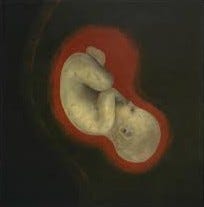
The Problem With Being Born
There are questions we are trained never to ask. Not because they are dangerous, but because they destabilize too much, too fast. They don’t argue with answers, they unravel the frameworks that make answers feel necessary, coherent, and safe.
One of those questions sits quietly beneath nearly every philosophy, theology, and self-help system we inherit, quiet enough to fade into the background:
Was being born ever a good idea?
Asking whether being born was a good idea is strange, given that none of us consented to it. But that absence of consent is the point.
It’s an odd question. More than odd. It feels vaguely improper, as though it violates an unspoken agreement. We’re allowed to question many things about life: its fairness, its purpose, its cruelty, even its meaning. But questioning birth itself - questioning whether existence should have begun at all - feels like crossing a line.
And it isn’t hard to see why. This question doesn’t challenge a belief so much as it threatens the foundation beneath belief itself: the need to trust that life will eventually explain itself, redeem its costs, and reward our endurance.
The discomfort is immediate and understandable. The question sounds ungrateful. It can sound morbid, nihilistic, even dangerous. It seems to flirt with despair, to disrespect life, or to invite conclusions no one wants to sit with. But that reaction is not accidental. It is the product of a culture deeply invested in treating existence as a given good, something that must be affirmed before it can be examined. And yet the capacity to examine it at all may be one of the most honest ways we remain in relationship with life.
We obsess over death. We theorize it, fear it, ritualize it. But birth - the moment we are thrust into time, consciousness, dependency, and loss without consent - rarely receives the same scrutiny. Philosophers have long treated mortality as the defining human limit while largely ignoring natality as an existential problem.
And yet birth is where everything begins. Not just life, but vulnerability. Attachment. Exposure. The conditions we spend the rest of our lives trying to manage.
Let’s state the obvious about birth:
Birth is a biological event that brings a new human organism into existence.
It occurs through processes that begin and end independently of the individual who is born.
No one consents to being born; existence begins without choice or prior agreement.
Birth places a person inside the unavoidable givens of human existence - mortality, groundlessness, isolation, and lack - without preparation or explanation.
Birth places an individual into conditions they did not select—family, culture, language, body, historical moment.
From the moment of birth, needs, vulnerability, and dependence are unavoidable.
Conscious awareness and agency develop only after existence has already begun.
All later choices are made within the fact that birth has already occurred and cannot be undone.
To question birth is to question the assumption that existence automatically justifies itself. That is why the question feels threatening. It destabilizes the stories that make endurance possible. Stories about progress. Stories about redemption. Stories that promise that suffering is temporary, meaningful, or necessary.
So let’s be clear about what this is and what it isn’t. This question is not an argument against living. It is not a call to despair. It is not an endorsement of self-destruction. It is an attempt to name something many people already feel but rarely articulate: the quiet suspicion that being alive is far more complicated and far less self-evident than we are usually allowed to admit.
The unease this question provokes is not a sign that it is wrong. It may be a sign that it is touching something real.
Why This Question Sounds Like Heresy
Most of us are taught to begin our thinking about life downstream from the assumption that being born was a good thing. Life is a gift. Existence is a blessing. From there, the work becomes interpretive - how to use the gift well, how to endure its difficulties, how to make sense of the pain that inevitably accompanies it. Suffering must be redeemed. Effort must accumulate. Endurance must lead somewhere.
And here’s the hidden cost: when existence is treated as automatically good, then questioning it becomes morally suspect. If life is a gift, then doubt becomes ingratitude. If suffering is meaningful, then protest becomes immaturity. If endurance is virtuous, then exhaustion becomes failure.
Here’s the hidden cost: when existence is treated as automatically good, questioning it becomes morally suspect. If life is a gift, doubt reads as ingratitude. If suffering is meaningful, protest looks like immaturity. If endurance is virtuous, exhaustion becomes failure.
This is why the question “Was being born ever a good idea?” feels so destabilizing. It doesn’t merely question life itself; it threatens the moral economy we’ve built around life - an economy that both comforts us with the demand to “make it worth it” and disciplines us with the expectation that we should be grateful for whatever we endure.
Existential Health: The Domain We Keep Misdiagnosing

If I asked you how your health is, you’d probably think physical. Maybe mental. Maybe social. But existential health - the condition of your meaning, your orientation, your ability to face reality without collapsing or hiding - rarely enters the conversation at all.
Yet existential health is exactly what this question touches.
Existential health is how we live with the basic conditions of being human - uncertainty, mortality, freedom, responsibility, longing, isolation. It’s not a belief-system, not positivity, not religion. It’s our capacity to face reality without collapsing or hiding.
Existential health belongs alongside biological, psychological, and social models because those models often fail to address the existential dimension - how we interpret and metabolize the fundamental conditions of existence.
Which means something important: what many people call “depression,” “anxiety,” “burnout,” or “faith crisis” is not always primarily clinical. Often it’s existential. Often it’s the collapse of the internal scaffolding that once justified effort, suffering, repetition, and loss.
And birth is where that scaffolding begins.
Because birth is not merely the start of life. It is the start of a specific kind of problem: the problem of being conscious in time.
Beginning Upstream: Birth as Exposure
This article begins not with death, despair, or meaninglessness, but with birth itself - the unchosen initiation into time, consciousness, desire, and loss. To be born is not simply to begin living; it is to be bound into the conditions of life. To be fastened to a body that will age, a mind that will remember, and a world that will not explain itself. None of this is requested. None of it arrives with instructions. And yet we are expected to be grateful for the opportunity.
From this angle, death is not the scandal. Death ends the strain. Birth initiates it.
This doesn’t mean life is only suffering. That’s the cheap, cartoon version of pessimism, and it’s not what this is. The problem with being born is not that life contains suffering. It always has. The deeper problem lies in the demand that suffering justify itself—that pain must teach, loss must refine, and existence must eventually make sense.
When those guarantees falter, something more destabilizing than despair emerges: exposure. The anesthesia wears off. What remains is the raw condition of being alive without a story sturdy enough to hold it all together.
That exposure is often misinterpreted as failure. It isn’t. It is reality, finally felt.
And the ability to remain present in that reality - without rushing to replacement stories - is precisely what existential health is about.
This Is Not Antinatalism
At this point, it’s worth pausing—because a certain kind of reader will already be reaching for labels. Antinatalism. Misanthropy. Depression disguised as philosophy. Or, in the more morally alarmed version: This is dangerous. This is irresponsible. This is anti‑life.
That reflex is predictable. It is also a way of not having to stay with the question.
Antinatalism, strictly speaking, is a moral position about procreation. It argues that it is always or usually impermissible to bring new people into existence. Some versions emphasize the harm that future people will inevitably face; others emphasize the harm future people will cause. Either way, it is fundamentally an ethical claim about what we should or should not do.
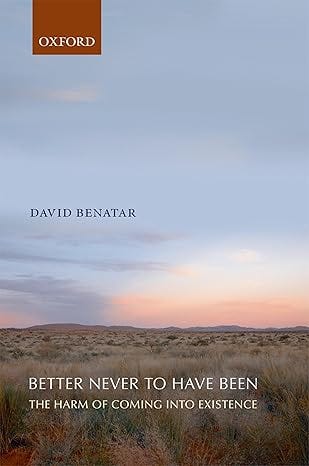
One influential argument in contemporary antinatalism is David Benatar’s “asymmetry argument,” which says that avoiding pain is always good, even if no one exists to enjoy that good, while missing out on pleasure isn’t bad unless someone is actually deprived. Therefore, being born always creates harm that didn’t need to exist.
Here are a few simple, concrete examples that illustrate Benatar’s asymmetry:
Example 1: A Child Who Is Never Born
If a child is never born, they experience no pain.
→ This absence of pain is considered good, even though no one exists to enjoy that good.That same never‑born child also experiences no pleasure.
→ But this absence of pleasure is not bad, because there is no one who feels deprived.
Conclusion: Nothing bad happens by not bringing the child into existence, but something good happens—pain is avoided.
Example 2: A Life With Mixed Goods and Harms
Suppose a person is born and has a life that includes love, joy, boredom, illness, anxiety, loss, and eventually death.
Even if the pleasures outweigh the pains, real suffering still occurs - pain that would not have existed at all if the person had never been born.
Conclusion: Being born guarantees some harm; not being born guarantees none.
Example 3: Preventing a Harm vs. Missing a Benefit
Preventing someone from suffering a migraine is clearly good, even if there’s no person who later thanks you.
But failing to create someone who would have enjoyed sunsets and music doesn’t wrong anyone, because there’s no existing person who misses out.
Conclusion: Avoiding pain counts as a moral good even without a beneficiary; missing pleasure does not count as a moral harm without a deprived person.
Example 4: A Risk Analogy
Choosing not to create a person is like not starting a game where someone might get hurt.
Starting the game guarantees at least some injury—scrapes, losses, pain—even if there are also moments of fun.
Conclusion: From this view, avoiding the game altogether avoids harm without wronging anyone.
These kinds of examples is what leads Benatar to conclude that coming into existence is always a harm, even when life contains joy.
To be fair, many critics accept that Benatar’s asymmetry highlights something real but argue that it doesn’t justify the conclusion that it is better never to exist. They question whether nonexistence can meaningfully be called “better,” note that lives are experienced as wholes rather than as tallies of pain and pleasure, and point to the strong intuition that bringing a generally good life into existence is morally permissible. Still, the argument unsettles because it exposes how much our confidence in life’s goodness depends on inherited assumptions about meaning, redemption, and payoff - assumptions that often go unquestioned until they fail.
But that is not what this article is doing.
This piece is not primarily asking, “Should people have children?” It’s asking something more unsettling and more intimate:
What is the existential situation we awaken into once we are here?
What does it mean to find ourselves alive: already in motion, already attached, already vulnerable, without having asked for any of it? The “problem of birth” isn’t about telling anyone what to do. It’s about noticing that being alive starts as something that happens to us, not something we choose.”
You can be deeply grateful for your children - fiercely protective, wildly in love, fully committed to their flourishing - and still recognize that birth initiates a burden no one consents to. Those aren’t contradictions. They’re what it looks like to be human when you stop policing your emotional life.
And if we’re going to be honest, the threat people feel around this question often comes from conflation: they assume that to question birth is to reject life. As if the only moral options are celebration or condemnation. But existential health matures precisely when we can hold complexity without collapsing into binaries.
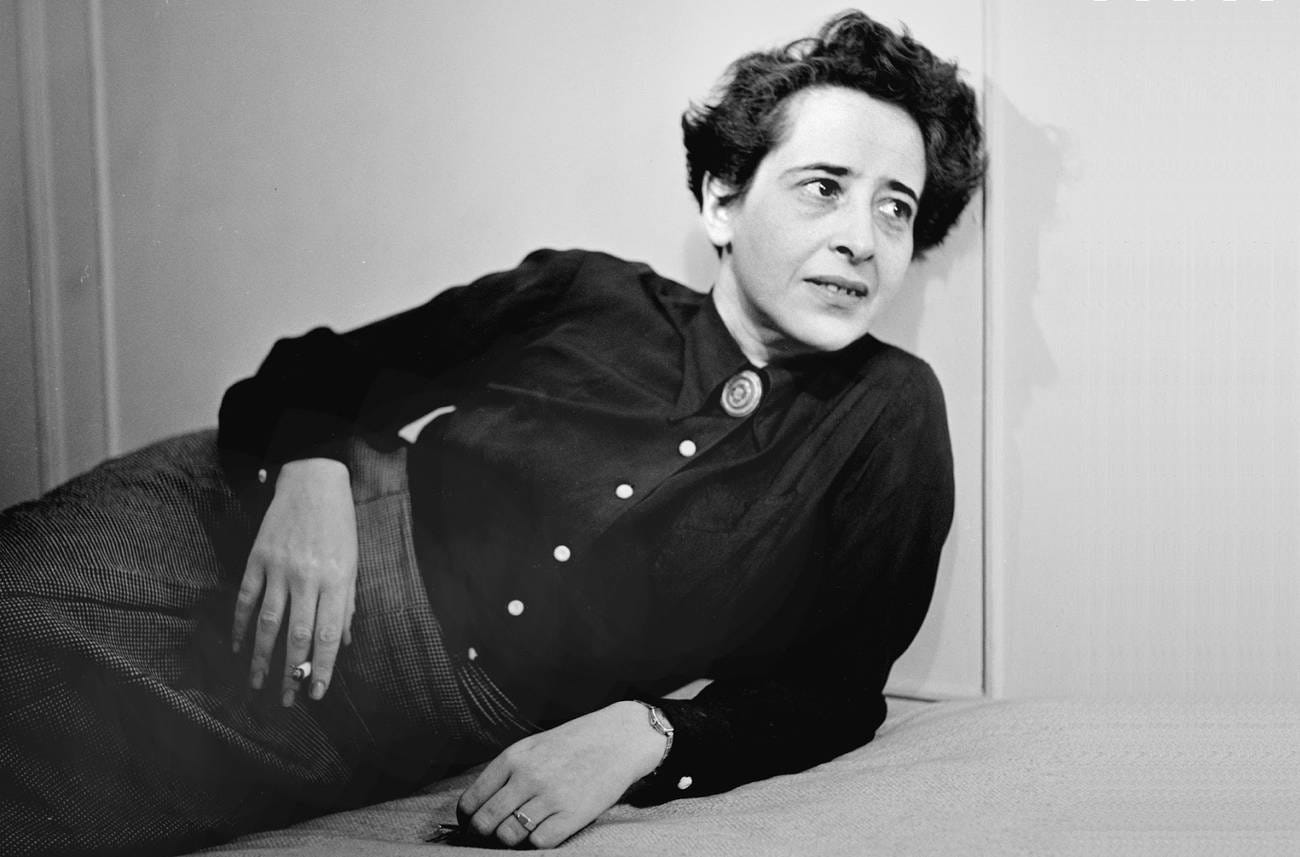
There’s another corrective worth naming here because it complicates the whole conversation in a helpful way. Hannah Arendt, for example, famously reframed “natality” not as catastrophe but as the human capacity to begin, to initiate something new in the world. In her hands, birth is not merely a biological event; it is the condition that makes freedom and new beginnings conceivable.
Hannah Arendt’s emphasis on natality begins from the same fact that makes non‑consensual birth unsettling: that existence arrives without choice. For Arendt, birth is not something we authorize; it is something that happens to us. But where the non‑consensual framing emphasizes thrownness (the fact that we are placed into life without consent) Arendt emphasizes what follows from that fact rather than trying to resolve it. Natality names the condition that, having arrived unasked, each person nevertheless carries the capacity to begin something new through action and speech.
In this sense, Arendt does not deny the lack of consent at birth; she treats it as the ground of human freedom rather than its contradiction. Because we do not choose to enter the world, the freedom that matters is not the freedom to opt in, but the freedom to initiate, respond, and interrupt what already exists.
Natality shifts attention away from whether life was chosen and toward what becomes possible once life is underway. The tension remains unresolved, and deliberately so. Non‑consensual birth names the vulnerability and exposure of being human; natality names the fragile, unpredictable power that emerges after that exposure, without retroactively justifying it.
That matters because it prevents a cheap conclusion. The problem of birth is not a one-note pessimism. Birth initiates exposure, yes. But birth also initiates possibility. The point is not to pretend either side cancels the other. The point is to stop outsourcing the tension to slogans.
What I am doing in this article is closer to what existential philosophy has always tried to do at its best: describe the human condition without anesthetic, and then ask what it might mean to live with integrity inside it. That is not antinatalism. It is existential health.
Emil M. Cioran and The Trouble with Being Born
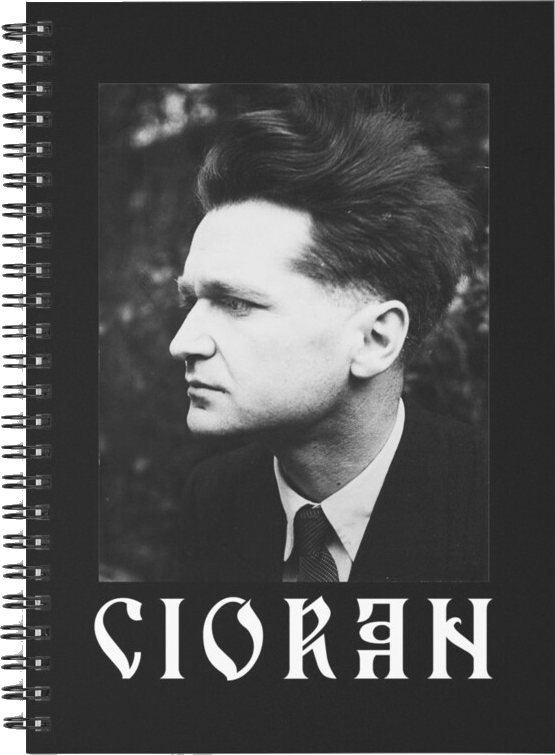
Emil M. Cioran is an unsettling companion precisely because he refuses to make existence easier to accept. Born in 1911 in the Romanian village of Rășinari to an Orthodox priest, Cioran grew up within the gravitational pull of religion, tradition, and metaphysical certainty—forces he would later interrogate with relentless severity. From early adulthood, he suffered from chronic insomnia, a condition that shaped not only his temperament but his thought. Wakefulness, for Cioran, was not merely physiological; it was existential—an exposure to consciousness without reprieve.
He studied philosophy at the University of Bucharest alongside figures such as Eugène Ionesco and Mircea Eliade, absorbing influences from Nietzsche, Schopenhauer, Kierkegaard, Dostoevsky, and German thinkers including Heidegger. Yet even in his earliest work, Cioran rejected systematic philosophy. He distrusted coherence, explanation, and resolution, sensing in them a subtle form of evasion. His first major book, On the Heights of Despair (1934), already bore the marks that would define his lifelong project: an obsession with suffering, the burden of consciousness, and the cost of being awake.
In 1937, Cioran moved to Paris, where he lived the rest of his life in relative obscurity. After World War II, he made the decisive choice to abandon Romanian and write exclusively in French, a move he described as both liberating and constraining, a linguistic “straightjacket” that forced precision and restraint.
Over the following decades, he produced a body of aphoristic work: A Short History of Decay, The Fall into Time, and most starkly, The Trouble with Being Born, which dismantled optimism, progress narratives, and metaphysical consolation with surgical clarity. He refused literary prizes, avoided public life, and resisted affiliation with any philosophical or ideological school. He rejected both belief and disbelief as final answers, remaining suspended in a posture of radical lucidity until his death in Paris in 1995.
The Trouble with Being Born, published in 1973, represents a distilled form of Cioran’s thought. It is not a philosophy book in the conventional sense. It does not argue its way toward a conclusion, build a system, or aim for coherence. It consists of hundreds of aphorisms (fragments, contradictions set beside contradictions) because for Cioran, explanation itself felt like a kind of anesthesia. Contradiction is not a flaw here; it is the method. The book refuses the comfort of consistency in the same way it refuses the comfort of meaning.
At its center is a claim so blunt it can feel almost obscene: the fundamental human misfortune is not death, but birth. To be born is to be conscripted into time and awareness without consent. Consciousness itself becomes the wound. Everything else - suffering, longing, despair, even hope - radiates outward from that initial condition. Death does not horrify Cioran because death ends the problem. Birth initiates it.
This is not a call to despair, nor an endorsement of self-destruction. Cioran does not argue that life should not continue. He argues that life should be seen without consolation. That distinction matters. His severity is often mistaken for nihilism, but nihilism is also a story: an answer that closes things too quickly. “Nothing matters” is often what people reach for when they cannot yet tolerate complexity: the possibility that life contains beauty without redemption, meaning without guarantee, love without permanence. Cioran is after something quieter and more demanding: lucidity.
Lucidity, for Cioran, is clear-eyed awareness: seeing reality without distortion, denial, or false comfort. It is not optimism, and it is not despair. It is the refusal to lie in order to cope. This is why The Trouble with Being Born relentlessly attacks optimism, progress narratives, religious redemption, and metaphysical guarantees, not because they are naïve, but because they function as anesthesia. They soften the conditions of existence in order to make them bearable. For Cioran, the greater danger is not despair, but the stories we tell ourselves to avoid it.
This is also why the book resonates so strongly with those whose inherited meaning systems have collapsed. Cioran offers no replacement belief. He does not patch the story. He leaves the rupture exposed. What he provides instead is language for metaphysical fatigue - the exhaustion that comes from sustaining explanations that no longer feel honest.
In the context of existential health, this matters deeply. Existential health is not about feeling better on demand or restoring hope at all costs. It is about the capacity to remain present, awake, and engaged when meaning is no longer guaranteed in advance. The Trouble with Being Born does not teach resilience. It teaches accuracy. It does not guide, comfort, or inspire. It stays with the problem. And that is precisely why it belongs here.
The following excerpts are not arguments or prescriptions, but encounters. Cioran writes with radical lucidity, aiming not to deny life but to strip away consolation. It’s not nevessary to agree or disagree, only to notice what emerges when existence is faced without guarantees.
The Essential Five
1. Birth as the original catastrophe
“We do not rush toward death, we flee the catastrophe of birth, survivors struggling to forget it.”
Explanation: Cioran reverses the usual fear of death, arguing that existence itself - initiated without consent - is the primary trauma from which all later suffering unfolds.
2. Consciousness as the wound
“Consciousness is much more than the thorn; it is the dagger in the flesh.”
Explanation: For Cioran, awareness intensifies pain rather than alleviating it, turning mere suffering into a self‑reflective, inescapable condition.
3. Lucidity without consolation
“Lucidity is the only vice that makes us free—free in a desert.”
Explanation: Clarity offers no comfort or direction, but it grants a stark freedom from illusion, even if that freedom comes without shelter or hope.
4. Endurance without justification
“What do you do from morning to night?”
“I endure myself.”
Explanation: Living, for Cioran, is not a project aimed at fulfillment but an ongoing act of bearing one’s own existence without appeal.
5. The counterfactual that haunts the book
“Not to have been born, merely musing on that—what happiness, what freedom, what space!”
Explanation: This line captures the book’s haunting refrain: the imagined relief of non‑existence, not as a program
Life Without Lessons: The Violence of Forced Meaning
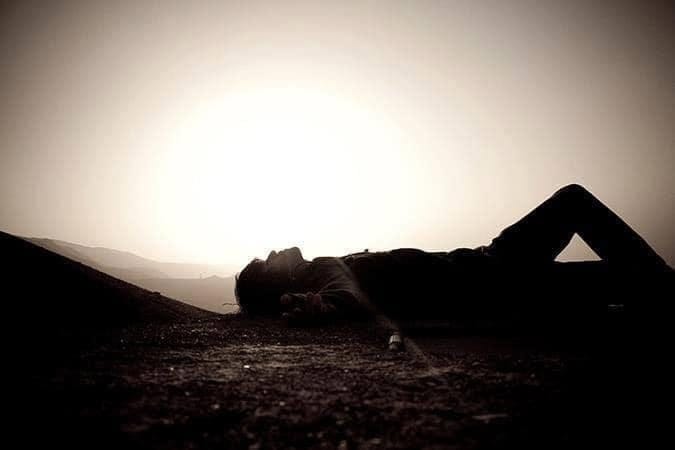
Much of what passes for psychological or spiritual distress is not caused by pain alone. Pain has always been part of human life. The deeper wound emerges when pain is required to mean something—when grief must teach a lesson, loss must produce growth, endurance must be validated by future payoff, and suffering is only acceptable if it is useful.
The demand to justify pain is corrosive.
It is also culturally enforced. It’s stitched into religion (“God is teaching you”). It’s stitched into hustle culture (“This will pay off”). It’s stitched into therapy-speak (“Everything happens for a reason” wearing a cardigan). It is the same old bargain: If you suffer now, life will explain itself later.
Cioran’s refusal is not aimed at life itself, but at that bargain. He does not replace religious meaning with secular meaning. He does not swap theology for therapy. He does not offer a better story. He asks whether the compulsion to tell stories at all might be part of the problem.
This is where existential health becomes more than a concept. It becomes a practice.
Existential health is not the elimination of suffering. It is the ability to relate to the givens of being human - uncertainty, mortality, longing, isolation - without collapsing, without hiding, without outsourcing responsibility to external authority.
If that is true, then “forced meaning” is not harmless comfort. It is an existential injury. It teaches people to distrust their own experience. It trains them to bypass grief rather than metabolize it. It conditions them to perform gratitude rather than tell the truth.
And the long-term result is predictable: a person can look functional while becoming existentially malnourished.
Time, Insomnia, and the Cost of Consciousness
Time is not a neutral container. It is an active force of erosion. Memory doesn’t heal the past; it sharpens it. The longer we live, the more we accumulate evidence that nothing stays.
Insomnia appears repeatedly in Cioran’s work because insomnia is the refusal of anesthesia. Night removes distraction. The daytime fictions (productivity, momentum, narrative) lose their grip. There is no future to hide in, no task to justify existence. Just consciousness, awake to itself, exposed.
This is where the problem of birth becomes existentially concrete. Birth initiates consciousness. Consciousness initiates time-awareness. Time-awareness initiates a certain kind of suffering that no amount of positivity can erase: the suffering of knowing. Knowing you will lose what you love. Knowing you cannot keep what you build. Knowing you cannot permanently secure anything.
That knowledge is not an illness. It is a condition of being awake.
Existential health is not the removal of that knowledge. Existential health is the capacity to carry it without lying.
Modernity and the Collapse of Shared Scaffolding
There’s another layer here that makes this question especially urgent right now. Modernity has produced something like existential malnutrition: people are left to construct meaning alone without shared symbolic and communal scaffolding, while many contemporary forms of suffering are existential rather than clinical.
In other words, we are not only dealing with the timeless human condition; we are dealing with a cultural landscape that is increasingly bad at helping people metabolize it.
For most of human history, existential orientation was distributed across ritual, community, shared narratives, and ecological rhythms. Now it is privatized. Individualized. Marketed. Optimized. People are told to “find their purpose” the way they’re told to find a good mattress.
So when the question “Was being born ever a good idea?” arises today, it often arises in a vacuum. And in a vacuum, the psyche does what it always does: it reaches for certainty. Or it collapses into despair. Or it numbs.
None of those are signs of truth. They are signs of missing containment.
Existential health is the work of building that containment without lies.
What Cioran Gives (That Most People Can’t)
This is why The Trouble with Being Born continues to matter. It does not guide. It does not comfort. It does not inspire. It refuses those roles.
What it does instead is name metaphysical fatigue—the exhaustion that comes from sustaining stories that no longer feel honest. The weariness of pretending life owes us coherence.
Cioran offers no exit. No redemption arc. No metaphysical safety net waiting just beyond the horizon.
What he offers is accuracy.
And accuracy—especially for people whose inherited meaning systems have collapsed—may be the first real form of care. Not because it makes life easier. Not because it resolves the absurd. But because it allows us to remain present without appeal—without anesthesia, without guarantees, without the demand that life make sense before we consent to live it.
That is existential health in its most distilled form: the capacity to face reality without collapsing or hiding.
The Turn: From “Is Life Good?” to “Can I Be Honest?”

The question “Was being born ever a good idea?” is not primarily a question about whether life is good or bad. It is a question about whether we are willing to be honest about what life is.
Because the most corrosive thing is not suffering. It is the requirement to perform a story about suffering that doesn’t match your lived experience.
And once you are willing to be honest, something changes.
Not the facts. The facts don’t change. The stone still falls. The day still repeats. Loss still comes. The body still ages. But the internal violence of forced meaning begins to loosen. The pressure to make everything add up begins to dissolve. And in that dissolution, a different kind of dignity becomes possible—the dignity of living without deception.
Existential health is not about solving the problem of birth. It is about learning how to stand inside it.
A Practice in Lucidity: Staying With What Cannot Be Resolved

This practice is not meant to soothe you. It is meant to strengthen your ability to remain present where consolation fails.
Set aside 20–30 uninterrupted minutes. Do not attempt this when exhausted, rushed, or emotionally flooded. This is not exposure for exposure’s sake; it is disciplined contact.
1. Name the Condition You Are In (Without Diagnosis)
Sit or stand somewhere ordinary. Do not create ambiance.
Begin by naming—silently or on paper—the unchosen conditions of your existence as facts, not interpretations:
You were born without consent.
You are subject to time, decay, and death.
You did not choose your body, your baseline temperament, or your historical moment.
Meaning is not guaranteed.
Continuation is happening anyway.
Do not argue with these statements. Do not turn them into beliefs. Let them function as givens, not problems to solve. This step is about accuracy, not agreement.
2. Allow the Reflex to Appear—Then Withhold Obedience
Notice what arises next.
For most people, one or more reflexes will surface:
The urge to refute the givens
The urge to redeem them with meaning
The urge to escape into abstraction
The urge to collapse into despair
Do not suppress these impulses. But do not follow them either.
Name the reflex precisely:
“This is the urge to rescue.”
“This is the urge to resolve.”
“This is the urge to shut down.”
This is the core discipline: seeing the reflex without outsourcing authority to it.
3. Stay With the Question That Has No Ethical Deadline
Bring to mind the question at the heart of Cioran’s work—not as an argument, but as a presence:
Was being born ever a good idea?
Do not try to answer it. Instead, notice:
How your body responds to the question
Where tension appears
Where urgency spikes
Where numbness sets in
This is not rumination. This is contact without demand.
Remain with the question for five full minutes without moving toward resolution.
If the mind produces answers, let them pass. If the mind produces fear, let it be felt. If the mind produces nothing, stay anyway. This is what it means to live without appeal—not deciding, not escaping, not anesthetizing.
4. Re‑enter Action Without Justification
When the time ends, do not conclude the practice with insight or reassurance.
Instead, choose one concrete action you will take immediately after:
Washing a dish
Writing one necessary email
Walking for five minutes
Feeding yourself or someone else
Perform the action without using it to justify existence. Do not tell yourself it “makes life worthwhile.” Do not tell yourself it “means something.”
Act because action is what remains. This is not resignation. It is ethical continuation without metaphysical bargaining.
5. Close With a Boundary (This Matters)
End by stating—clearly, firmly:
“I am not required to resolve existence in order to live responsibly today.”
This is not permission to despair. It is permission to stop demanding cosmic justification before showing up.
Why This Practice Has Weight
It does not seek comfort
It does not promise relief
It does not turn suffering into meaning
It does not rush toward hope or nihilism
What it builds instead is existential tolerance: the capacity to remain lucid, present, and ethically engaged without guarantees. That capacity—not inspiration—is what allows someone to read Cioran without collapsing, moralizing, or hiding.
And that is the work this piece is asking of you.
Reader Aftermath: If This Landed Hard, That Matters
The question “Was being born ever a good idea?” will never become socially acceptable. It will always feel a little illicit. It will always sound like heresy in a culture addicted to reassurance.
But it may be one of the most honest questions available to us. Not because it leads to despair. Because it leads to contact. Because it refuses the cheap salvation of forced meaning. Because it names the burden of consciousness without lying about it. Because it asks us to stop outsourcing the weight of being human to systems that cannot carry it.
And because on the far side of that honesty - if we can stay there long enough - something sturdier than comfort sometimes emerges.
Not answers.
A posture.
A way of standing in life that does not require life to justify itself before we consent to be present within it. That is not a solution to the problem of birth. It is what it looks like to become existentially healthy in the presence of it.
If this article unsettled you, that response is not incidental. It’s not a failure of comprehension or a sign that something has gone wrong. It is a predictable reaction when a foundational assumption—one most of us were never given permission to examine—is disturbed.
People respond to this kind of disturbance in different ways. Some feel relief: a loosening, a quiet recognition, the sense that something long held privately has finally been named. Others feel irritation or resistance, even anger—the impulse to label the question pessimistic, dangerous, or irresponsible, to insist that life must be affirmed at all costs. Some feel sadness or a low-grade grief they can’t quite locate. Others feel an urgency to resolve the tension immediately: What’s the answer? What’s the takeaway? What are we supposed to do with this?
All of these responses make sense.
They are not verdicts on the argument. They are reflexes—habits of meaning and protection that have helped many of us stay upright for a long time. When a question touches the place where those habits live, the nervous system reacts before the intellect has time to weigh in. That doesn’t mean you’re weak. It means you’re human.
One of the most important things to notice after reading something like this is the urge to do something with it—to resolve it, reject it, spiritualize it, turn it into a position. That urgency is understandable. We are trained to metabolize discomfort by converting it into certainty as quickly as possible. But existential health asks for something slower and more demanding. It asks whether you can stay in contact with the question without immediately needing it to close.
If you felt exposed reading this, that exposure is not pathology. It is contact. It is what happens when the anesthesia of automatic meaning wears off and reality is felt more directly. Most of us spend our lives trying to avoid that state—not because it is unbearable, but because it is uncontained. No one taught us how to live there.
This is where existential health stops being a concept and becomes a capacity.
The goal here is not agreement—with this article, with Cioran, or with any particular conclusion. It is not to decide whether life is good or bad, or to resolve the problem of birth. The invitation is to notice what happens in you when the assumption that “existence justifies itself” is no longer doing all the work. To notice how much energy has gone into maintaining stories that made endurance possible. To notice what tightens—and what loosens—when those stories are questioned.
Some readers will feel tempted to label this nihilism, antinatalism, or despair. Others will feel tempted to rescue it with optimism, faith, or positivity. Both moves miss the point. This is not a call to stop living, nor a declaration that life is meaningless. It is a question about whether you can tolerate honesty without guarantees.
There is no requirement to land anywhere.
What matters is whether you can remain present to the question without outsourcing it to doctrine, ideology, moral certainty, or despair. If you can do that, even briefly, you are already practicing existential health. And if you can’t, that doesn’t mean you’ve failed. It simply means you’ve found where the work actually is.
This question will not disappear once you’ve read it. It will return quietly:in fatigue, in grief, in stillness, in the middle of a day that looks fine from the outside but feels strangely thin from the inside. When it does, the invitation is not to answer it. The invitation is to notice that you are still here - breathing, choosing, showing up - without having resolved it.
That, too, is a way of standing inside life.
And if this question intensifies despair or brings up thoughts of self-harm, treat that not as a philosophical failure but as a signal to reach for support—from someone you trust, a clinician, or a local crisis resource. Existential exposure is not meant to be carried alone.
What this essay is after is not darkness for its own sake, but honesty strong enough to hold the whole picture. If you can stay with that honesty—without running, without bypassing, without demanding immediate reassurance—you may find something unexpected on the other side.
Not answers.
Capacity.
The capacity to remain present in a life that offers no guarantees, no final explanations, no metaphysical receipts, and to still live with integrity, tenderness, and courage. That is existential health.
Jesus and the Problem of Being Born
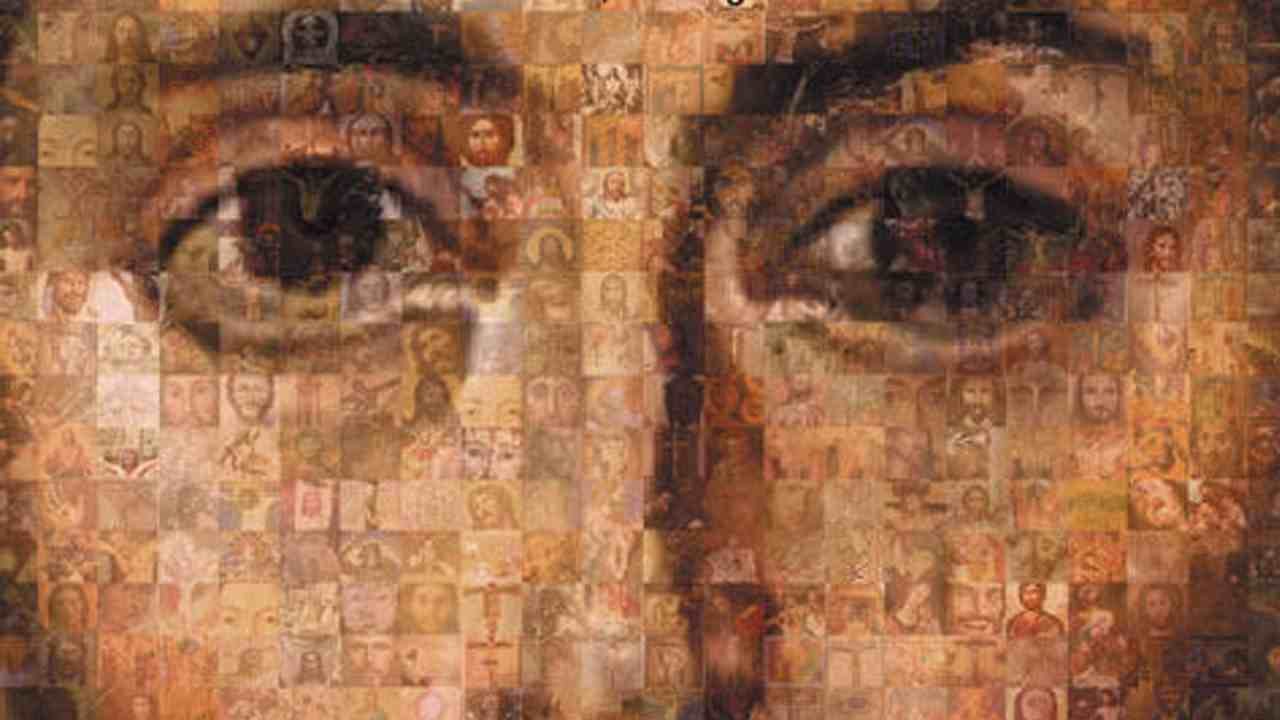
In my view, Jesus would not deny the weight of existence, nor would he rush to justify it.
One of the most striking things about Jesus, when read without theological smoothing, is that he never treats being alive as self‑evidently good or easy. He speaks constantly of burden, cost, loss, and suffering. He does not romanticize life. He does not explain suffering away. He does not tell people that existence will make sense if they just believe harder.
In that sense, Jesus stands closer to lucidity than consolation.
He begins from a realism about the human condition: people are weary, poor, grieving, sick, oppressed, afraid. His compassion is not based on an abstract belief that “life is a gift,” but on the concrete recognition that life is hard and often unjust. He never says, “Be grateful you were born.” He says, in effect, I see how heavy this is.
At the same time, Jesus does not respond to the burden of existence by rejecting life or idealizing non‑being. Where Cioran names birth as catastrophe, Jesus accepts birth as the given terrain—but refuses to pretend that it comes with guarantees.
This is where the difference matters.
Jesus Does Not Justify Existence—He Enters It
Jesus does not solve the problem of being born by explaining why it’s good.
He responds by entering the condition fully, without appeal.
He is born into vulnerability, obscurity, and precarity. He does not arrive above the human condition but inside it. And he never claims that this condition will be redeemed by meaning, progress, or metaphysical certainty. Instead, he lives a life that remains exposed—to grief, betrayal, fear, and finally abandonment.
The crucifixion matters here, not as a theological transaction, but as an existential posture: a refusal to escape suffering by explanation. Jesus does not reinterpret pain into purpose while enduring it. He cries out. He protests. He does not anesthetize the experience.
That cry—“Why have you forsaken me?”—is not an answer. It is lucidity under extreme conditions.
Where Jesus and Cioran Diverge
Cioran stays with the wound and refuses consolation. Jesus stays with the wound and keeps acting anyway.
Jesus does not deny the scandal of existence, but neither does he let it collapse him into withdrawal. He continues to feed people, touch the sick, confront power, and care for others without any promise that these actions will “add up.”
This is crucial: Jesus does not offer a metaphysical justification for being alive.
He offers a way of remaining ethically and relationally engaged without one.
In modern terms, Jesus practices existential health:
Presence without guarantees
Action without certainty
Love without the assurance of redemption
He does not say life is good. He lives as though care still matters even if life doesn’t justify itself.
How Jesus Might Respond to The Trouble with Being Born
In my view, Jesus would not refute Cioran with optimism. He would not rescue birth with meaning. He would likely recognize the honesty in naming existence as heavy, unchosen, and costly.
But he would also refuse to let lucidity become withdrawal. Where Cioran says, “Birth is the wound,” Jesus seems to say, “Yes—and what will you do with your hands anyway?”
Not because doing redeems existence, but because relation is still possible inside it.
In short, Jesus does not justify existence, he does not deny its weight, he does not promise it will make sense He models a way of standing inside life without appeal, continuing to act, care, and remain present without metaphysical insurance.
That places him neither against Cioran nor as his solution, but as someone who accepts the same exposure and chooses engagement anyway.
How the Problem of Being Born Relates to Religious Deconstruction

Religious deconstruction often begins when inherited answers no longer metabolize lived experience. At its core, the “problem of being born” presses on exactly that fault line. It names a question most religious frameworks work very hard to pre‑empt: Was existence itself ever asked for, and if not, on what grounds is it justified? When that question surfaces, it doesn’t merely challenge a doctrine; it destabilizes the moral architecture that has made faith emotionally survivable.
Many religious systems function, in part, to resolve the scandal of existence in advance. They frame birth as gift, suffering as meaningful, endurance as virtuous, and life as ultimately justified by divine intention or cosmic purpose. Deconstruction begins when those explanations no longer feel honest - when suffering doesn’t resolve into growth, when gratitude feels coerced, or when being alive starts to feel less like a blessing and more like an unchosen burden. Questioning birth itself exposes how much religious belief has been carrying the weight of making existence acceptable rather than true.
This is why the problem of being born often appears late in deconstruction, not early. Early stages tend to focus on hypocrisy, harm, authority, or doctrine. But deeper deconstruction reaches beneath belief and asks whether the very premise that “existence is good by default” can still be assumed. At that point, faith is no longer being evaluated for coherence or morality alone, but for its capacity to tolerate reality without anesthesia. The question of birth cuts through redemptive narratives that require suffering to be meaningful and gratitude to be obligatory.
For many, this moment feels dangerous, not because it leads directly to despair, but because it removes the ethical pressure to make life “worth it”. Religious deconstruction often carries intense fear that without metaphysical guarantees—God’s plan, ultimate justice, eternal meaning—life will collapse into nihilism. The problem of being born challenges that fear by separating honesty from annihilation. It asks whether one can remain alive, responsible, and engaged without first securing a cosmic justification for having been born.
This is where existential health becomes central. Deconstruction is not simply the dismantling of belief, but the re‑learning of how to live when inherited meaning systems no longer function. The problem of being born does not demand a new theology or philosophy; it demands capacity: the ability to remain present to unchosen existence without rushing to rescue it with doctrine, optimism, or despair. In that sense, it is not anti‑religious. It is post‑consolation.
For some, deconstruction eventually leads to renewed faith, reimagined on different terms. For others, it leads beyond religion altogether. In both cases, the problem of being born marks a threshold: the point at which faith can no longer serve as an answer‑machine and must either deepen into honesty or be released. What matters is not the outcome, but whether existence is finally allowed to be encountered as it is - unchosen, vulnerable, unfinished -without requiring it to justify itself first.
If this writing is useful to you. If it helps you think more honestly, stay present longer, or carry difficult questions without rushing to resolve them, you can support it by becoming a paid subscriber. Your support makes it possible for me to keep writing at this depth, without dilution or optimization for clicks. No hype, no answers for sale - just sustained, careful work.
The demand that suffering justify itself feels like a hidden pressure point. We suffer, then we’re required to make it “hold up” afterward.
Fascinating. Lots to ponder here