

The Manufactured Self
Simone de Beauvoir and the Hidden Architecture of Modern Identity

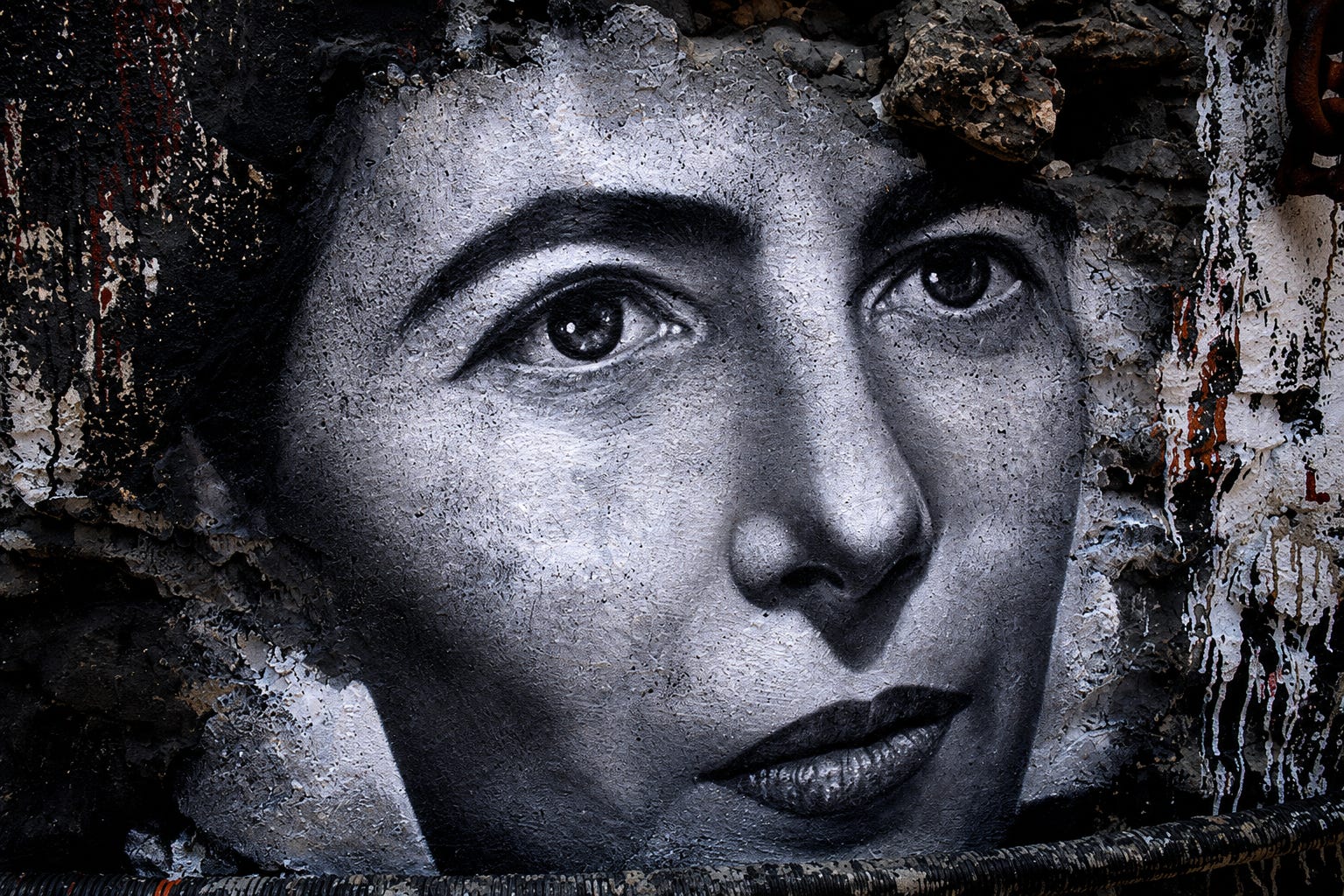
In recent months, I have been revisiting the work of several major modern thinkers whose insights continue shaping contemporary understandings of identity, power, meaning, freedom, and human consciousness. Recent articles have explored the work of Alfred North Whitehead, and James Cone. In this article, I turn to Simone de Beauvoir. These thinkers were not merely responding to the problems of their own historical moment. Each, in different ways, exposed deeper structures shaping human perception, culture, selfhood, and civilization itself. At a time when inherited systems of meaning are destabilizing across modern life, their work feels less historical than urgently contemporary.
Simone de Beauvoir and the Crisis of Selfhood
Most people move through life assuming they are relating directly to reality. They believe they are seeing the world as it truly is, evaluating others objectively, and constructing their identities through independent thought and personal choice.
Yet one of the most unsettling discoveries in philosophy, psychology, sociology, and existential thought is that human beings rarely encounter reality in any pure or unmediated sense. We encounter interpretations. We inherit frameworks. We absorb categories, symbols, narratives, assumptions, emotional reflexes, and systems of meaning long before we become conscious enough to question them. Human beings do not merely inherit beliefs about reality. We inherit structures of perception themselves.
From the moment we enter the world, we are immersed in social conditioning powerful enough to shape not only what we think, but how we think. Family systems, religion, education, media environments, political narratives, economic systems, gender expectations, national myths, peer groups, and institutional structures all participate in constructing the interpretive lens through which we experience existence. Over time these inherited frameworks become psychologically internalized to such a degree that we experience them not as interpretations, but as reality itself.
This process is so totalizing that most people never fully recognize how much of their identity was socially assembled before conscious self-authorship even became possible. Entire emotional reactions, desires, fears, aspirations, moral intuitions, and ideas about worth often emerge from inherited social programming rather than independent reflection. Much of what individuals experience as “themselves” consists of deeply conditioned adaptations to surrounding systems of power, belonging, survival, and recognition.
Human beings frequently experience social conditioning as personality.
This insight forms one of the hidden foundations beneath modern intellectual life. It sits underneath major developments in feminist theory, critical theory, sociology, existential philosophy, religious deconstruction, media studies, psychology, and postmodern analysis. Yet one of the most important thinkers to illuminate this process remains strangely minimized outside academic circles.
Her name was Simone de Beauvoir.
Simone de Beauvoir (1908–1986) was a French existential philosopher and writer whose work reshaped modern understanding of identity, freedom, gender, and human consciousness. Though often reduced to the category of “feminist philosopher,” Beauvoir’s deeper project concerned how societies construct human selfhood through culture, power, and social conditioning, shaping not only what people think, but how they experience reality itself.
That insight remains explosively relevant because modern civilization has become increasingly organized around identity production. Social media algorithms shape selfhood. Political systems cultivate tribal consciousness. Consumer capitalism manufactures aspirational identities. Religious systems organize moral and existential meaning. Digital environments reward performance over authenticity. Human beings are now living inside overlapping symbolic frameworks shaping identity continuously and often invisibly.
Long before the internet age, Simone de Beauvoir recognized that one of the deepest struggles of human existence concerns the tension between socially inherited identity and authentic selfhood.
That realization changed not only feminism, but the way we understand what it means to be human.
Simone de Beauvoir and Manufactured Consciousness
Simone de Beauvoir emerged within a world structured almost entirely through male-centered assumptions about reality. Philosophy, politics, literature, religion, education, sexuality, and public life were overwhelmingly interpreted through masculine frameworks presented not as perspective, but as universal truth. Men occupied the position of normative humanity. Women were understood secondarily, often defined primarily through their relationship to men rather than through autonomous subjectivity.
Beauvoir recognized that this arrangement was not merely social or political. It was existential. Women were not simply denied equal participation in society. They were denied full recognition as independent centers of meaning, freedom, and subjectivity.
Her revolutionary contribution was not merely the observation that women lacked rights or opportunities. Many reformers before her had already argued that women deserved better treatment. Beauvoir’s deeper insight concerned the construction of womanhood itself. She recognized that femininity had been culturally manufactured through centuries of male interpretation, social expectation, institutional reinforcement, and symbolic conditioning.
This insight reached its most famous expression in her statement:
“One is not born, but rather becomes, a woman.”
That sentence altered the trajectory of modern thought because Beauvoir was not merely discussing gender roles. She was exposing the process through which identities themselves become socially produced. What societies frequently present as natural or inevitable is often historical, cultural, and constructed. Human beings absorb categories of identity through socialization processes so pervasive that they eventually appear self-evident.
People often defend inherited identity structures as though they emerged from reality itself rather than history.
The implications extend far beyond gender. Nations are socially constructed realities maintained through shared symbolic narratives. Religious identities are socially constructed. Concepts of masculinity, success, professionalism, morality, attractiveness, patriotism, and even normality itself are shaped through collective interpretation and institutional reinforcement. Entire civilizations function through systems of meaning that become psychologically internalized over time.
This is why Beauvoir remains profoundly contemporary. She recognized that power often operates through the shaping of perception itself. Human beings can be conditioned to experience socially manufactured realities as objective truth.
A teenage girl opens her phone before she even gets out of bed. Before she speaks to another human being, she has already encountered hundreds of silent instructions concerning desirability, femininity, success, beauty, status, and belonging. Her body, personality, aspirations, sexuality, and self-worth are being shaped by invisible systems of reinforcement long before she has developed the psychological distance necessary to question them. Eventually these accumulated signals stop feeling external. They begin to feel like “me.”
The same process unfolds across the entire social field. Boys learn early which emotions weaken their claim to masculinity. Religious children learn which questions threaten belonging. Young professionals absorb silent expectations about ambition, productivity, and self-optimization. Entire identities form through adaptation to systems that rarely announce themselves as systems at all.
That realization becomes increasingly important within digital culture, where identity formation is now accelerated through algorithmic reinforcement. Modern individuals exist inside socially mediated environments that continuously shape emotional response, self-image, political affiliation, and belonging. Platforms reward recognizable identity performance while punishing ambiguity and complexity. People increasingly curate themselves according to external systems of visibility, approval, and performance.
Beauvoir anticipated this crisis decades before social media existed. She understood that human consciousness is vulnerable to interpretive inheritance at a foundational level.
Her work ultimately asks one of the most important existential questions of modern life: How much of what you call “yourself” was consciously chosen, and how much was socially constructed before you ever had the capacity to resist it?
The Violence of Categories
One of Beauvoir’s most penetrating insights concerned the human tendency to reduce living persons into conceptual categories. Drawing partly from Hegel’s analysis of selfhood and “the Other,” Beauvoir recognized that societies establish dominant groups as normative centers of reality while defining others secondarily and relationally.
Man becomes the universal human subject.
Woman becomes “the Other.”
The significance of this insight extends far beyond gender politics because it reveals how social power frequently operates invisibly through categorization itself. Once human beings are reduced to categories, they cease being encountered as full existential subjects. They become abstractions interpreted through stereotype, projection, ideology, fear, mythology, or symbolic simplification.
Human beings do this constantly.
We reduce people into political identities, racial categories, psychological labels, ideological tribes, religious affiliations, generational stereotypes, and social caricatures. We often relate not to living complexity, but to mental representations shaped through cultural conditioning. The individual disappears beneath the category.
Categories simplify reality by sacrificing human depth.
A man enters a room and immediately begins performing a version of masculinity he never consciously chose. His posture changes. His voice lowers slightly. Vulnerability narrows. Emotional restraint intensifies. He has spent decades absorbing silent social instructions about competence, strength, dominance, control, and acceptable male behavior. None of this feels artificial because the performance has fused with identity itself.
Meanwhile, a woman navigating the same room may carry the accumulated weight of centuries of social interpretation concerning likability, appearance, emotional tone, authority, sexuality, and safety. The surrounding culture has already assigned meaning to her before she speaks a single sentence.
This is how categories operate psychologically. They cease being merely external stereotypes and become embodied structures of self-consciousness.
This process becomes especially dangerous when societies institutionalize these abstractions. Entire political systems, religious frameworks, legal structures, educational systems, and economic arrangements become organized around socially reinforced categories that determine who is considered valuable, trustworthy, intelligent, moral, dangerous, normal, or fully human.
History repeatedly demonstrates the destructive potential of categorical thinking. Racism depends upon socially constructed interpretations of human difference. Patriarchy depends upon socially constructed assumptions concerning masculinity and femininity. Nationalism frequently depends upon mythologized distinctions between insiders and outsiders. Religious extremism depends upon categorical divisions between saved and condemned, pure and impure, sacred and profane.
What makes Beauvoir’s analysis so psychologically devastating is that she forces recognition of how deeply these symbolic frameworks operate within ordinary consciousness. Human beings rarely experience themselves as participating in oppressive systems. Most people simply inherit categories already embedded within culture and mistake them for objective reality.
This is why prejudice often survives even among individuals who consciously reject discrimination. The conditioning operates beneath explicit belief systems. People may sincerely oppose sexism, racism, or authoritarianism while still unconsciously perceiving others through inherited psychic architecture shaped across generations.
Modern digital life intensifies this tendency dramatically. Social media platforms incentivize reductionism because categories spread faster than complexity. Human beings become compressed into identity markers, ideological signals, demographic profiles, and symbolic affiliations. Algorithms reward emotional simplification because outrage and certainty generate engagement more effectively than ambiguity and nuance.
The result is a civilization increasingly organized around performative categorization rather than genuine encounter.
Beauvoir recognized that this process ultimately impoverishes everyone involved. The person reduced to a category loses existential recognition, but the one doing the reduction also becomes trapped inside diminished perception. The world shrinks into abstractions. Complexity disappears. Human beings stop seeing one another.
This may be one of the deepest crises of modern culture.
We possess unprecedented technological connectivity while simultaneously losing the capacity to encounter each other outside socially manufactured identities.
The Manufactured Self
One of the reasons Simone de Beauvoir remains psychologically difficult for many readers is that her work destabilizes the comforting fantasy of a fixed, predetermined, stable self. Human beings long for coherent identities because identity stabilizes existence. We want to know who we are. We want certainty concerning our purpose, morality, belonging, significance, and direction. Stable identities provide psychological protection against existential uncertainty.
But Beauvoir recognized that human existence is fundamentally unfinished.
This insight emerged partly through existential philosophy, especially the proposition that “existence precedes essence.” Human beings are not born carrying a fixed metaphysical blueprint determining who they must become. We exist first, and then gradually construct ourselves through choices, actions, relationships, interpretations, and participation within the world.
Yet Beauvoir complicated simplistic versions of existential freedom. She rejected naïve individualism that imagines people freely invent themselves independent of history, society, or material conditions. Human beings are profoundly shaped by forces they did not choose. Class, gender, culture, religion, economics, family systems, trauma, historical circumstance, and institutional structures all participate in forming the self.
This creates one of the central tensions of human existence.
We are conditioned, but not entirely determined.
We are free, but not unconstrained.
We inherit identities, but also participate in reshaping them.
We are subjects of consciousness while simultaneously existing as objects within the perception of others.
This irreducible tension is what Beauvoir called ambiguity.
Human beings struggle deeply with ambiguity because ambiguity resists psychological closure. Most ideological systems attempt to neutralize existential ambiguity by offering simplified narratives capable of stabilizing the self and reducing uncertainty. Religion often provides fixed moral frameworks and metaphysical certainty. Political ideologies offer simplified explanations for complex social realities. Consumer culture offers identities built around aspiration, status, and lifestyle performance. Digital culture offers visibility through performative self-curation.
All of these symbolic structures function partly as defenses against existential instability.
Beauvoir recognized that much of human behavior consists of attempts to escape the anxiety produced by openness, uncertainty, and incompleteness. People frequently cling to rigid identities not because those identities are true, but because they provide psychological structure. Certainty often functions less as truth than as emotional stabilization.
This insight feels increasingly urgent in contemporary culture. Modern individuals are now subjected to continuous identity reinforcement through media systems, algorithms, branding culture, ideological ecosystems, and social performance structures. Human beings increasingly experience themselves not directly, but through mediated representations shaped by external validation systems.
Many people no longer know where performance ends and authentic inward experience begins. Modern identity is increasingly experienced as performance before it is experienced as presence.
An exhausted person stares at a glowing screen late at night carefully curating fragments of personality for public consumption. A photograph is adjusted. A sentence rewritten. A reaction measured against anticipated judgment. Visibility has become intertwined with identity itself. The self increasingly appears not as something inwardly inhabited, but as something externally managed.
What makes this psychologically disorienting is that the performance is rarely experienced as deception. Most people are not consciously inventing false selves. They are adapting continuously to systems of validation powerful enough to shape emotional reality itself. Over time, the distinction between authentic experience and socially rewarded identity performance becomes increasingly difficult to locate.
Social media intensifies self-consciousness to unprecedented levels. Individuals learn to curate versions of themselves designed for visibility, affirmation, and social survival. The self becomes a project of external management. Identity transforms into performance.
This produces profound psychological fragmentation.
People become alienated not only from one another, but from themselves. They lose contact with direct experience beneath layers of adaptation, self-monitoring, social signaling, and identity maintenance.
Beauvoir recognized this danger long before digital culture amplified it globally. She understood that human beings can become trapped inside culturally scripted identity while mistaking those constructions for authentic selfhood.
Her work therefore remains deeply relevant to contemporary struggles involving anxiety, alienation, self-worth, belonging, and existential confusion.
Religion, Authority, and the Externally Authored Life
One of the most powerful contemporary applications of Beauvoir’s work concerns religion and authority. Although Beauvoir identified as an atheist, her significance for religious deconstruction extends far beyond debates concerning God’s existence. Her deeper challenge concerns the formation of human identity through inherited systems of authority and meaning.
Religious systems often function not merely as collections of beliefs, but as totalizing identity architectures. They shape concepts of morality, sexuality, gender, obedience, authority, salvation, human nature, belonging, purpose, shame, purity, and existential meaning. Over time these systems become psychologically internalized so deeply that individuals experience them not as interpretations, but as unquestionable reality.
This explains why religious deconstruction is often far more destabilizing than intellectual disagreement alone would suggest.
People are not merely reconsidering doctrines. They are confronting the collapse of identity structures that once organized meaning, morality, belonging, and psychological stability itself.
Many individuals emerging from authoritarian religious systems eventually realize that enormous portions of their inner life were externally authored before conscious consent was possible. Their fears, desires, moral reflexes, emotional responses, relationship dynamics, self-concepts, and existential anxieties were shaped through years of institutional conditioning. Even after doctrinal belief weakens, the psychological architecture often remains intact.
A former evangelical sits quietly years after leaving the church and suddenly realizes that the condemning inner voice narrating their failures still speaks in the language of institutional religion. The doctrines may have collapsed intellectually, yet the nervous system continues operating according to inherited structures of shame, fear, obedience, and self-surveillance.
This is why religious deconstruction is rarely just intellectual. It is psychological, emotional, relational, existential, and often physiological. Human beings do not simply “leave beliefs.” They attempt to disentangle themselves from entire systems of conditioned identity formation that once organized reality itself.
This creates a profound form of existential disorientation.
Individuals may consciously reject religious beliefs while still carrying internalized shame structures, fear responses, authority reflexes, gender conditioning, purity narratives, and psychological dependence upon external validation systems. The body and nervous system frequently continue operating according to inherited conditioning long after intellectual belief collapses.
Beauvoir helps illuminate this process because she recognized that systems of domination frequently sustain themselves not primarily through coercion, but through internalized consciousness formation. Human beings can become participants in their own confinement when institutions successfully define reality for them. The deepest forms of authority are the ones that eventually begin speaking in your own inner voice.
This insight extends beyond religion into modern ideological life generally. Political tribes, influencer ecosystems, nationalism, online communities, and institutional cultures all shape consciousness through symbolic reinforcement and social conditioning. Entire populations can become psychologically organized around externally authored identities while experiencing those identities as personal truth.
This raises one of the defining existential questions of modern life:
Who is authoring your consciousness?
Are your values genuinely examined convictions, or inherited scripts absorbed through prolonged conditioning?
Are your desires authentically yours, or manufactured interiority shaped by systems seeking influence over consciousness itself?
Are your moral intuitions grounded in direct reflection, or inherited emotional programming reinforced through fear, shame, reward, and belonging?
Most people avoid confronting these questions because the destabilization can feel existentially threatening. Identity structures often function as psychological survival mechanisms. We rarely surrender certainty because we are convinced. More often, we surrender certainty because we are afraid. Challenging them risks uncertainty, social alienation, and the collapse of meaning frameworks that once provided emotional stability.
Yet Beauvoir insists that genuine freedom requires precisely this confrontation. Certainty becomes dangerous when it escapes examination.
Freedom and the Terror of Becoming
One of the great misconceptions surrounding existential freedom is the assumption that freedom feels liberating. In reality, freedom often feels frightening. Many people would rather inhabit a painful certainty than an open-ended freedom. To recognize that no institution, ideology, religion, relationship, or authority can fully relieve you of responsibility for your existence is psychologically destabilizing. Freedom exposes individuals to uncertainty, existential openness, vulnerability, and the burden of self-authorship.
This is partly why authoritarian systems remain psychologically attractive even in modern societies that celebrate individuality. Many people do not seek certainty because certainty is true. We seek certainty because certainty regulates anxiety. Fixed identities and rigid worldviews provide emotional structure capable of reducing existential instability.
A person raised inside rigid ideological certainty may experience ambiguity not as freedom, but as danger. Without fixed answers, the world suddenly feels psychologically uncontained. Questions once resolved by authority now remain painfully open. Moral certainty dissolves. Identity destabilizes. Belonging becomes uncertain. What outsiders sometimes interpret as intellectual stubbornness is often an attempt to preserve existential stability.
Beauvoir understood that freedom is psychologically demanding because freedom exposes human beings to responsibility without guaranteeing emotional security. This is partly why authoritarian systems repeatedly re-emerge throughout history. They offer relief from the burden of existential openness.
Beauvoir understood this deeply. She recognized that freedom is inseparable from responsibility because freedom means participation in the ongoing creation of one’s life. Human beings are not passive objects carried mechanically through existence. We continually interpret, choose, respond, adapt, resist, conform, create, and become.
At the same time, Beauvoir rejected shallow individualism that imagines freedom as merely “doing whatever one wants.” She understood that human existence is relational. People become themselves within networks of relationship, culture, history, and mutual dependence. Genuine freedom therefore cannot emerge through domination, manipulation, objectification, or indifference toward others.
This insight represents one of Beauvoir’s most important ethical contributions.
She recognized that denying the freedom of others ultimately deforms one’s own humanity because human existence unfolds interdependently. The isolated self is an illusion. No human being becomes themselves alone. Human beings affect one another constantly through systems of power, recognition, language, institutions, economics, and emotional exchange.
Freedom therefore carries ethical implications.
Every society creates conditions that either expand or constrict human becoming through its families, religions, schools, governments, media systems, economic structures, and digital environments. Every culture implicitly decides which forms of selfhood will be validated, punished, celebrated, marginalized, or erased.
This realization remains deeply relevant in contemporary culture, where social pressure increasingly operates through visibility systems and algorithmic reinforcement. Individuals are rewarded for performing recognizable identities while ambiguity and complexity are often socially penalized. Human beings learn quickly which versions of themselves generate approval and which risk exclusion.
This creates enormous psychological fragmentation.
People begin performing socially acceptable selves while becoming increasingly estranged from direct inward experience. Authenticity becomes difficult because survival often depends upon adaptation to external expectations. The result is a society filled with individuals who appear connected while privately experiencing alienation, exhaustion, anxiety, and disorientation.
Much of modern mental distress may reflect this fracture between performed identity and authentic selfhood.
Beauvoir recognized that maturity requires learning to tolerate ambiguity rather than fleeing from it through ideological certainty or social performance. To become psychologically grounded means developing the capacity to inhabit openness without collapsing into despair or authoritarian dependence.
That task is extraordinarily difficult because ambiguity offers no final completion. Human beings remain unfinished. Selfhood remains dynamic. Meaning remains participatory rather than permanently secured.
Yet Beauvoir believed this unfinished condition is not a defect to eliminate, but a reality to confront honestly.
Simone de Beauvoir and Modern Selfhood
The modern world is undergoing a profound destabilization of inherited meaning structures. Institutional religion is declining across much of the West. Traditional gender roles are shifting rapidly. Political polarization is intensifying. Digital life is transforming human attention and identity formation. Millions of people are attempting to reconstruct meaning after the erosion of older systems that once organized psychological and social life.
This is why Beauvoir’s work feels so startlingly relevant to modern life.
She understood that identity is neither fixed nor simple. She recognized that human beings exist inside tensions that cannot be permanently resolved through ideology, dogma, or abstraction. She exposed the ways systems of power shape perception itself. She challenged externally authored existence while simultaneously rejecting simplistic individualism. She understood that liberation is both personal and collective.
Most importantly, Beauvoir recognized that human beings are unfinished creatures participating continuously in the creation of themselves and their worlds.
That insight becomes especially unsettling during periods of civilizational transition because the collapse of inherited certainty often produces psychological instability. Human beings accustomed to externally supplied identities suddenly confront existential openness without adequate tools for self-authorship. The result can be confusion, tribalism, ideological extremism, anxiety, nihilism, or desperate searches for replacement certainty. The collapse of inherited identity does not automatically produce freedom. Sometimes it produces panic.
This dynamic increasingly defines contemporary culture.
Many individuals no longer trust institutions, yet still psychologically long for authority. Modern people increasingly oscillate between rebellion and dependence. They reject institutional religion while searching for replacement systems of certainty online. They distrust political authority while surrendering themselves to ideological tribes. They criticize conformity while carefully curating identities according to digital visibility metrics. They long for authenticity while remaining terrified of social exile.
The result is a peculiar form of modern instability in which individuals possess unprecedented freedom of identity construction while simultaneously feeling psychologically fragmented, performative, and existentially ungrounded.
Modern selfhood has become increasingly unstable because the structures that once organized meaning are fragmenting faster than new existential frameworks are emerging. We no longer know where adaptation ends and authentic selfhood begins.
Beauvoir anticipated this condition decades ago. She understood that the collapse of externally authored identity does not automatically produce mature freedom. Freedom requires psychological development, existential courage, ethical responsibility, and the capacity to tolerate uncertainty without retreating into simplification.
This may become one of the defining existential challenges of the twenty-first century.
Can human beings learn to inhabit ambiguity without collapsing into ideological extremism?
Can people develop self-authorship without losing relational responsibility?
Can freedom survive within systems increasingly organized around psychological manipulation and the engineering of consciousness?
Can human beings encounter one another beyond categories, tribes, and performative identities?
Can modern civilization produce psychologically grounded individuals capable of resisting mass social conditioning?
These questions no longer belong merely to philosophy classrooms. They now sit at the center of politics, religion, technology, mental health, education, and cultural life itself.
The Thinker We Still Have Not Fully Faced
Simone de Beauvoir was not merely a feminist icon, nor only Sartre’s intellectual companion, nor simply an existential philosopher writing about women’s liberation. She was one of the great diagnosticians of socially constructed consciousness in modern intellectual history.
She recognized that human beings frequently mistake inherited interpretation for reality itself. She exposed the mechanisms through which culturally scripted identities become normalized as reality itself. She understood that systems of domination often sustain themselves not merely through force, but through shaping perception before conscious reflection even begins. She challenged the reduction of human beings into categories, stereotypes, social roles, and symbolic abstractions.
Every system that reduces human beings to categories eventually loses the ability to truly see them.
Beauvoir understood that authentic freedom requires confronting ambiguity rather than escaping into comforting certainty. Human beings frequently flee uncertainty by surrendering themselves to rigid identities, simplified narratives, and inherited systems of meaning capable of stabilizing the self.
In many ways, Beauvoir anticipated some of the deepest crises now unfolding across contemporary civilization.
The central struggle of modernity is no longer merely political, technological, or even religious. Increasingly, it is a struggle over consciousness itself. It is a struggle over who or what gets to shape human perception, identity, desire, morality, belonging, and reality construction. Modern systems of power no longer operate primarily through overt coercion alone. They operate through the production of consciousness. They shape how human beings interpret themselves before they ever consciously begin reflecting on who they are.
This is why Beauvoir feels so startlingly contemporary.
She recognized that domination often begins long before explicit oppression becomes visible. It begins through the shaping of categories, narratives, assumptions, emotional reflexes, symbolic norms, and inherited structures of interpretation. Human beings absorb entire models of reality through culture long before they possess the intellectual or psychological tools necessary to evaluate those models critically.
What Beauvoir exposed was not merely sexism. She exposed one of the deepest hidden mechanisms of civilization itself: the social manufacturing of human identity.
That insight now reaches far beyond twentieth-century feminism.
It applies to algorithmic identity formation. It applies to nationalism and ideological tribalism. It applies to religious conditioning and political extremism. It applies to influencer culture, consumer capitalism, online performance, institutional authority, and digital systems designed to continuously shape emotional response and symbolic belonging.
Modern civilization increasingly functions through systems competing to author consciousness itself.
This is partly why contemporary life feels psychologically exhausting for so many people. Human beings are now immersed in nonstop pressures aimed at shaping identity, desire, fear, aspiration, morality, attractiveness, success, outrage, belonging, and self-worth. Never before in human history have so many forces simultaneously competed for influence over the inner architecture of the self.
The result is not merely political polarization or cultural fragmentation. The result is existential destabilization.
Many individuals no longer know where adaptation ends and authentic selfhood begins. They no longer know which desires are genuinely theirs and which were manufactured through prolonged exposure to social reinforcement systems. They no longer know whether they are expressing themselves or performing identities optimized for approval, belonging, visibility, and survival.
This is why the modern crisis of identity cannot be solved merely through better politics, better technology, or better institutional reform. The crisis is deeper than that. It concerns the human relationship to meaning, selfhood, freedom, and consciousness itself.
Beauvoir understood that the collapse of inherited structures does not automatically produce mature freedom. Sometimes it produces panic. Sometimes it produces nihilism, tribalism, extremism, performative identity, or desperate attempts to recover certainty at any cost. Human beings frequently flee ambiguity because ambiguity exposes the terrifying openness of existence itself.
Yet Beauvoir refused both despair and false certainty.
She insisted that human maturity requires learning to inhabit ambiguity honestly rather than escaping into simplified ideological identities. She recognized that freedom is not the absence of structure, but the difficult task of participating consciously in the formation of oneself and one’s world. She understood that no human being becomes themselves in isolation, and that liberation severed from responsibility easily collapses into domination, narcissism, or indifference.
Most importantly, she recognized that authentic human life requires resisting every system that attempts to reduce people into categories, abstractions, functions, stereotypes, or socially prescribed roles.
That may ultimately be her most enduring contribution.
Simone de Beauvoir was not merely a feminist thinker arguing for women’s equality, though she transformed that conversation permanently. She was one of the first major theorists of socially manufactured identity within modern systems of power. She recognized that civilizations do not merely govern bodies. They shape consciousness. They construct norms of selfhood. They organize perception. They teach people what to desire, fear, admire, obey, reject, and become.
Long before social media algorithms, mass branding culture, influencer economies, digital tribalism, and identity-driven politics, Beauvoir recognized that human beings are profoundly vulnerable to inherited systems of interpretation masquerading as reality itself.
That realization remains deeply unsettling because it forces an unavoidable question upon modern life:
How much of what we call “ourselves” was consciously chosen, and how much was socially constructed before we ever had the power to resist it?
To question socially constructed reality is not merely to challenge ideas. It is to destabilize the psychological architecture through which people experience themselves and the world.
And perhaps that is precisely why we still have not fully faced her.
If this essay resonated with you, I invite you to become a paid subscriber ($50 annually). My work explores the deeper forces shaping identity, meaning, consciousness, spirituality, and existential life in the modern world. Paid subscribers support the sustained research and writing behind essays like this while gaining access to additional longform essays, reflections, discussions, and explorations into existential health and post-institutional spirituality.
Paid subscribers also receive complimentary membership in the Center for Non-Religious Spirituality, an evolving community exploring meaning, selfhood, spirituality, and human flourishing beyond rigid institutional frameworks.
"The social manufacturing of human identity" is an accurate description of the the "ego" or conditioning itself.
I follow a Buddhist sangha (Livingcompassion.org) that actively promotes and provides numerous tools to assist in thethe deconstruction of the ego, while pointing us towards consciousness itself.
Learning to live in ambiguity (the I- don't-know mind) is the ultimate expression of freedom. Understanding how my entire perception is "me" and the world are completely projections from my conditioning has been a rewarding, frustrating challenge.
I was living in a multi-ethnic city where people would commonly describe each other by reference to the other person’s presumed race or ethnic group. One day, at work, a “white guy” (let’s say) came in looking for Mr X, who happened to be, a “black guy” (let’s say). Instead of saying “Oh yes he’s the black guy who sits around the corner”, I said, “He’s sitting around the corner, I think he’s wearing a red shirt today.” About half an hour later the “white guy” walked past me on the way out and gave me a very long stare with a screwed up expression which amused me a lot. You’re right that these kinds of category systems are relational but they are also hierarchical. “Flesh-colored” means pink, despite the fact that the majority of people in the world aren’t pink. And so starts the struggle to be reclassified as an “honorary white person”. People who belong to a group that in one generation were despised as immigrants who ate strange food and spoke English badly, in following generations do the same to newer immigrants from other lands and cultures. Or not. It’s up to us whether we want to play that game. And if we don’t, we may get stared at occasionally.