

The Great Reconstruction
Part One: Everything is not okay... but life is the greatest good


“I never feel okay.”
These words spoken to me, landed. I had never heard them before. A four-word sentence, which spoke volumes. The word “never” was a profound admission. We all from time to time say things like “not doing okay” or “not feeling great today”, but it’s different to say, “I never feel okay.” This is more like the cry of the human condition.
There are moments, if you let yourself go there, when we know viscerally that something is not okay… ever. I don’t just mean our daily difficulties, I’m talking about everything, down to the studs of existence itself. Something is perpetually broken, incomplete, wrong. I know you must feel this, perhaps only in those experiences when it pushes itself through the cracks of your defenses.
Something is not right, and deep down we know it. In our life, in the world, in the answers and explanations we have been given – something is off and doesn’t line up. There’s a screw loose somewhere. It rattles when you log in and see the morning’s headlines, or scroll through your newsfeed. You can’t quite name it, but it’s there. You see it in people’s faces as you pass them in the grocery store. Something is always missing. There’s a chronic discontent that lurks beneath the surface of our lives.
That’s on a good day.
There is a longing inside us. It shows itself as a questioning of the disharmony that we live in. It is not just out there. We feel it deep inside ourselves. It is our disharmony. It is our personal yearning.
We’ve tried to fix it. On a species level we created religion, philosophy and spirituality to explain, overcome, numb or manage our existential angst. We’ve taken up grand political and revolutionary movements to guarantee us life, liberty, and the pursuit of happiness. We put our faith in science and technology to straighten things out. Nothing seems to work.
There’s this psychical black hole and regardless of how much money, possessions, thrills, achievement, recognition, fitness, self-improvement and Netflix we throw at it, we are never quite satisfied or at least not for long.
Perhaps you’ve thought these kinds of feelings mean there is something distinctively messed up about you personally. You’re not. We all experience this. It’s part of the human situation to feel this way.
We have bought into the myth of being “normal”, which is the absence of loneliness, anguish, melancholy and despair. That’s not “normal”, right? That’s why we go to therapy, to fix it.
If we could really accept that we weren’t okay, we could stop proving we were okay. If we could stop proving that we were okay, we could get that it was okay not to be okay. If we could get that it was okay not to be okay, we could get that we were okay the way we are.
The question is: How do we cope with these feelings, and even turn them into reasons to life life spartanly and fully? How do we stare our human reality square in the face and insist to die only once, instead of a thousand little deaths of concessions and compromises?
Today, I am beginning a new undertaking in the form of a series of articles, titled:
The Great Reconstruction: Creating the “Religion” We Need Now
In the world I typically operate, the term “reconstruction” is the flip side of “deconstruction” in the leaving-religion process. It’s a mistake to divide the two as separate and distinct, but in this context “deconstruction” refers to the critical scrutiny of one’s religious beliefs and practices, which inevitably leads to a divestment from a significant portion of them.
The “reconstruction” aspect refers to how a person reconstitutes and rebuilds their post-religion beliefs, spirituality and life orientation. I discuss this entire process in my series: unChristian: Deconstruction for the rest of us, as well as the articles: The 5 Cold Hard Truths of Leaving Religion and The Leaving-Religion Do and Don't List.
One serious flaw in the typical way we approach religious deconstruction and reconstruction is we think of it as a private or individualized endeavor. I wish I had a nickel for every time a religion-leaver told me how difficult it is to walk their journey alone, without the benefit and support of a community and structure like they had in religion. It’s fashionable in these spiritual-but-not-religious days to be critical of “organized religion”. It turns out that non-religious spirituality struggles in the absence of what organized religion mastered.
My contention in this series is that we need a new “religion”. The religions (and secular isms) of our world in the East and the West have served a great purpose and there are components of all of them that offer great wisdom. But there are ways that all the world’s religions no longer address the realities of the human condition in our time in history.
I know what some of you might be thinking:
“Jim! Have you finally lost your ever-loving mind??? So, you’ve decided to start a new religion!?! I guess former megachurch pastors just can’t leave well enough alone. Is this going to end up as a Netflix film about a cult?”
I get it. It perhaps sounds grandiose. This series is not about starting A new religion; it’s about reimagining the entire domain of what we have historically called “religion”. But the kind of “religion” I am envisioning is a radical departure from the religions of the past, including there formation around a revolutionary or charismatic guru or leader.
There are no shortage of people who talk about religious “deconstruction”, but far fewer take up the subject of “reconstruction”. In this series, I’m going to take some risks, swing for the fences and roll the dice on suggesting that we need a radical, wholesale, societal, and species “reconstruction” of the entire enterprise of “religion.”
Whether it’s Christianity, Buddhism, atheism, humanism, existentialism or scientism, they are all “religion” with respect to being an approach for understanding and abiding with the nature of reality and the givens of human existence. All of them run the risk of committing the same error, refracted through their own distinct interests.
In Factotum, Charles Bukowski wrote:
“If you’re going to try, go all the way. Otherwise, don’t even start. This could mean losing everything and maybe even your mind. It could mean not eating for three or four days. It could mean freezing on a park bench. It could mean jail. It could mean derision. It could mean mockery, isolation. Isolation is the gift. All the others are a test of your endurance, of how much you really want to do it. And, you’ll do it, despite rejection and the worst odds. And it will be better than anything else you can imagine. If you’re going to try, go all the way. There is no other feeling like that. You will be alone with the gods, and the nights will flame with fire. You will ride life straight to perfect laughter. It’s the only good fight there is.”
My hope for this series is to discover a new possibility: living in a way, now, moment to moment, that makes a difference to life. I want to do my part in inspiring us as human beings to live in a possibility instead of in what we have inherited. Instead of just being a human being because we were born that way, to declare a new possibility of being for human beings. This is the work of transformation: bringing forth a breakthrough in the possibility of being human.
I want to offer a few guidelines for how to approach this series, which I hope will be help you get the most out of it.
Don’t take my word for it
Since leaving my former religious life, I have spent decades toiling in the fields of theology, philosophy and the humanities. I am a certified spiritual director, published author, and have spent 25 years working with people in religious deconstruction, recovery from religious trauma, and the cultivation of authentic spirituality and greater existential health. Despite all this, only you are the expert when it comes to your own spiritual journey. Of course I want you to consider what I am sharing in this series or I wouldn’t be writing it, but measure everything you read against your own critical thinking, personal experience and inner knowing.
Avoid the all or nothing mentality
This series is going to challenge what I believe to be the central flaws of virtually all religions of the East and West, and non-religious isms such as atheism, humanism, scientism, and existentialism. On the one hand, to apply wholesale the ideas I’m going to share in this series would likely result in a fairly significant demolition of any religion or ism you might currently be following. Most change and growth is not wholesale or happen all at once. For any truth in this series that resonates with you, give thought to what it would like for you to begin living it right now as you are and where you are.
Religion as the problem and the solution
At first blush, this series might at first seem like nothing more than a shot across the bow at religion. It’s not. In fact, one of the main points coming in this series is how religion lost it’s way by not understanding it’s own message, movements and history more deeply.
Push past your ego-energy
This series is going to step on toes. Religion and politics can be decisive and polarizing because they are two areas where people most want and need to be “right” (except maybe sports). When it comes to religion, we tend to want to believe that our version has a suitable explanation for everything, and the ego is activated with the implication that we don’t. It would be useful to read this series with the idea that none of us (no religion, non-religion or ism) has all the answers, and there are ways of approaching these dilemmas constructively with grace and hope.
Navigating existential angst
This series might spark existential angst you have never experienced before. One of the contentions of this series is that it might be necessary to face nihilism in order to integrate it in a healthy way into our lives. In my psychology of religion series, particularly my article on the work of “negative psychoanalyst” Julie Reshe, we discussed the necessity of working with feelings and experiences we tend to repress, deny or avoid because they have been labeled as “negative”. The term “nihilism” sounds depressing itself, and I address the topic of nihilism in that article. Two books to change your thinking on the topic are Wendy Syfret’s, The Sunny Nihilist: A Declaration of the Pleasure of Pointlessness and Robert Pantano’s The Art of Living a Meaningless Existence.
Should Religion Evolve?

Existence is an evolutionary process. I discuss this in my series: The case for Unifying Science and Religion, which includes an article on Darwinian evolution. Religion is the only enterprise on earth that is fundamentally characterized by the refusal to evolve. It has not gone well for those who have tried. Jesus is a good example; he was deemed a heretic and executed for his attempt to revolutionize traditional religious thinking. Neither did it go well for people like Galileo, Joan of Arc, Thomas More and a long list of accused infidels.
Depending on who you ask, whether religion has done more harm than good is a matter of debate. But religion’s resistance to change has often been the handmaiden of the damage it has done.
Though it’s common for any religion to claim special anointing and authority, it’s perhaps best to think of religion as an artifact of human evolution. I discuss this view of religion in my series, The Evolution of Religion.
Historically, religion is treated differently than any other human phenomenon. For example, here are a few characteristics of the world’s religions that set it apart from all other human endeavors:
The content and character of the world’s religions originated within a context 2,500 years ago (commonly referred to as the “Axial Age”). To put it in perspective, if science was defiant to change, we would still believe in a geocentric universe, and that matter was composed of the four elements: earth, air, fire, and water. Our understanding of the universe and the human person has radically evolved over the past few thousand years. Despite our highest regards for the religions of the West and the East, it’s not reasonable to assume they were born in a holy vacuum, untouched by the societal, cultural and political realities of its day.
The harmful effects of religion are not considered evidence of its legitimacy. There are warning labels on cigarettes because they contain cancer-causing chemicals. Smoke them if you want, but you’ve been informed of the risk. Harmful religious training may be one of the great unrecognized causes of mental and physical illness in our culture. Religious Trauma Syndrome will soon be included in the Diagnostic and Statistical Manual of Mental Disorders (DSM). There is not a self-correcting measure built into religion to curb or eliminate the harm it does.
Religion is given an exemption when it comes to the scrutiny of critical thinking, rational thought, and reasonable verification. For example, religious beliefs in a literal “original sin” condition, eternal Hell, and the virgin birth and bodily resurrection of Jesus, are accepted on the merits of faith alone. Of course “faith” is a feature of religion, but as Jean-Paul Sartre pointed out, there is a “bad faith” for which we must be careful.
Though I can be critical of religion, I realize that everyone’s experience of religion is different. Were I against all religion, I would not be suggesting the creation of a new paradigm in the realm of “religion”. We can and must do religion better.
One reason why religion resists change and evolution is that people anchor their personal identity, existential security, way of life, social network and cultural cohesion in their religion. Whether the earth is or isn’t the center of the universe might not impact your daily life, but virtually everything of personal value is related to one’s religion, which is defined according to a fixed set of beliefs and practices. Typically, when it comes to a religion, you can either accept or reject what it is. You can be in or out, but there’s no changing it.
A primary contention in this series of articles is that religion can and should evolve. It requires one to loosen their vice grip on the content and character of any particular religion, and appreciate the underlying meaning-making ethos of all religion. The word “religion” connotes a range of ideas such as God, the supernatural, spirituality and the sacred. But in this series I will also address non-religious or secular ideologies that have essentially failed humankind in the same ways as traditional religion.
The fact that religion can and should evolve is partly based on the fact that religion has already been evolving in historical time even though we don’t recognize it in biographical time. For the purpose of this series I am not going to focus on the historical evolution of religion. As mentioned, I address this in a previous series. Additionally, some useful books on the subject include:
Religion in Human Evolution by Robert N. Bellah
A History of God by Karen Armstrong
A History of Religious Ideas (3 volumes) by Mircea Eliade
The Evolution of God by Robert Wright
The Anthropology of Religion, Magic, and Witchcraft by Rebecca L. Stein
Robert Bellah wrote:
“We have to understand ourselves as a part of the narrative of evolution. And evolution never stops. The notion that human evolution at some point stopped and “history” took over is absurd.”
Diagnosing the Problem to be Solved
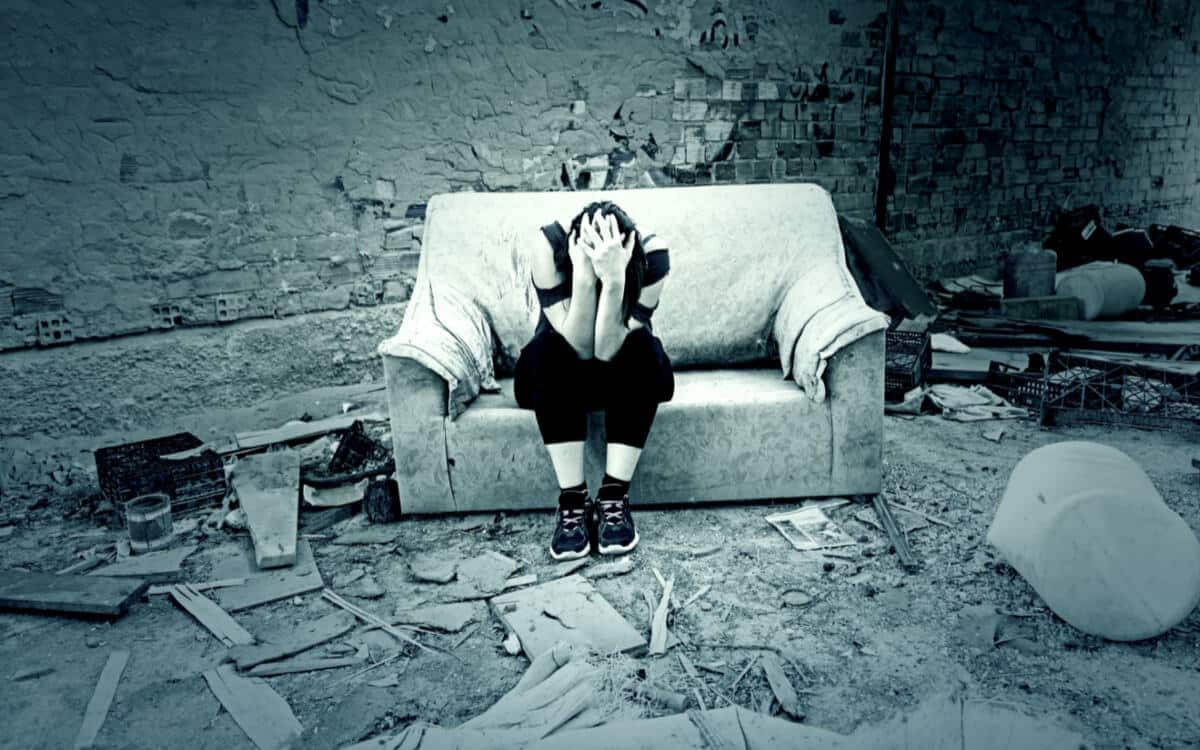
The problem that the religions of the West and the East have failed to adequately address is the problem I mentioned at the outset of this article. Everything is not okay. There is something inherently and chronically wrong with our existence, the human condition, and the story we find ourselves in. To say it is “wrong” is to say that it is not as we would wish it to be. Existence is what it is, but the existence we were given as human beings is defective. Everything is not all right the way we want.
In one way or another, the religions of the East and the West convey the message that everything is fundamentally all right with the world or will be all right in the end. Such a message is understandable as a safeguard against nihilism, which has become the unpartable sin to cure. In my view, humankind cannot avoid extinction unless we stand toe-to-toe with nihilism, and discover it is not the evil dragon to be slayed but the key to a prison we have locked ourselves in. Friedrich Nietzsche wrote, “Be careful, lest in casting out your demon you exorcise the best thing in you.”
The “religion” that we need now is a religion that starts with the truth. James Baldwin wrote, “Not everything that is faced can be changed, but nothing can be changed until it is faced.” Facing the defective nature of our existence won’t change it. But once we face it, we can transcend these defects in ways that are hopeful, transformative and liberating.
We need a turn in the religious consciousness of humanity, and it must begin in an approach to these defects that abandons the impulse to deny them. What are the defects at the heart of our existence that we try so hard to deny but can’t?
They are:
Human mortality - we all die
Human groundlessness - we don’t know why we are here
Human insatiability - we are never satisfied
These three undeniable defects in our existence and the lived human experience, is what pushes through the cracks and makes you feel something is wrong. It’s the reason why we never feel okay. Everything is not all right the way we wish it would be.
In one way of another, every religion, non-religion, and ism is attempting to refute, deny, circumvent or console us of these three frightening realities. It’s understandable. But in the process what they have instead done is prevented us from realizing that life is the greatest good.
The central point of this series is: Everything is not okay... but life is the greatest good.
Until we straightforwardly face the defects of human existence, we will never be able to fully embrace the gift of life. Everyone dies. What we want is to die only once and not die a million deaths in denials, compensations and petty consolations. We are stuck in a dilemma. One horn of the dilemma is what happens when we face the defects of our existence. The other horn is what happens when we fail to face them.
Give us a religion that will help us to live—we can die without assistance. Homo sapiens have evolved past our superstitions, myths and fantasies of the infallibility of our knowledge. Artificial Intelligence can’t save us. We need a great reconstruction. We need a “religion” for the future that helps us to live abundantly not in denial of what isn’t okay, but because of it.
Next week I plan to begin addressing the three defects of human existence, how religion has failed to address them, and what would a radical acceptance mean for living life fully and transforming every dimension and way of being human in our society and world.
In Summary
There are moments, if you let yourself go there, when we know viscerally that something is not okay… ever.
Religion lost it’s way by not understanding it’s own message, movements and history more deeply.
This series is not about starting A new religion; it’s about reimagining the entire domain of what we have historically called “religion”.
We need a turn in the religious consciousness of humanity, and it must begin in an approach to these defects that abandons the impulse to deny them.
Even if the defects didn’t exist, it’s doubtful anything could ever be okay for Dallas Cowboy fans.
Everything is not okay... but life is the greatest good.
“He did not know that the new life would not be given him for nothing, that he would have to pay dearly for it, that it would cost him great striving, great suffering. But that is the beginning of a new story - the story of the gradual renewal of a man, the story of his gradual regeneration, of his passing from one world into another, of his initiation into a new unknown life."
- Fyodor Dostoyevsky, Crime and Punishment

I spent nine years as the president of an organization headquartered in Birmingham, Alabama. The “Southern progressive alliance for exploring religion” was called SPAFER. It was composed of church members who could no longer believe in the faith items of their church and we’re looking for something beyond and something new and something that would fit with the discoveries of our reality in the world of science and evolution and chemistry. Twice a year we had speakers like Bishop John Shelby Spong Marcus Borg, and many others who are out in the world speaking to people about new ways of thinking about the religion called Christianity. The organization was alive and active for some 20 years. I was the last president when we had to close it down from lack of attendance. Why did we have lack of attendance, because once you have given up on the things your church so strongly believes, nobody gives you anything else to hold onto. There’s no need to keep understanding that you need to give it up so people began to drop out of our organization and once you’ve heard all of the speakers that are going around the country trying to get people to realize that Christianity is dying. There’s no need to keep sitting there hearing people say that because you agree with them. All of this is to say that Jim Palmer, you are onto the solution; we need a new religion for the 21st-century, but we don’t need to re-interpret the stories in the Bible. We don’t need to hang on anything in the old religion that has proven to be as I used to like to say Not True, so I am with you 100% and I look forward to your future articles along this line of thought.
Jim—
That line, “I never feel okay,” hits like scripture. Not the sugar-coated kind, the real stuff—raw, cracked open, human.
You’re right. Religion lost the plot trying to duct-tape over despair with dogma. But you’re also right that we can’t just deconstruct and drift. We need something to stand in—something honest, communal, and built for the species we’ve actually become.
And while you're reimagining religion, I’d whisper this: Mary Magdalene was already onto it. Her gospel wasn’t about sin or sacrifice. It was about direct knowing, inner freedom, and telling Peter to pipe down. So maybe the “new religion” is a resurrection—not invention.
Either way, I’m with you. Let’s stop pretending we’re okay. Let’s build something that doesn’t require us to.
—Virgin Monk Boy
“Everything is not okay. But you are.”