

The Existential Health Reader
Essays on Meaning, Identity, and the Human Condition (An Inquiry Across 400 Articles)


PREFACE
400 Articles Later: What I Now Believe About Being Human
When I published my first Substack article, I did not realize I was beginning a long investigation into what it means to remain fully human under modern conditions. At the time, I thought I was writing about religion, spirituality, psychology, meaning, identity, culture, and the interior life. But over the course of 400 articles, radually I recognized that these were never actually separate subjects. They were different expressions of the same deeper inquiry: what happens to human beings when inherited structures of meaning begin collapsing faster than new forms of existential ground can be established in their place?
Again and again, the same themes kept returning: meaning, belonging, mortality, authority, loneliness, selfhood, spirituality, identity, fragmentation, and the struggle to remain internally coherent inside systems that increasingly reward performance over authenticity, stimulation over depth, certainty over honesty, and tribal belonging over genuine selfhood. I did not consciously choose these themes as an intellectual brand. Modern life kept forcing them forward because modern people keep colliding with the same existential pressures whether they possess language for them or not.
Over time, it became increasingly clear to me that much of contemporary suffering cannot be adequately understood through purely political, economic, medical, or even psychological categories alone. Beneath many modern struggles sits something deeper and more destabilizing: existential disorientation.
Human beings may outwardly appear functional while internally carrying profound uncertainty about who they are, what gives life meaning, what can be trusted, where they belong, how to live honestly, or whether modern society itself is organized in ways compatible with human flourishing. These are not isolated private failures unfolding independently inside disconnected individuals. Increasingly, they reflect broader conditions of existential destabilization emerging across modern life.
The weakening of inherited religion did not eliminate humanity’s existential needs. Technological advancement did not resolve loneliness, mortality, grief, meaninglessness, or the hunger for transcendence. Information abundance did not create wisdom. Hyper-individualism liberated many people from oppressive structures while simultaneously transferring enormous existential responsibility onto isolated individuals now expected to privately construct meaning, identity, morality, purpose, and psychological coherence under conditions that continuously destabilize all five.
What I eventually discovered is that I was not merely documenting cultural trends or spiritual deconstruction. I was observing the psychological and existential consequences of a civilization undergoing profound transition. Industrialization reorganized human life around mobility, productivity, and economic systems increasingly detached from local continuity and communal rhythms. Secularization weakened inherited symbolic worlds that once organized meaning, morality, mortality, and belonging collectively. Digital technologies transformed attention itself into a contested economic resource while algorithmic systems increasingly shape perception, identity formation, emotional life, and social reality beneath conscious awareness.
At the same time, many of the structures that once distributed existential burden across religion, community, kinship, ritual, continuity, and shared symbolic life have weakened dramatically. Increasingly, modern people are left attempting to privately metabolize meaning, mortality, identity, spirituality, morality, and psychological survival in relative isolation. The result is not merely stress, but increasing psychological and existential incoherence.Many contemporary psychological, relational, spiritual, and cultural struggles increasingly appear connected to the erosion of existential ground itself.
By existential ground, I mean the underlying conditions that allow human beings to experience life as psychologically coherent, emotionally inhabitable, morally orienting, relationally grounded, and existentially meaningful. It involves one’s relationship to meaning, mortality, selfhood, embodiment, belonging, continuity, transcendence, morality, and reality itself.
From years of dialogue with readers, another pattern became impossible for me to ignore: many people are not simply searching for opinions, self-help techniques, or ideological certainty. They are trying to recover some coherent way of being human inside conditions that increasingly undermine coherence itself. Across these years of writing, I encountered thoughtful, intelligent, psychologically aware individuals who nevertheless felt internally untethered. People carrying loneliness, grief, religious collapse, identity destabilization, moral confusion, fragmentation, exhaustion, and profound uncertainty about how to inhabit their own lives honestly.
That realization gradually changed the direction of my work. I became less interested in defending ideologies and more interested in understanding the conditions under which human beings either psychologically flourish or slowly fragment. I became increasingly convinced that human beings require more than stimulation, productivity, entertainment, political identity, technological advancement, or endless self-optimization in order to remain psychologically whole. Human beings require meaning, self-trust, relational depth, belonging, symbolic coherence, existential orientation, and forms of grounding capable of helping them metabolize reality honestly.
As the work developed, these writings evolved into a larger inquiry involving existential health: the relationship human beings have to meaning, mortality, identity, congruence, selfhood, belonging, and reality itself. Existential health asks not merely whether individuals are outwardly functioning, but whether they possess sufficient existential grounding to remain psychologically coherent and fully alive within the conditions of existence. Increasingly, I have come to believe that many forms of modern suffering cannot be fully understood apart from this deeper existential layer beneath contemporary life.
My relationship to religion also changed profoundly through this process. I no longer see religion through simplistic categories of either truth or falsehood alone. Religion often emerged because it addressed enduring dimensions of human existence: mortality, suffering, transcendence, moral formation, belonging, symbolic life, existential orientation, and the longing to participate in something larger than oneself.
The deeper problem was not that these human needs were imaginary. The problem was that institutions frequently intertwined those needs with fear, hierarchy, dependency, shame, tribalism, and suppression of selfhood. Many people leaving religion are not merely rejecting doctrines. They are attempting to recover parts of themselves institutional systems taught them to distrust.
Over these years of writing, I also became increasingly skeptical of the assumption that information naturally produces wisdom. Humanity now possesses unprecedented access to knowledge while often appearing psychologically overwhelmed, spiritually fragmented, morally reactive, and existentially disoriented. Human beings do not simply need more information. They need interpretive depth, emotional maturity, existential grounding, meaning continuity, self-trust, and the capacity to remain in contact with reality without collapsing into cynicism, ideology, nihilism, or compulsive certainty-seeking.
And perhaps that leads to the deepest thing I now believe about being human: the human nervous system appears far more dependent upon coherence than modern culture recognizes. I no longer think happiness is the highest human need. Happiness fluctuates too easily. Pleasure is too unstable. Success too culturally relative.
What human beings appear to require more fundamentally is some sustainable sense of existential grounding: a way of existing in which one’s inner life, relationships, values, body, mortality, meaning structures, and reality itself no longer feel fundamentally at war with one another. Without this, people gradually fragment even while appearing outwardly functional. With coherence, something within the human being begins reorganizing toward aliveness again.
This reader emerges from that larger inquiry.
The essays gathered here explore the collapse of inherited meaning, existential fragmentation, spirituality after religion, selfhood, belonging, mortality, psychological coherence, and what I increasingly understand as the practice of being alive under modern conditions. Read together, they form an evolving map of existential health within a rapidly changing world.
The work remains unfinished. The inquiry remains open. But beneath all 400 articles, one question has continued returning with increasing urgency: what allows human beings not merely to survive modern life, but to remain fully alive within it?
INTRODUCTION
This reader was created because I realized that the essays I was writing were never actually about separate subjects. What initially appeared to be writing about religion, spirituality, psychology, meaning, identity, loneliness, mortality, culture, belonging, authority, and selfhood gradually revealed itself as part of a much larger inquiry into the contemporary human condition itself. The essays collected here explore different dimensions of that inquiry and are organized around recurring themes involving existential health, fragmentation, meaning, selfhood, spirituality after religion, and the search for inner stability within modern life.
Again and again, the same underlying questions kept emerging beneath different topics and conversations:
What allows human beings to remain psychologically coherent within a fragmented culture?
What gives life meaning after inherited structures lose authority?
How do people remain fully human within systems that increasingly reward performance over presence, stimulation over depth, certainty over honesty, and tribal identity over existential maturity?
What does it mean to live consciously, responsibly, and coherently in an age where many inherited maps no longer feel psychologically, spiritually, or intellectually sufficient, yet nothing stable has fully replaced them?
The articles throughout this guide approach these questions from multiple angles, but together they explore the same underlying concern: what allows human beings to remain psychologically coherent, relationally grounded, and fully human under modern conditions.
The purpose of this reader is not simply to analyze isolated cultural trends, but to map the broader existential conditions increasingly shaping contemporary life.
Over the course of hundreds of essays, conversations, workshops, and dialogues with readers, it became clear that what many people experience as isolated personal struggles often reflect broader historical and existential conditions.
Beneath rising loneliness, ideological extremism, identity instability, psychological fragmentation, institutional distrust, spiritual confusion, burnout, overstimulation, and existential exhaustion sits a deeper civilizational destabilization involving the erosion of continuity, belonging, shared meaning structures, interpretive stability, and existential ground itself. These are not merely private struggles unfolding independently inside disconnected individuals. They increasingly reflect the psychological consequences of living through a profound transition in human consciousness, social organization, technological mediation, and cultural life.
Modern life now unfolds under conditions of accelerating technological change, weakening continuity, institutional distrust, informational overload, fragmented symbolic worlds, and increasing pressure upon individuals to privately construct meaning, identity, morality, and existential orientation for themselves. Many inherited structures that once organized human experience collectively no longer possess sufficient authority to stabilize reality on humanity’s behalf.
This reader emerges from the recognition that the defining crisis of contemporary life may not simply be political polarization, technological acceleration, or psychological distress alone, but the destabilization of existential ground itself. By existential ground, I mean the underlying conditions that allow human beings to experience life as coherent, inhabitable, meaningful, morally orienting, relationally grounded, and psychologically sustainable.
This is one reason I began using the term existential health. Existential health concerns the relationship human beings have to meaning, mortality, identity, coherence, belonging, selfhood, reality, and purpose. It asks not merely whether individuals are outwardly functioning, but whether they possess sufficient existential grounding to inhabit life honestly and coherently. A person may appear productive, informed, socially connected, politically engaged, and psychologically functional while internally carrying profound fragmentation, alienation, meaninglessness, disconnection, or existential disorientation.
Increasingly, the contemporary crisis appears less like the absence of information and more like the absence of coherent frameworks capable of helping human beings metabolize reality in psychologically sustainable ways.
The essays collected in this guide are organized thematically because they explore interconnected dimensions of the same broader existential terrain. Some sections focus on the collapse of inherited meaning structures and the psychological consequences of fragmentation. Others examine loneliness, belonging, selfhood, symbolic life, spirituality after religion, mortality, identity formation, technological culture, and the search for inner alignment within modern conditions.
Taken together, these essays form an evolving framework for understanding many of the psychological, relational, spiritual, and cultural tensions shaping contemporary life. While the topics vary, the deeper thread remains remarkably consistent: the search for conditions that allow human beings to remain psychologically coherent, relationally grounded, morally awake, and fully human within a rapidly changing world.
This guide is therefore not intended simply as a collection of “best essays” or intellectual commentary. It is better understood as a map of an ongoing inquiry into the contemporary human condition. Read together, these writings explore the deeper structures beneath modern fragmentation and the ongoing human search for meaning, belonging, coherence, selfhood, and existential ground within a rapidly changing world.
At the center of this work sits a conviction that human beings require more than stimulation, productivity, ideological certainty, or technological advancement in order to flourish. Human beings require meaning, relational depth, continuity, self-trust, existential orientation, and forms of belonging that do not require self-erasure.
The title of my upcoming book, The Practice of Being Alive, emerged directly from this larger inquiry. Increasingly, I have come to believe that being fully alive is not automatic under contemporary conditions. It has become a developmental, psychological, relational, spiritual, and existential practice requiring intentional forms of grounding capable of sustaining human stability within a rapidly fragmenting world. The deeper question beneath this entire body of work has never simply been how to survive modern life, but how to remain fully human within it.
How to Read This Guide

This guide is not intended to function as content consumption, intellectual entertainment, or endless conceptual analysis. It is an invitation into existential inquiry. The essays collected here are meant to be engaged slowly, reflectively, and personally. Many of the questions explored throughout these sections are not problems to solve once intellectually and move beyond. They are conditions of being human that must be continually encountered, interpreted, and lived.
Some readers may recognize parts of themselves immediately within these writings: experiences of fragmentation, loneliness, deconstruction, uncertainty, exhaustion, disconnection, or the search for meaning after inherited structures collapse. Others may encounter resistance, discomfort, tension, or unfamiliar ways of interpreting modern life. Both responses matter. Friction is often part of existential inquiry because genuine self-examination destabilizes inherited assumptions about identity, reality, belonging, morality, spirituality, and selfhood itself.
You do not need to read this guide linearly or all at once. Some sections may feel immediately relevant while others may resonate later under different life conditions. Certain essays are more philosophical, others more psychological, relational, spiritual, or practical. But beneath the variety of topics runs a deeper throughline involving existential health: the human longing for coherence, meaning, belonging, embodiment, self-trust, and psychological grounding within a fragmented age.
The invitation throughout this guide is not simply to agree or disagree with the arguments presented, but to examine your own relationship to being alive. What forms your sense of meaning? What stabilizes your identity? What fragments you? What deepens your aliveness? What inherited structures still organize your perception without your awareness? What allows you to remain psychologically coherent, morally awake, relationally present, and existentially grounded within modern conditions?
Read slowly. Reflect honestly. Notice what unsettles you, what clarifies experience, what creates resistance, and what opens new forms of perception. Existential inquiry is not passive observation from a distance. It is participation in the ongoing work of becoming more conscious, more grounded, and more fully human.
Key Concepts

Over the past several years, I’ve developing a body of work around what I call existential health. It’s an attempt to name and work with a dimension of human life that is widely experienced but rarely defined with precision. This work begins from a simple recognition: new movements do not begin with scale, they begin with language.
Without shared language, insight remains private and fragmented. People may recognize similar patterns or tensions in their lives, but without the ability to name them clearly, there is no way to stabilize those insights, communicate them effectively, or build on them over time. Everything has to be rediscovered from scratch. Nothing accumulates.
Language is what allows a movement to become coherent. It creates distinctions that make experience visible, allowing people to identify what is actually happening rather than simply reacting to it. It makes it possible to think with precision, to communicate without constant translation, and to develop something that can extend beyond a single individual.
This is not about branding or terminology for its own sake. It is about function. Without language, a movement cannot organize itself, cannot train people, and cannot move into practice. It remains a loose collection of impressions rather than a field.
With language, something different becomes possible. Insight can be named, refined, challenged, and shared. People can begin to operate within the same structure rather than circling around it, allowing a shift from isolated recognition to collective development.
This need becomes clear when looking at how most people are currently trying to navigate their lives. The vocabulary available to them was not designed for what they are actually dealing with. It names beliefs, identities, and systems, but struggles to describe direct experience, internal conflict, and the conditions of being human in a precise and usable way.
As a result, people often sense that something is off, but cannot locate it clearly, let alone respond to it effectively. This creates a structural limitation. Without adequate language, experience remains diffuse, tension cannot be properly identified, and everything gets filtered through borrowed categories that may not fit. The result is a cycle of searching, reframing, and adjusting, without a corresponding increase in clarity or capacity.
The work of existential health requires a different kind of language. Not language that explains life from a distance, and not language that replaces experience with prefabricated meaning, but language that stays close enough to reality to clarify it. Language that allows a person to remain in contact with their experience while making more precise distinctions about what is happening, what is being avoided, and what is being asked of them.
What follows is part of that effort. These terms are not slogans or branding devices, but functional distinctions meant to be recognized in experience, naming what can be observed, tested, and developed in how you actually live. Together, they form a working vocabulary for engaging existential health as a practice rather than an idea, organized into a set of domains that map the structure of the work itself.
Foundational Conditions
The terrain this work engages
Existential Health
Existential health is the set of capacities that allow a person to engage the conditions of existence directly, without distortion, avoidance, or dependency on external authority. It describes the difference between having beliefs, identities, and frameworks, and actually being able to live in a grounded and coherent way. It is often misunderstood as a philosophy or worldview. It is not what you think about life. It is how able you are to meet it. Where existential health is underdeveloped, people rely on external structures to stabilize what they cannot hold internally. Where it is developed, a person can remain oriented even in the absence of clear answers, fixed meaning, or guaranteed outcomes.
Existential Tension
Existential tension is the inherent strain that comes with freedom, uncertainty, responsibility, and mortality. It speaks to the misinterpretation of discomfort as dysfunction. It is often treated as anxiety or something to eliminate. It is not a flaw. It is the condition of being in contact with reality. This tension does not disappear with better thinking or more information. It persists because it is structural, not situational. Attempts to remove it typically result in distortion, premature certainty, or dependency on external frameworks. The task is not resolution, but developing the capacity to remain in contact with it without collapsing or escaping.
Metaphysical Orphanhood
Metaphysical orphanhood is the condition of existing without a given, unquestioned framework that provides ultimate meaning and authority. It identifies the disorientation that arises when inherited systems lose credibility. It is often misunderstood as loss or emptiness. It is also the condition that makes self-authorship possible. Without a pre-existing structure to defer to, the responsibility for meaning, direction, and interpretation can no longer be outsourced. This creates instability, but it also creates the possibility of a more direct and self-authored engagement with existence. What appears at first as absence is also the removal of constraint.
Core Capacities
What must be developed
Capacity
Capacity is the developed ability to remain in contact with reality and the core conditions of existence without needing to escape, prematurely resolve, or outsource them. It identifies the difficulty of overwhelm and dependency that emerges when a person cannot hold uncertainty, responsibility, or tension. It is often mistaken for intelligence or emotional strength. Capacity is what determines what you can face without distortion. It is not fixed. It can expand or contract depending on how a person engages their experience. Where capacity is limited, pressure is offloaded into belief, avoidance, or external structure. Where it is developed, a person can remain present to complexity without needing to reduce it prematurely.
Reality Contact
Reality contact is the ability to perceive and remain in contact with one’s actual experience without distorting it to fit inherited frameworks or defensive interpretations. It clarifies the strain of living inside explanations instead of reality. It is often misunderstood as mindfulness or presence. It requires suspending interpretation long enough to actually see what is happening. This includes noticing not only external events, but internal responses, assumptions, and impulses as they arise. Without reality contact, experience is immediately filtered and reshaped. With it, there is a directness that allows more accurate engagement and response.
Direct Engagement
Direct engagement is the disciplined act of meeting experience as it is before converting it into explanation, avoidance, or abstraction. It exposes the problem of distance, where people think about life instead of entering it. It is often misunderstood as impulsivity or emotional reactivity. It is sustained contact with reality without retreat. This does not mean acting on every impulse, but remaining present to what is occurring without withdrawing into analysis or narrative. It is what turns experience into something that can be worked with rather than bypassed.
Holding Without Resolution
Holding without resolution is the ability to remain with uncertainty or tension without forcing closure. It makes visible the pattern of premature resolution and false clarity. It is often mistaken for indecision. It is a core developmental capacity that allows reality to be engaged before it is simplified. This involves tolerating the discomfort of not knowing without immediately converting it into belief or conclusion. Over time, this creates space for more accurate perception and more grounded action.
Contact Before Interpretation
Contact before interpretation is the discipline of delaying explanation in order to fully perceive experience. It addresses the immediate distortion that arises through inherited language and assumptions. It is often mistaken for passivity. It is an active constraint that preserves accuracy. Interpretation is not eliminated, but postponed. This allows experience to register more fully before it is organized into meaning. Without this step, interpretation replaces perception. With it, interpretation becomes more precise and less reactive.
Distortions and Failure Modes
What interferes with contact
Distortion
Distortion is any alteration of experience that makes it more tolerable, more certain, or more aligned with expectation at the cost of accuracy. It describes how people reshape reality to maintain psychological stability. It is often misunderstood as simple bias or error. It is usually functional and protective, which is why it persists. Distortion is not random. It follows patterns shaped by fear, conditioning, and the limits of capacity. Because it stabilizes in the short term, it can feel necessary, even invisible. The cost is a gradual loss of contact with what is actually happening.
Premature Resolution
Premature resolution is the act of collapsing uncertainty or tension into simplified answers before fully engaging what is present. It exposes false clarity, where certainty replaces contact with reality. It is often mistaken for insight or conviction. It is a way of avoiding the demands of not knowing. This can take the form of adopting beliefs, conclusions, or narratives that provide immediate relief. What is lost is the opportunity to remain with the tension long enough for a more accurate understanding to emerge.
Interpretive Overlay
Interpretive overlay is the imposition of meaning or narrative onto experience in a way that replaces direct perception. It describes distortion, where experience is filtered before it is actually seen. It is often mistaken for understanding. It frequently prevents understanding by closing down observation too early. The overlay becomes so immediate and familiar that it feels like reality itself. Eventually, this creates a distance between what is happening and how it is experienced.
Interpretive Reflex
Interpretive reflex is the automatic conversion of experience into explanation before it is fully perceived. It describes the tendency to never actually see what is happening. It is often mistaken for intelligence or analysis. It is avoidance operating at speed. This reflex reduces the discomfort of uncertainty by replacing observation with immediate meaning-making. The faster it operates, the less opportunity there is for direct contact with experience.
False Clarity
False clarity is a state of apparent certainty that replaces contact with reality. It addresses the tendency to feel resolved without actually engaging what is true. It is often mistaken for insight or conviction. It is usually the result of premature resolution. False clarity can feel stable and convincing, but it depends on avoiding aspects of reality that would disrupt it. It provides relief, but at the cost of accuracy.
Stability Through Illusion
Stability through illusion is the maintenance of psychological stability through beliefs or narratives that distort reality. It describes systems that feel stable but depend on inaccuracy. It is often mistaken for strength or health. It is fragile and requires ongoing reinforcement. When the illusion is challenged, instability returns quickly, often with greater intensity. This creates a cycle where distortion is continually reinforced to maintain a sense of control.
Framework Dependency
Framework dependency is the reliance on conceptual systems to interpret and navigate experience without the ability to function outside of them. It reflects an inability to engage reality without mediation. It is often mistaken for having a strong worldview. It reflects an underdevelopment of direct capacity. Frameworks can be useful, but when they become necessary for basic orientation, they limit the ability to respond to situations that fall outside their structure. This creates rigidity and reduces adaptability.
Adaptive Structures and Identity
What gets built in response to those conditions
Survival Architecture
Survival architecture refers to the patterns a person develops to maintain stability, avoid pain, and function within their environment. It clarifies the confusion between adaptive strategies and identity. It is often mistaken for personality or “who you are.” Much of it was built under constraint and persists beyond its original context. These patterns are not arbitrary. They were effective responses to specific conditions. The difficulty is that they continue to operate even when those conditions are no longer present, shaping perception, behavior, and interpretation in ways that limit flexibility and direct engagement with reality.
Constructed Identity
Constructed identity is a sense of self built primarily from adaptive patterns, roles, and external expectations. It addresses the problem of mistaking survival structure for identity. It is often experienced as authentic. It is more assembled than discovered. This form of identity provides continuity and stability, but it is often organized around what was necessary rather than what is accurate or chosen. As these structures begin to loosen, a person may experience a loss of certainty about who they are, which can feel destabilizing but also opens the possibility for a more grounded form of self-authorship.
Outsourced Authority
Outsourced authority is the transfer of one’s decision-making, meaning-making, or self-trust to external systems, figures, or frameworks. It describes how people defer their lives to institutions, ideologies, or cultural scripts. It is often mistaken for humility or guidance. It reflects insufficient internal development. This transfer reduces the immediate burden of uncertainty and responsibility, but it also limits the development of the capacities required to navigate life directly. It feels like guidance. It functions as avoidance. Over time, it creates dependency, where clarity and direction are expected to come from outside rather than being formed through engagement.
Authority Projection
Authority projection is the attribution of clarity, certainty, or insight to others that one has not developed internally. It captures the tendency to idealize teachers, systems, or leaders. It is often mistaken for respect. It reinforces dependency. This projection can create a sense of orientation and stability, but it displaces the work of developing one’s own capacity. The authority appears to reside in the other, when in reality it reflects an undeveloped relationship to one’s own perception and judgment.
Borrowed Certainty
Borrowed certainty is adopting the confidence of others to compensate for lack of internal grounding. It describes the tendency to align with strong voices rather than develop one’s own clarity. It is often mistaken for agreement or learning. It is dependency in disguised form. Borrowed certainty can feel stabilizing, especially in conditions of uncertainty, but it does not translate into actual understanding. It collapses complexity into alignment, reducing the need to engage directly with what is not yet clear.
Identity Instability
Identity instability is the disorientation that arises when inherited identity structures begin to break down. It addresses the problem of feeling lost when old frameworks stop working. It is often mistaken for dysfunction. It is often a necessary phase in development. As previously stable ways of defining oneself lose coherence, the absence of a clear replacement can create uncertainty and fragmentation. This instability is not a failure of identity, but a disruption of structures that can no longer be maintained.
Deconstructive Instability
Deconstructive instability is the destabilization that occurs when inherited frameworks are critically examined and begin to break down. It captures the loss of structure without the capacity to function without it. It is often mistaken for progress in itself. It is a phase, not an endpoint. The removal of previously held assumptions can create a sense of clarity, but it also exposes the absence of underlying capacity. Without further development, this state can lead to fragmentation rather than transformation.
Nihilistic Collapse
Nihilistic collapse is a condition in which inherited meaning structures lose coherence without a corresponding development of capacity to form meaning. It captures the disorientation and perceived meaninglessness that follow the breakdown of belief systems. It is often mistaken for a final philosophical conclusion. It is more accurately a transitional state. What appears as the absence of meaning is often the absence of inherited meaning, combined with an undeveloped ability to generate coherence through engagement. This state can lead to withdrawal or disengagement, or it can become the starting point for a more direct and self-authored relationship to meaning.
Developmental Movement
How change occurs
Self-Authorship
Self-authorship is the ability to form, hold, and revise one’s own orientation to life based on direct engagement with experience. It describes living within scripts that were never consciously chosen and the shift away from them. It is often misunderstood as independence or self-invention. It is the assumption of responsibility for how your life is shaped and lived. This does not mean rejecting all external influence, but no longer deferring to it by default. What is adopted is engaged, tested, and owned. Self-authorship develops over time as capacity increases, allowing a person to remain oriented without relying on inherited structures to define their direction.
Meaning Formation
Meaning formation is the active process of developing coherence and orientation through engagement with one’s life. It addresses the tendency to passively inherit meaning or expect it to arrive fully formed. It is often misunderstood as discovering a fixed purpose. It is constructed and refined through lived experience. Meaning is not imposed in advance or revealed in completion. It emerges through action, reflection, and adjustment. As capacity develops, meaning becomes less dependent on external validation and more grounded in how a person actually lives and responds to reality.
Capacity Threshold
Capacity threshold is the point at which a person can no longer remain in contact with a given aspect of reality without distorting or avoiding it. It clarifies the tendency to overestimate one’s ability to engage difficult conditions. It is often mistaken for preference or belief. It marks the boundary of current development. When this threshold is reached, pressure is typically redirected into avoidance, explanation, or reliance on external structure. Recognizing this boundary is not a limitation to be judged, but a precise indicator of where development is required.
Capacity Expansion
Capacity expansion is the process of increasing one’s ability to remain present to previously intolerable aspects of experience. It highlights the gap between insight and change. It is often misunderstood as gaining knowledge. It is built through sustained contact, not information. This process is gradual and often uneven. It involves repeatedly engaging what was previously avoided, without forcing resolution. Gradually, this increases the range of what can be held directly, reducing the need for distortion or external stabilization.
Regression to Structure
Regression to structure is the movement back into rigid frameworks or scripts when capacity is exceeded. It describes the tendency to revert to old patterns under pressure. It is often mistaken for failure. It is a predictable response to overload. When conditions exceed what can be held, previously relied upon structures reassert themselves to restore stability. This regression is not a reversal of development, but an indication of current limits. It becomes useful when recognized, as it points directly to where capacity has not yet caught up to demand.
Orientation Shift
Orientation shift is a fundamental change in how a person relates to reality, not just what they think about it. It captures intellectual change without corresponding lived change. It is often mistaken for insight. It is visible in how a person moves through their life. This shift is not a single moment, but an ongoing reorganization of perception, response, and responsibility. It becomes evident in the reduction of distortion, the ability to remain with uncertainty, and the increasing alignment between what a person recognizes and how they actually live.
A Living Glossary
This language is not complete. It is being developed through continued writing, dialogue, and application. What matters is not adopting the terms, but increasing the capacity they are meant to describe. The language exists to support that work, not replace it.
SECTION I: The Collapse of Inherited Meaning

For most of human history, meaning was not something individuals were expected to construct entirely alone. Reality arrived partially stabilized through religion, culture, family, community, tradition, and shared symbolic frameworks that organized identity, morality, belonging, and existential orientation before individuals were psychologically mature enough to evaluate those systems independently.
That stability has weakened dramatically. Modern individuals now inhabit a world where inherited authorities no longer possess sufficient power to organize reality collectively, yet nothing equally coherent has replaced them. The result is not merely intellectual disagreement. It is a deeper psychological destabilization involving trust, identity, continuity, and the human need for existential ground.
📄 The Age of Deconstruction: Why Modern Humans No Longer Trust Reality, Authority, or Meaning
Modern life is producing a level of psychological instability that many people struggle to fully name. Reality itself increasingly feels contested. Institutions once responsible for stabilizing meaning no longer possess sufficient authority to generate widespread trust. Individuals are now expected to construct identity, morality, belonging, and existential orientation largely on their own while navigating overwhelming informational complexity, ideological fragmentation, and accelerating technological change.
This matters psychologically because human beings require some degree of symbolic coherence in order to remain grounded. When every framework becomes permanently debatable, identity itself can become destabilized. Anxiety, exhaustion, cynicism, hypervigilance, chronic self-monitoring, and meaning fatigue are not always merely individual problems. Many are emerging responses to civilizational conditions where inherited structures no longer reliably organize reality.
At the deepest level, this is not simply a cultural or political crisis. It is an existential one. The defining challenge of modern civilization may not be technological advancement itself, but whether human beings can reconstruct psychologically sustainable forms of meaning after the collapse of inherited certainty.
📄 This is the End of the Beginning: Religion, Nothingness, and the Lie of Nihilism
Many people assume that losing religious certainty inevitably leads toward emptiness, despair, or nihilism. But what often collapses is not meaning itself. What collapses is dependence on inherited systems that previously organized meaning on behalf of the individual. The death of certainty can initially feel like the death of reality because so much of identity, morality, belonging, and psychological stability were fused to structures that once seemed unquestionable.
This matters psychologically because human beings often confuse the collapse of a framework with the collapse of existence itself. When inherited authority dissolves, many experience profound disorientation, grief, fear, loneliness, and existential vertigo. Yet beneath that destabilization exists the possibility of something more mature: self-authored meaning, deeper discernment, psychological integration, and forms of spirituality no longer dependent upon fear, conformity, or institutional mediation.
Nihilism often emerges not because meaning is impossible, but because people have not yet learned how to relate to meaning without external certainty. The end of one world can become the beginning of a more conscious relationship to being alive.
📄 Religion Works—Until It Doesn’t: Growth eventually outgrows the system that shaped your faith
Religious systems often provide genuine psychological benefits for long periods of life. They offer structure, belonging, moral orientation, continuity, identity, community, and existential reassurance. For many people, religion functions as an organizing framework that stabilizes reality during formative stages of psychological and spiritual development.
But growth sometimes creates friction with the very systems that once provided stability. Questions emerge that inherited frameworks cannot fully contain. Personal experience begins conflicting with institutional expectations. Intellectual honesty, moral complexity, emotional maturity, or psychological individuation may eventually require movement beyond inherited certainty.
This matters psychologically because many people interpret this transition as failure, betrayal, or spiritual collapse when it may actually represent development. The pain often comes not merely from leaving beliefs behind, but from losing entire structures of belonging, identity, continuity, and existential orientation simultaneously. Understanding this process can help people navigate religious transition with greater clarity, self-trust, and compassion toward themselves.
📄 The Day Utopia Died: Debunking Secular Salvation
Modern secular culture often replaced religious salvation with political, technological, ideological, therapeutic, or economic forms of salvation. Progress itself became sacred. Many assumed that science, reason, activism, innovation, wealth, or social transformation would eventually eliminate suffering, resolve human conflict, and stabilize civilization.
But human beings did not become less psychologically complicated after religion lost authority. The same desires for certainty, transcendence, moral purity, belonging, and existential reassurance often migrated into secular systems. When those systems fail to deliver redemption, disillusionment intensifies.
This is psychologically significant because people frequently place impossible expectations onto ideologies, institutions, leaders, movements, or technological progress. When collective salvation narratives collapse, many experience exhaustion, cynicism, distrust, despair, or existential confusion. The deeper challenge may not be finding a perfect system capable of rescuing humanity, but learning how to live meaningfully within permanent human limitation, uncertainty, and complexity.
📄 Spiritual But Not Free: How Religion Follows You After You Leave
Leaving religion does not automatically dissolve the psychological structures religion helped create. Many people physically exit religious systems while continuing to carry internalized fear, shame, authority conditioning, self-surveillance, existential dependency, moral perfectionism, or distrust of their own inner experience long afterward.
The psychological implications are profound because because people often expect liberation to feel immediate. Instead, many discover that institutional belief systems continue shaping perception, relationships, identity, emotional regulation, and self-worth beneath conscious awareness. Religious conditioning frequently survives not only through doctrine, but through nervous system patterns, attachment structures, moral reflexes, and internalized authority.
Understanding this helps explain why religious deconstruction can feel both freeing and destabilizing simultaneously. The goal is not merely leaving a system externally. It is learning how to recover the capacity to relate to existence, meaning, identity, and selfhood without perpetual fear, self-betrayal, or dependence on external authorization.
📄 Scriptless: Subjective Destitution in a Post-Authority World
Modern individuals increasingly live without stable scripts for how to understand themselves, structure meaning, navigate adulthood, sustain belonging, interpret suffering, or orient their lives existentially. Earlier societies often transmitted stronger cultural continuity through religion, community, family structures, tradition, and shared symbolic worlds. Those frameworks were imperfect, but they reduced the burden of existential self-construction.
Today many people must improvise identity under conditions of permanent instability, informational overload, economic precarity, social fragmentation, and collapsing institutional trust. The result is not merely freedom. It is often exhaustion. Many experience chronic uncertainty about who they are, what matters, how to live, or what can ultimately be trusted.
This matters psychologically because human beings require continuity and orientation in order to remain grounded. When individuals must construct reality entirely alone, identity itself can become fragile, performative, and psychologically unstable. Beneath rising anxiety, loneliness, polarization, self-curation, and existential fatigue sits a deeper condition: the difficulty of remaining coherent in a world where almost every inherited source of authority has weakened simultaneously.
SECTION II: Existential Health and the Human Condition

Modern culture often treats human beings as productivity systems, ideological identities, consumers, psychological profiles, or biological machines requiring optimization. Yet beneath economics, politics, technology, and social performance remains the deeper reality of human existence itself: consciousness, embodiment, mortality, relationship, meaning, suffering, love, uncertainty, and the ongoing challenge of remaining psychologically coherent within conditions we did not choose.
Existential health begins with the recognition that many forms of modern suffering cannot be understood purely through pathology, productivity, or self-improvement frameworks. Human beings are meaning-making creatures whose wellbeing depends not only upon material survival, but upon continuity, belonging, purpose, embodiment, relational depth, and existential orientation. When these dimensions deteriorate, the psyche often destabilizes regardless of external success.
This section explores what it means to remain fully human within a fragmented age. Not by escaping reality, but by learning how to inhabit existence more consciously, honestly, compassionately, and courageously.
📄 The Practice of Being Alive: Building a Movement of Existential Health
Modern culture has developed sophisticated ways of treating productivity, performance, optimization, and symptom management while often neglecting the deeper existential conditions shaping human life beneath them. Many people are not merely struggling with stress or mental health symptoms in isolation. They are struggling with meaning, identity, belonging, coherence, mortality, purpose, and the difficulty of remaining psychologically grounded within fragmented modern conditions.
Existential health names this deeper layer of human experience. It recognizes that human beings are not machines requiring endless optimization, but meaning-making creatures whose psychological wellbeing is inseparable from questions of existence itself. This matters because many forms of modern suffering cannot be fully understood without addressing the collapse of continuity, trust, belonging, and existential orientation occurring beneath contemporary life.
Building a movement around existential health is therefore not simply therapeutic. It is civilizational. The future may depend partly upon whether human beings can reconstruct psychologically sustainable ways of being alive within environments increasingly organized around fragmentation, acceleration, isolation, and perpetual instability.
📄 Half the Story Is Killing You: The Affirmative Givens of Human Existence
Many people inherit psychological frameworks that define existence primarily through deficiency, shame, fear, sin, scarcity, or perpetual self-correction. Entire systems of meaning can become organized around what is broken in human beings while neglecting what is beautiful, relational, creative, resilient, loving, conscious, and alive within them.
The psychological implications are profound because the stories people internalize about human nature shape identity at profound levels. When individuals absorb only tragic narratives about existence, they often lose contact with awe, joy, embodiment, intimacy, creativity, tenderness, curiosity, and aliveness itself. A psyche trained only to fear suffering eventually struggles to participate fully in life.
Human existence undeniably contains grief, limitation, mortality, and pain. But it also contains beauty, connection, meaning-making, love, transcendence, wonder, and the astonishing fact of consciousness itself. Psychological health requires learning how to hold both halves of the story simultaneously.
📄 You Solved the Wrong Problem
Many people spend years attempting to solve external problems while the deeper source of suffering remains untouched. They pursue achievement, certainty, status, productivity, validation, ideological certainty, spiritual perfection, or endless self-improvement believing these will finally resolve the unease beneath their lives. Yet the underlying condition often persists because the problem itself was misunderstood.
This matters psychologically because modern culture frequently trains individuals to treat existential distress as personal failure. But many forms of anxiety, emptiness, burnout, and chronic dissatisfaction are not simply problems of insufficient success or optimization. They emerge from disconnection: from self, embodiment, meaning, relationship, mortality, truthfulness, and the direct experience of being alive.
The goal of existence may not be constructing a flawless identity capable of escaping vulnerability. It may involve learning how to participate honestly in reality without abandoning oneself in the process.
📄 Sapiens: Survival Architecture and the Problem of Coherence in the Modern World
Human beings evolved inside environments radically different from modern civilization. The nervous system developed for survival within relatively stable relational groups, embodied existence, slower informational environments, direct sensory reality, and shared symbolic continuity. Modern conditions increasingly violate many of those assumptions simultaneously.
The human consequences are enormous because people are now attempting to process overwhelming levels of stimulation, abstraction, acceleration, comparison, fragmentation, uncertainty, and digital mediation without sufficient recovery, coherence, or existential grounding. Many modern struggles are not evidence of personal weakness. They reflect growing tension between ancient survival architecture and hypermodern conditions.
The result is often chronic dysregulation, anxiety, loneliness, dissociation, identity instability, exhaustion, and interpretive overload. Understanding this tension helps individuals develop greater compassion toward themselves while recognizing that many contemporary psychological struggles are systemic rather than purely individual failures.
📄 Contact: The Practice of Staying With Your Life
Modern life offers endless mechanisms for distraction, avoidance, dissociation, self-curation, stimulation, and escape. Many people spend enormous portions of their lives attempting not to feel grief, uncertainty, loneliness, vulnerability, mortality, desire, regret, fear, tenderness, or emotional exposure. Yet avoiding reality often produces deeper fragmentation across time.
This matters psychologically because healing frequently begins not through escape from experience, but through the capacity to remain present within it. Contact means learning how to stay emotionally, psychologically, relationally, and existentially connected to one’s actual life instead of perpetually fleeing from discomfort through distraction, ideology, performance, or compulsive stimulation.
The practice of being alive requires developing the ability to inhabit reality honestly, including its beauty, grief, ambiguity, limitation, and impermanence. Psychological coherence depends partly upon the capacity to remain in contact with existence itself.
📄 The Problem With Being Born: Exploring The Question We Were Never Supposed to Ask
Most societies discourage direct confrontation with the deepest existential questions surrounding existence itself. Questions involving suffering, mortality, meaning, consciousness, freedom, or whether existence is inherently good are often treated as psychologically dangerous, morally forbidden, or socially destabilizing.
Yet human beings naturally ask these questions because consciousness itself generates them. This matters psychologically because suppressing existential inquiry does not eliminate existential tension. It often intensifies alienation, loneliness, confusion, and internal fragmentation. Many people carry profound existential uncertainty privately while feeling unable to discuss it honestly.
Exploring difficult existential questions does not automatically lead toward despair. In many cases it creates greater honesty, depth, humility, compassion, and psychological integration. The danger is not necessarily questioning existence. The danger is being forced to confront existence alone without language, support, or meaningful structures for navigating those questions consciously.
📄 The Gift of Mortality: Why Human Beings Are Not Built for Forever
Human beings often experience mortality as a threat, interruption, or cosmic injustice. Yet finitude shapes nearly everything meaningful about existence. Love matters because time is limited. Presence matters because moments disappear. Relationships matter because people are fragile and temporary. Mortality gives emotional weight to experience itself.
This is psychologically significant because attempts to deny death frequently distort life. Many forms of distraction, compulsive achievement, endless accumulation, self-protection, or existential avoidance emerge partly from the refusal to confront impermanence directly. Yet avoiding mortality often produces greater anxiety beneath the surface rather than genuine peace.
Human beings may not be psychologically designed for endless existence. Meaning frequently emerges precisely because life is finite, vulnerable, embodied, and temporary. Mortality does not merely limit human life. It helps shape the depth, urgency, tenderness, and preciousness that make life feel profoundly real.
SECTION III: Belonging, Loneliness, and Fragmentation

One of the deepest crises unfolding beneath modern life is not simply ideological confusion, but relational fragmentation. Human beings are increasingly connected technologically while becoming more psychologically isolated, emotionally displaced, and existentially ungrounded. Many people no longer know where they belong, who they can trust, or how to remain fully human inside systems that reward performance, certainty, tribalism, and self-curation over depth, vulnerability, and authentic connection.
Belonging has always functioned as a form of psychological stability. Relationships, communities, shared meaning structures, and mutual recognition help organize identity and create coherence within the self. When those structures fracture, the consequences extend far beyond loneliness. Identity destabilizes. Anxiety intensifies. People become increasingly vulnerable to ideological extremism, performative identity, digital dependency, and systems promising certainty, recognition, or relief from fragmentation.
This section explores the psychological consequences of relational rupture in modern life: leaving religion, identity conflict, digital alienation, ideological tribalism, technological displacement, loneliness, and the growing loss of interiority itself. Beneath all of these themes sits a deeper question that modern civilization has not yet learned how to answer: how do human beings remain psychologically coherent, relationally alive, and existentially grounded in a fragmented age?
📄 Exiled: Surviving a Leaving-Religion Relational Rupture
Leaving a religious system is often described intellectually, but the deepest consequences are usually relational. Many people do not simply lose beliefs. They lose family stability, community continuity, emotional safety, social identity, and the shared symbolic world that once organized their lives. What makes religious rupture psychologically devastating is that belonging itself often becomes conditional upon conformity.
Human beings are wired for attachment and communal coherence. When relationships become dependent upon ideological agreement, the nervous system experiences exile not merely as disagreement, but as existential threat. This helps explain why many people leaving high-control religious systems experience grief, anxiety, identity confusion, loneliness, hypervigilance, and profound disorientation long after the doctrinal questions are resolved. The loss is not abstract. It is embodied.
This article matters psychologically because modern discussions about deconstruction often underestimate the relational cost of reclaiming agency. People are not only trying to reconstruct beliefs. They are trying to rebuild a life after the collapse of the social world that once made reality feel stable.
📄 A More-Than-Human Rupture: How Toxic Religion is Destroying the Planet and How to Fix It
Modern humans are experiencing an ecological crisis, but beneath the environmental collapse sits a deeper rupture involving consciousness itself. Many religious systems positioned humanity above nature rather than within it, encouraging forms of domination, extraction, separation, and spiritual alienation from the living world. The result is not only environmental destruction, but psychological estrangement from embodiment, interdependence, and relational belonging within existence itself.
Human beings evolved inside living systems, not outside them. Psychological well-being is deeply connected to relational participation with the more-than-human world. When consciousness becomes severed from nature, individuals often experience heightened anxiety, emptiness, disembodiment, chronic consumption, and existential disconnection. The ecological crisis is therefore not merely technological or political. It is spiritual, psychological, and civilizational.
The psychological implications are profound because environmental collapse reflects a deeper failure of relationship. Healing the planet may require reconstructing how human beings understand power, belonging, embodiment, and participation within life itself.
📄 Misreading the Manosphere: Why Men Are Turning to Systems That Shouldn’t Work but Do
Many modern institutions correctly identify toxic forms of masculinity while failing to understand the psychological vacuum forming beneath modern male identity. Large numbers of men are experiencing loneliness, lack of initiation, social invisibility, emotional confusion, economic instability, relational uncertainty, and the collapse of clear developmental pathways into adulthood. Into that vacuum step online systems offering structure, certainty, hierarchy, belonging, and identity.
The manosphere often provides psychologically dangerous answers to legitimate human needs. That distinction matters enormously. People rarely gravitate toward rigid systems solely because they are manipulated. They gravitate toward them because fragmentation creates vulnerability to systems promising coherence, agency, recognition, and meaning. Condemnation without understanding only deepens the alienation driving the phenomenon.
What makes this existentially destabilizing is that societies that fail to create healthy pathways for meaning, responsibility, belonging, emotional maturity, and relational purpose leave vulnerable individuals susceptible to ideological systems built on resentment, dominance, and simplistic certainty.
📄 Artificial Humanity: Why Artificial Intelligence Cannot Solve the Problem of Being Human
Artificial intelligence can increasingly simulate conversation, creativity, emotional responsiveness, and intellectual performance. But simulation is not consciousness, and information processing is not the same thing as being human. The danger emerging beneath artificial intelligence is not only technological disruption. It is the growing confusion between functional performance and lived existence.
Human beings do not merely require information. They require embodiment, relational attachment, mortality, vulnerability, meaning-making, moral struggle, uncertainty, and participation within reality itself. The existential dimensions of human life cannot be automated away because they are not technical problems awaiting optimization. They are conditions of being alive.
The deeper psychological issue is how modern culture increasingly attempts to solve existential suffering through technological substitution rather than deeper human development. Artificial intelligence may assist human life in extraordinary ways, but it cannot resolve loneliness, identity fragmentation, meaninglessness, grief, mortality, or the psychological challenge of becoming fully human.
📄 The Authority to Be Human: The truth behind religion’s conflict with LGBTQ identity
At the core of many religious conflicts surrounding LGBTQ identity sits a deeper struggle over authority, embodiment, and the right to define one’s own humanity. Institutional systems often preserve coherence by regulating identity, sexuality, belonging, and acceptable forms of selfhood. When individuals begin trusting lived experience over institutional control, the conflict becomes existential for both the person and the system.
For many LGBTQ individuals, the psychological damage does not arise merely from disagreement. It emerges from chronic invalidation of identity, attachment rupture, shame conditioning, relational rejection, spiritual fear, and the internal fragmentation produced by trying to survive inside systems requiring self-betrayal. Human beings cannot remain psychologically whole while continuously severing themselves from their own lived reality.
Psychologically, this reveals that the struggle is ultimately about existential legitimacy: who possesses the authority to define what it means to exist honestly as a human being. The consequences affect identity formation, self-trust, belonging, embodiment, mental health, and the ability to live without chronic internal division.
📄 No New Gods: Certainty As the Last Addiction
As inherited religious certainty collapses, many people imagine they have escaped dogmatism while unconsciously reconstructing new absolutisms through politics, ideology, identity systems, wellness culture, technological utopianism, or moral tribalism. The human longing for certainty does not disappear when religion declines. It often migrates.
Certainty provides temporary psychological relief from ambiguity, mortality, complexity, vulnerability, and existential insecurity. Stable answers can reduce anxiety and create the feeling of control. But when certainty becomes psychologically addictive, individuals lose the capacity for humility, nuance, discernment, complexity tolerance, and genuine encounter with reality. The need to feel certain begins overriding the ability to remain honest.
This becomes especially destabilizing because modern fragmentation creates enormous pressure to escape uncertainty through rigid identities and totalizing systems. The challenge is not simply abandoning old gods. It is learning how to remain psychologically grounded without surrendering complexity, ambiguity, agency, or humanity in exchange for false certainty.
📄 Stop Streaming Your Soul: Consciousness Is Trending and Interiority Is Cancelled
Modern digital culture increasingly rewards visibility over depth, performance over reflection, stimulation over contemplation, and self-exposure over genuine interiority. Human experience is now continuously converted into content. Thoughts become posts. Emotions become branding. Identity becomes performance for invisible audiences. The result is a growing erosion of inner life itself.
Psychological development requires solitude, reflection, ambiguity, silence, boredom, privacy, emotional digestion, and sustained interior awareness. Without protected interiority, individuals gradually lose contact with their own thoughts, desires, discernment, and existential grounding. A self constantly shaped for public consumption eventually struggles to recognize what is authentic beneath the performance.
This is psychologically significant because the loss of interior life destabilizes identity at its foundation. Human beings cannot sustain coherence when consciousness itself becomes colonized by algorithms, audience anticipation, performative self-monitoring, and perpetual external stimulation. The capacity to remain inwardly present may become one of the defining psychological challenges of the digital age.
SECTION IV: Selfhood, Authority, and Psychological Freedom

One of the most psychologically destabilizing discoveries of modern life is that much of what human beings experience as natural, fixed, or self-evident is socially constructed, culturally conditioned, historically inherited, and relationally shaped. Identity, gender, morality, spirituality, meaning, and even the self itself emerge within symbolic systems that organize human consciousness long before individuals become aware of their influence. The modern individual is therefore confronted with a difficult and unsettling question: how much of who I am was actually chosen?
This realization can produce both liberation and fragmentation. As inherited systems lose unquestioned authority, people gain greater freedom to examine the structures shaping their lives. But freedom without grounding can also generate confusion, instability, anxiety, and existential disorientation. Many individuals now find themselves attempting to reconstruct identity without clear cultural maps capable of stabilizing the process.
This section explores the psychological consequences of becoming conscious of human construction itself: how social systems shape identity, how authority becomes internalized, how gender roles regulate selfhood, how modern culture misunderstands human nature, how disembodiment fragments consciousness, and how the self may be far less fixed than most people assume. Beneath these explorations sits a deeper challenge facing modern humanity: learning how to remain psychologically coherent while recognizing that much of reality is participatory, relational, and continuously constructed.
📄 Socially Constructed: Disabling the Sacred Canopy and Becoming Liberated World Builders
Much of what human beings experience as “reality” is shaped through inherited social systems: religion, culture, institutions, language, gender norms, economic structures, and collective narratives that organize meaning long before individuals consciously evaluate them. These systems often function as what sociologist Peter L. Berger called a “sacred canopy,” a symbolic world that stabilizes identity and reality by making socially constructed assumptions feel natural, inevitable, or divinely ordained.
The psychological challenge begins when individuals recognize that many inherited structures are constructed rather than absolute. That realization can be liberating, but also destabilizing. People may experience grief, disorientation, existential vertigo, or loss of meaning when the systems organizing reality no longer feel unquestionably true. The collapse of inherited certainty creates both danger and possibility.
This article matters psychologically because becoming a self-authoring human being requires learning how to participate consciously in meaning-making rather than unconsciously submitting to inherited scripts. Liberation is not merely rejecting systems. It is developing the maturity, discernment, and responsibility required to help build more humane worlds.
📄 Spiritually Codependent: Reclaiming Your Authority for a Self-Sourced Life
Many religious and ideological systems train individuals to distrust their own experience while elevating external authorities as the final arbiters of truth, morality, identity, and meaning. Increasongly, people may lose confidence in their own perception, intuition, emotional reality, discernment, and inner knowing. The result is a form of spiritual codependency in which psychological stability becomes dependent upon institutional approval and external validation.
Human development requires the gradual formation of self-trust. Without it, individuals often remain trapped in chronic guilt, fear of autonomy, indecision, authority dependency, and internal fragmentation. Reclaiming existential authority can therefore feel psychologically terrifying because it involves confronting uncertainty without the protective structure of imposed certainty.
This article matters psychologically because many people leaving institutional systems are not merely reconstructing beliefs. They are learning how to exist without outsourcing their humanity. The challenge is not becoming isolated or narcissistically self-enclosed, but developing grounded self-authorship capable of engaging reality honestly and responsibly.
📄 Thou Art What? The End of the Self as Origin
Modern culture often treats the self as an isolated, independent entity capable of generating identity entirely from within. But human beings are profoundly shaped by biology, culture, language, history, relationships, trauma, social conditioning, and symbolic systems that precede conscious awareness. The self is not created in isolation. It emerges relationally.
Recognizing this can feel psychologically destabilizing because it challenges deeply rooted assumptions about individuality, autonomy, and personal authorship. Many people experience discomfort when confronted with how much of their identity has been shaped by forces they did not consciously choose. Yet this recognition can also create greater humility, compassion, and freedom from rigid egoic narratives.
The psychological implications are profound because understanding the relational nature of selfhood changes how people approach identity, responsibility, healing, and meaning. Human beings are neither completely self-created nor entirely determined. Psychological maturity involves learning how to participate consciously within the conditions that shaped us.
📄 Biology, Plus What?: Unpacking the Myth of Human Nature
Human beings are biological creatures, but biology alone cannot fully explain human identity, behavior, morality, culture, meaning, or consciousness. Much of what people call “human nature” is shaped through symbolic systems, historical conditions, social environments, language, and cultural expectations layered on top of biological inheritance.
The psychological danger emerges when simplistic appeals to “human nature” are used to justify rigid social roles, inequality, domination, tribalism, or fatalism. Human beings often mistake culturally conditioned behavior for inevitable biological truth. This narrows the imagination of what human life can become and limits the possibility of growth, transformation, and social evolution.
This article matters psychologically because identity formation depends upon how people understand themselves. Reducing human beings solely to biology can produce despair, rigidity, and reductionism, while denying biology entirely creates fragmentation and disembodiment. Psychological health requires integrating both embodiment and cultural meaning-making without collapsing either into simplistic absolutes.
📄 The Script Is the Cage: How Gender Roles Train People to Erase Themselves
Gender roles often function as deeply internalized social scripts teaching individuals which emotions, desires, behaviors, vulnerabilities, ambitions, and identities are acceptable within their culture. Many people spend years unconsciously performing versions of themselves designed to secure approval, belonging, safety, or social legitimacy rather than expressing authentic personhood.
The psychological cost of chronic performance is enormous. Individuals who continuously suppress parts of themselves to maintain social acceptance often experience anxiety, shame, emotional numbness, identity confusion, resentment, relational disconnection, and loss of self-trust. Over time, adaptation can become self-erasure.
Beneath this lies a deeper psychological reality - human flourishing requires more than social conformity. It requires enough existential freedom to inhabit one’s humanity honestly. The challenge is not eliminating all social structure, but creating forms of belonging that do not require people to amputate themselves in order to remain accepted.
📄 Stone-Cold Absurd: Living Life with No Answers and No Refunds
Human beings long for certainty, ultimate explanations, moral clarity, and guarantees that suffering will make sense. Yet existence often refuses to provide final answers. Mortality remains unresolved. Meaning is not handed down automatically. Suffering does not always reveal hidden purpose. Life can feel radically indifferent to human expectations.
The confrontation with absurdity can initially produce anxiety, nihilism, despair, or existential paralysis. But it can also create a different kind of freedom. When individuals stop waiting for existence to provide perfect certainty, they become more capable of participating consciously in life as it actually is rather than demanding metaphysical guarantees before fully living.
What makes this especially significant is how much human suffering emerges from the inability to tolerate uncertainty, ambiguity, limitation, and existential vulnerability. Psychological maturity may involve learning how to remain open, ethical, relationally alive, and capable of meaning-making even without absolute answers.
📄 Ghost in the Machine: Life Beyond the Phantomat
Modern humans increasingly experience themselves as disembodied consciousness floating inside technological systems optimized for stimulation, productivity, distraction, and performance. Digital civilization encourages individuals to identify more with symbolic projections of self than with embodied existence itself. The result is a growing alienation from physical presence, mortality, relational depth, and lived reality.
Many people unconsciously live as what philosopher Gilbert Ryle called a “ghost in the machine,” imagining the self as something separate from the body, environment, and relational world. But human beings are not detached minds observing existence from outside. Consciousness is embodied, embedded, vulnerable, and relationally situated.
What is ultimately at stake is how disembodiment contributes to anxiety, dissociation, overstimulation, loneliness, identity instability, and loss of existential grounding. Reclaiming embodiment may become increasingly essential for psychological coherence in technologically saturated societies.
📄 The No-Self for Dummies... like me: Making Sense of The World’s Most Perplexing Truth
The idea of “no-self” found in many contemplative traditions can sound deeply confusing or even threatening. Most people experience themselves as stable individuals with enduring identities, preferences, memories, and personal continuity. Yet closer examination reveals that the self is far more fluid, relational, impermanent, and constructed than it initially appears.
For many individuals, encountering no-self teachings can trigger fear, disorientation, or resistance because identity functions as a form of psychological stability. But the insight is not necessarily that human beings do not exist. Rather, it points toward the possibility that rigid attachment to fixed identity creates suffering by forcing reality into static narratives that life itself continually disrupts.
Beneath this discussion sits a deeper concern involving how excessive attachment to egoic identity often intensifies anxiety, defensiveness, shame, comparison, and existential fear. Understanding the fluidity of selfhood can create greater compassion, flexibility, humility, and freedom from the exhausting pressure to maintain a perfectly coherent permanent identity in an impermanent world.
SECTION V: Spirituality After Religion

One of the defining psychological transitions of modern life is that millions of people are leaving institutional religion while still remaining haunted by the existential questions religion once attempted to answer. The collapse of inherited belief systems has not eliminated the human sstruggle for meaning, transcendence, belonging, morality, awe, or spiritual depth. It has simply destabilized the structures that once organized those longings. Many modern individuals now exist in an in-between space: unable to fully return to traditional religion, yet unable to live as though the deeper dimensions of human existence do not matter.
This transition is far more psychologically complex than many people realize. Religion shapes identity, attachment, emotional regulation, moral imagination, community, authority structures, selfhood, and existential orientation. Even after belief collapses, its psychological architecture often remains active beneath conscious awareness. People frequently leave doctrines while carrying inherited patterns of shame, fear, certainty addiction, authority dependency, dualistic thinking, and spiritual self-surveillance into entirely new environments.
This section explores what spirituality might become after the decline of supernatural certainty and institutional authority. It examines religious deconstruction, post-theistic meaning-making, spiritual bypassing, non-religious spirituality, existential responsibility, self-authorship, and the ongoing human search for transcendence beyond dogma. Beneath all of these explorations sits a central question of the modern age: how do human beings remain spiritually alive without surrendering intellectual honesty, psychological freedom, or existential responsibility?
📄 Beyond the Sky-God: Interdividuality and the Future of Spirituality After Supernatural Theism
For much of human history, spirituality was organized around belief in supernatural beings governing reality from outside the world. But as traditional theism loses credibility for many modern people, the deeper human questions remain: connection, meaning, transcendence, morality, belonging, and participation in something larger than the isolated self. The challenge now is not merely abandoning old metaphysical models, but reconstructing spirituality on foundations compatible with modern consciousness.
The concept of interdividuality challenges the modern myth of the fully separate individual by emphasizing the fundamentally relational nature of human existence. Human beings do not emerge independently from one another. Identity, consciousness, meaning, language, morality, and selfhood are formed relationally. Spirituality may therefore involve less escape from humanity and more participation within the profound interconnectedness of existence itself.
This article matters psychologically because modern individualism often intensifies loneliness, alienation, and existential fragmentation. A spirituality grounded in relational participation rather than supernatural hierarchy may offer a more psychologically sustainable foundation for meaning, belonging, and human flourishing after religious certainty collapses.
📄 The Cult of Now: How Spiritual Bypassing Became the New Religion
Modern spirituality often presents itself as liberation from dogma, yet many contemporary spiritual movements unconsciously reproduce the same avoidance mechanisms they claim to transcend. Positivity culture, manifestation ideology, hyper-individualized healing narratives, and obsessive present-moment absolutism can become forms of spiritual bypassing that disconnect individuals from grief, injustice, trauma, embodiment, relational responsibility, and the complexity of human existence.
The pressure to remain constantly peaceful, elevated, healed, grateful, or spiritually optimized often creates psychological fragmentation rather than wholeness. Difficult emotions become interpreted as spiritual failure. Suffering becomes privatized. Structural realities disappear beneath therapeutic individualism. People learn to manage symptoms internally while avoiding deeper confrontation with reality itself.
This article matters psychologically because genuine human development requires emotional integration, existential honesty, and the capacity to remain present to suffering without collapsing into denial or self-optimization ideology. Spirituality that cannot tolerate pain often becomes another defense against being fully human.
📄 The Supernatural Is a Construct: Why Post-Religion Spirituality Requires a Different Foundation
The supernatural often feels self-evident within religious systems, but ideas about gods, demons, heavens, miracles, sacred realms, and metaphysical hierarchies are deeply shaped by culture, language, historical conditions, and inherited symbolic frameworks. As more individuals recognize this constructed dimension of religious imagination, spirituality itself enters a profound transition.
The collapse of supernatural belief can initially feel psychologically destabilizing because supernatural systems often organize meaning, morality, identity, mortality, hope, and existential orientation. Without them, many people experience metaphysical orphanhood, uncertainty, grief, or nihilistic disorientation. Yet abandoning supernaturalism does not necessarily eliminate awe, transcendence, wonder, depth, or spiritual experience itself.
This helps illuminate why so many modern people increasingly require forms of spirituality grounded in lived reality rather than metaphysical certainty. The challenge is learning how to remain spiritually alive without relying upon frameworks that demand epistemological dishonesty or suspension of critical consciousness.
📄 Spiritual But Not Free: How Religion Follows You After You Leave
Leaving religion does not automatically dissolve the psychological structures religion installed within the self. Many people exit institutions while continuing to carry deep patterns of shame, fear, authority dependency, moral perfectionism, certainty addiction, black-and-white thinking, self-surveillance, and existential guilt long after belief itself fades.
Religious systems shape far more than intellectual conclusions. They regulate nervous systems, emotional responses, relational expectations, identity formation, and perceptions of safety. This helps explain why individuals often feel psychologically trapped even after consciously rejecting the doctrines they once believed. The body and psyche frequently continue living inside structures the mind has already abandoned.
This article matters psychologically because deconstruction is not merely intellectual. It is embodied, relational, emotional, and existential. Genuine freedom requires more than changing beliefs. It requires recognizing and healing the internalized structures that continue organizing identity, fear, and selfhood beneath conscious awareness.
📄 Following Jesus out of Christianity: What to do with Jesus in religious deconstruction
For many people undergoing religious deconstruction, Jesus becomes psychologically complicated. Institutional Christianity may no longer feel credible, ethical, or spiritually survivable, yet the figure of Jesus often remains emotionally, morally, or existentially significant. The question therefore becomes whether Jesus can be separated from the systems built around him.
Religious institutions frequently transform living spiritual figures into mechanisms of authority, conformity, and doctrinal control. But many individuals rediscover aspects of Jesus that transcend institutional religion: radical compassion, solidarity with suffering, critique of domination systems, existential courage, nonviolence, relational presence, and psychological liberation from oppressive moral structures.
This is significant because people leaving religion are often forced into false binaries: either reject everything entirely or remain psychologically captive to inherited systems. Exploring Jesus outside institutional Christianity may allow some individuals to preserve existential meaning and moral inspiration without surrendering intellectual honesty or personal autonomy.
Human beings have long searched for definitive pathways to transcendence, enlightenment, salvation, or ultimate truth. Religions often promise maps, formulas, doctrines, rituals, and systems capable of delivering certainty about reality itself. But the deeper individuals explore existence, the more elusive final certainty often becomes.
The longing for absolute spiritual certainty is deeply psychological. Stable systems reduce anxiety, organize identity, and provide relief from existential vulnerability. Yet rigid spiritual pathways can also become mechanisms of dependency that prevent direct encounter with reality. The need for guaranteed arrival often obstructs genuine openness, humility, and existential participation.
This helps illuminate why so many people confuse spiritual maturity with certainty acquisition. But human development may involve learning how to remain open to mystery without collapsing into dogmatism, nihilism, or compulsive certainty-seeking. The absence of fixed roads does not eliminate meaning. It changes the nature of the journey.
📄 God Didn’t Disappear. He Moved.You Left Religion. You Kept the Structure.
Many people believe they have escaped religion while unconsciously reconstructing its psychological architecture elsewhere through politics, wellness culture, ideological tribalism, activism, identity systems, productivity culture, or technological utopianism. The object of devotion changes, but the underlying structure often remains remarkably similar.
Human beings appear deeply predisposed toward meaning systems that organize morality, belonging, identity, certainty, purity, and existential orientation. When traditional religion declines, those same psychological dynamics frequently migrate into secular forms. The result is not necessarily liberation from religious thinking, but displacement of it.
This article matters psychologically because individuals cannot fully understand themselves without recognizing how deeply symbolic structures shape human consciousness. The challenge is not merely changing what one worships. It is becoming aware of the psychological mechanisms that continually generate new forms of absolutism, dependency, and identity fusion.
📄 Theology After God: From Metaphysical Orphanhood To Responsibility Without Alibi
The collapse of traditional belief systems leaves many modern individuals confronting a frightening possibility: what if there is no external authority ultimately responsible for guaranteeing meaning, morality, justice, or salvation? Without metaphysical certainty, human beings are forced into deeper confrontation with freedom, responsibility, ambiguity, and existential vulnerability.
This condition can feel like metaphysical orphanhood. The inherited structures that once stabilized reality no longer provide sufficient grounding, yet no universally accepted alternative has emerged. Many individuals oscillate between nihilism, anxiety, ideological extremism, or endless searching for replacement certainties capable of restoring psychological stability.
This becomes psychologically important because maturity may require learning how to live responsibly without metaphysical guarantees. Responsibility without alibi means confronting the possibility that human beings themselves participate in constructing the moral, relational, and existential worlds they inhabit. That burden is frightening, but it may also be the beginning of genuine freedom.
📄 No Dogma. No Masters. The Case for Non-Religious Spirituality
Modern humans increasingly find themselves unable to fully inhabit either traditional religion or reductionistic secularism. Many reject institutional dogma, supernatural certainty, authoritarian spirituality, and rigid metaphysical systems while still recognizing that human beings possess profound existential, relational, moral, and spiritual dimensions that cannot be reduced entirely to material utility.
Non-religious spirituality attempts to create space for meaning, awe, contemplation, embodiment, ethical responsibility, existential depth, relational connection, and psychological transformation without requiring submission to institutional authority or supernatural claims unsupported by evidence. It is not anti-spirituality. It is an attempt to reconstruct spirituality without surrendering intellectual honesty or personal agency.
This article matters psychologically because human beings require more than consumption, productivity, distraction, and ideological identity to remain psychologically whole. The challenge facing modern civilization is not simply whether people will remain religious. It is whether they can develop psychologically sustainable forms of meaning, transcendence, and existential coherence after the collapse of inherited certainty.
📄 The Existential Impulse: What Replaces God When You Outgrow Religion
Many people assume that when religion collapses, the human need for meaning disappears with it. But the existential impulse runs far deeper than institutional belief. Human beings still long for coherence, transcendence, belonging, orientation, moral grounding, awe, and participation in something larger than private survival. The collapse of God does not eliminate these longings. It simply removes the symbolic structure that once organized them.
This helps explain why people so often replace religion with new systems of ultimate concern. Politics, identity, ideology, productivity, nationalism, technology, wellness culture, romantic obsession, social movements, and even self-optimization can become substitutes for transcendence. Human beings appear psychologically structured toward meaning-making. The question is rarely whether people will orient themselves around something ultimate. The question is what kind of system will inherit that existential energy once traditional religion loses authority.
The deeper challenge explored here is how many modern individuals misinterpret religious deconstruction as the end of spirituality itself. In reality, what often emerges afterward is a deeper confrontation with the human condition. The challenge is not simply replacing God with another belief system. It is learning how to live consciously with meaning, mystery, responsibility, mortality, and transcendence without surrendering autonomy, critical thought, or existential honesty.
SECTION VI: The Practice of Being Alive (Paid Subscribers)
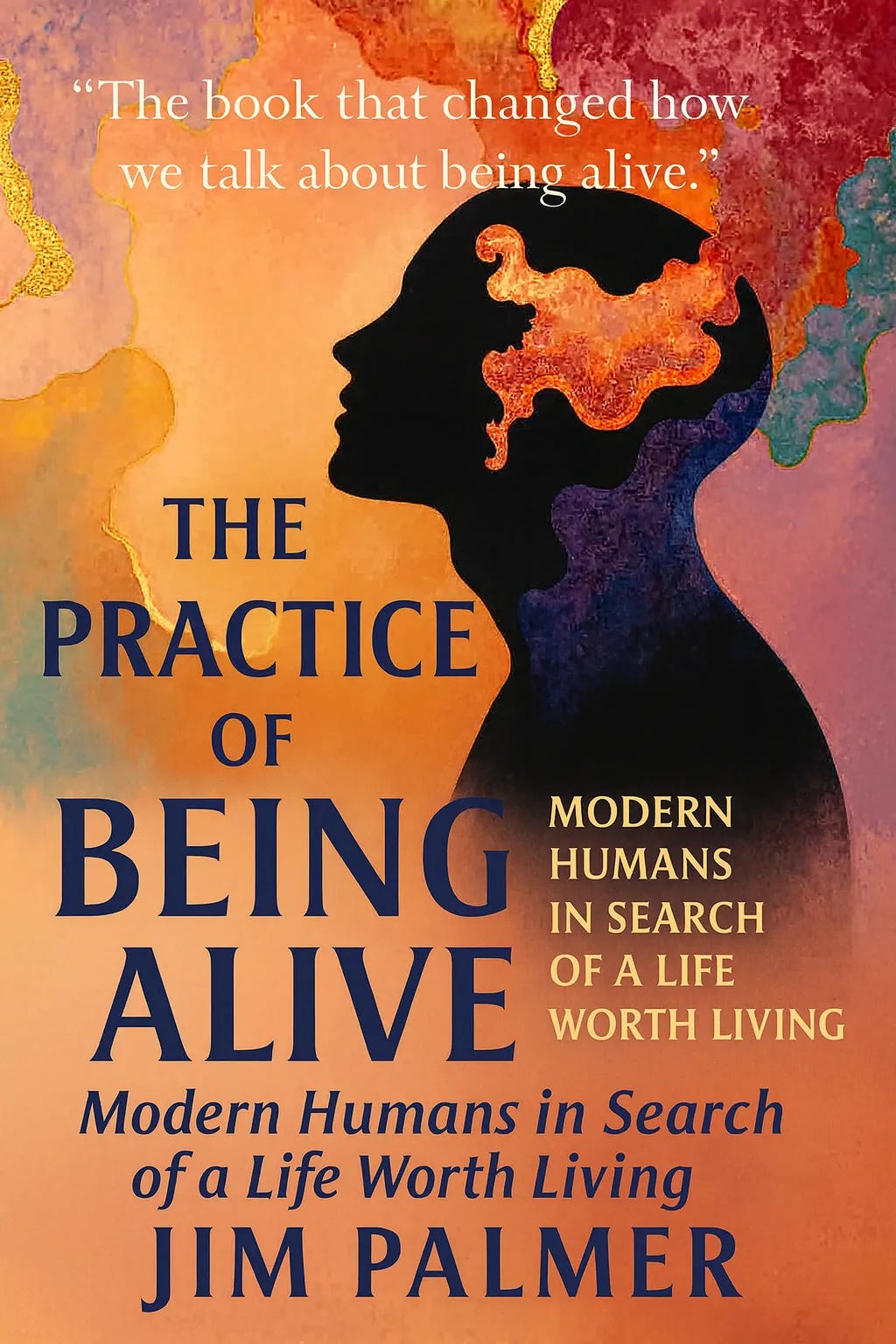
Much of modern life now unfolds beneath conditions of fragmentation, acceleration, uncertainty, loneliness, performative identity, institutional distrust, existential exhaustion, and the collapse of inherited meaning structures. Human beings are increasingly expected to construct coherent lives without stable cultural frameworks capable of organizing identity, belonging, morality, spirituality, or existential orientation on their behalf. Earlier sections of this collection explored many dimensions of that destabilization: deconstruction, relational rupture, technological fragmentation, identity formation, spirituality after religion, and the psychological consequences of modern existence itself.
But diagnosis alone is not enough.
Eventually every human being arrives at a more intimate question: how do we actually live now? How do we remain psychologically coherent without collapsing into ideology, cynicism, nihilism, distraction, or compulsive certainty-seeking? How do we recover embodiment, presence, meaning, tenderness, courage, self-trust, and existential grounding after inherited structures no longer hold?
I am currently writing a new book, The Practice of Being Alive: Modern Humans in Search of Ground in a Nihilistic Age. It explores what it means to live with clarity, agency, and depth in an age where inherited sources of meaning have lost their authority but nothing stable has replaced them. Rather than presenting a finished product, I am publishing chapters here as working drafts, inviting readers to engage the material as it is being shaped. This is not early access for passive consumption. It is an invitation into the process itself. The reflections, questions, tensions, and friction points that emerge through dialogue are part of how the work sharpens and evolves.
The writings in this section move away from abstract systems and toward lived existence itself: grief, mortality, love, embodiment, attention, suffering, connection, responsibility, wonder, and the daily practice of becoming fully human in a fractured world. If existential health is to become more than an intellectual framework, it must eventually become lived practice. This section is where that practice begins taking form.
📄 Something Is Not Right (Preface)
📄 The Day You Didn’t Live (Introduction)
📄 The Landscape of Our Time: The Loss of Ground (Chapter One)
📄 Before You Try to Fix It (Chapter Two)
📄 Living a Few Inches Outside Yourself (Chapter Three)
📄 Relational Ground (Chapter Four)
⭐ I currently post a new chapter every two weeks.
The Center for Non-Religious Spirituality
This work eventually expanded beyond writing alone.
As more people began wrestling with questions involving meaning, identity, spirituality after religion, existential health, self-trust, belonging, psychological fragmentation, and the search for coherence within modern life, it became clear that many individuals were facing these struggles in isolation.
The Center for Non-Religious Spirituality emerged as an ongoing space for existential inquiry, dialogue, reflection, practice, and relational exploration beyond institutional religion and rigid ideological systems. It is not organized around dogma, supernatural certainty, or imposed belief. It is a community for people seeking psychologically honest, intellectually grounded, and spiritually meaningful ways of being human within a changing world.
Inside the Center, members engage live dialogues, workshops, existential health practices, discussion spaces, reading groups, and conversations exploring meaning, mortality, selfhood, belonging, embodiment, spirituality after religion, and the practice of being alive itself.
For readers who wish to continue exploring these questions relationally rather than alone, the Center functions as an ongoing extension of the inquiry explored throughout this reader. Paid subscribers receive a complimentary membership to CNRS.
Where to Begin
This reader explores many dimensions of the contemporary human condition: meaning, identity, fragmentation, spirituality after religion, mortality, loneliness, selfhood, psychological coherence, existential health, and the search for ground within a rapidly changing world. While the essays are organized thematically, you do not need to move through them rigidly or sequentially. Existential inquiry is not linear because human life is not linear. Different sections will resonate differently depending upon where you currently find yourself.
If you are navigating religious deconstruction, loss of inherited certainty, or the collapse of traditional belief systems, begin with SECTION I: The Collapse of Inherited Meaning and SECTION V: Spirituality After Religion. These writings explore the psychological consequences of losing inherited frameworks while examining what spirituality, meaning, and existential orientation might become afterward.
If you are struggling with loneliness, relational rupture, digital alienation, ideological exhaustion, or the difficulty of remaining psychologically grounded within fragmented modern culture, begin with SECTION III: Belonging, Loneliness, and Fragmentation. These essays explore the relational dimensions of existential health and the growing crisis of human disconnection.
If questions surrounding identity, selfhood, gender, autonomy, authority, conditioning, or psychological freedom feel most alive for you right now, begin with SECTION IV: Selfhood, Authority, and Psychological Freedom. These writings examine how human beings are shaped by inherited systems while exploring the difficult process of becoming more conscious participants in one’s own life.
If you are wrestling more directly with mortality, meaning, suffering, existential anxiety, embodiment, or the deeper conditions of being human, begin with SECTION II: Existential Health and the Human Condition. These essays focus on the psychological, existential, and relational dimensions of remaining fully alive within finite human existence.
If you are less interested in diagnosis and more interested in reconstruction, grounding, embodiment, relational presence, and the practical work of learning how to live consciously within modern conditions, begin with SECTION VI: The Practice of Being Alive. These writings move toward lived existential practice and the ongoing question of what it means to remain fully human within a fragmented age.
You do not need to read this guide perfectly or completely. Some essays may feel immediately clarifying while others may create resistance, tension, uncertainty, or discomfort. All of those responses are part of the inquiry. Begin where your life currently feels most alive, fractured, unresolved, honest, or demanding of attention. The goal is not mastery of concepts. It is deeper contact with existence itself.
Closing Reflection
Modern life often trains human beings to become distracted from themselves, disconnected from one another, psychologically fragmented, spiritually exhausted, and existentially disoriented beneath endless stimulation, performance, and acceleration.
But beneath all the instability explored throughout these writings remains something stubbornly human: the longing for coherence, meaning, truthfulness, belonging, aliveness, and genuine contact with reality.
Perhaps existential health begins there.
Not in perfection.
Not in certainty.
Not in possessing final answers.
But in the willingness to remain present to existence honestly enough that a more grounded way of being human can gradually emerge.
The work is unfinished.
The inquiry remains open.
The practice continues.
Thank You!
Thank you for reading, reflecting, questioning, supporting, and engaging this work over the course of these 400 articles. Much of what has emerged throughout these writings has been shaped not only through solitary reflection, but through years of dialogue with readers navigating their own human experiences, and the search for existential ground within modern life. Your engagement has helped sharpen the inquiry, deepen the language, and expand the work far beyond what I initially imagined when I published the first article.
If this reader has resonated with you, challenged you, clarified experience, or helped you feel less alone within the complexities of being human, I invite you to consider becoming a paid subscriber ($50 annually). Paid subscriptions support the continuing development of this writing, new essays and book chapters, live dialogues and workshops, and the broader work of the Center for Non-Religious Spirituality. Paid subscribers also receive complimentary access to the Center, including discussion spaces, workshops, existential health resources, and the ongoing development of The Practice of Being Alive.
More than anything, thank you for continuing to engage these questions seriously and honestly. In a culture increasingly shaped by distraction, fragmentation, performance, and acceleration, the willingness to remain thoughtful, psychologically awake, relationally present, and existentially engaged is itself a meaningful act of resistance. The inquiry continues. The work remains unfinished. And I am deeply grateful to everyone walking this path alongside me.