

The Creature Civilization Forgot
Why Modern Life No Longer Fits the Human Animal

We Have Forgotten What Kind of Creature We Are
One of the most remarkable achievements of modern civilization is how thoroughly we have learned to think about ourselves while gradually forgetting what we are.
We possess an astonishing vocabulary for describing human beings. We speak of personality, identity, consciousness, beliefs, values, trauma, attachment, culture, politics, economics, mental health, spirituality, ideology, and countless other dimensions of human existence. Entire academic disciplines have emerged to study particular aspects of our lives with extraordinary sophistication. We have become increasingly skilled at describing how people think, what they believe, how societies function, how brains process information, and how cultures shape identity. In many respects, no civilization has ever understood so much about the human condition.
Yet beneath this expanding knowledge lies a curious absence.
The more precisely we describe the different dimensions of being human, the less often we ask a question that seems almost embarrassingly simple.
What kind of creature is a human being?
At first glance, the question appears too obvious to deserve serious attention. We already know the answer, or so it seems. Human beings belong to the animal kingdom. We are primates. We are mammals. Biology settled those questions long ago. Why return to them now?
Knowing a fact is not the same as allowing that fact to organize our understanding.
Modern thought has largely treated our mammalian inheritance as background information rather than foundational knowledge. We readily acknowledge that human beings evolved, yet we often think about ourselves as though evolution were simply the opening chapter of our story rather than the living reality within which every subsequent chapter continues to unfold.
We become fascinated by consciousness while forgetting the organism that became conscious. We debate morality while overlooking the social creature through whom morality emerged. We analyze culture, politics, economics, religion, and identity while paying surprisingly little attention to the biological inheritance that quietly shapes how all of those realities are experienced.
This fragmentation is understandable. Knowledge has advanced largely through specialization. Biology studies living organisms. Neuroscience studies the brain. Psychology studies the mind. Anthropology studies culture. Sociology studies social systems. Philosophy studies meaning. Theology studies the sacred.
Each discipline illuminates an important dimension of reality, yet none of us experiences life in fragments. Human beings do not first exist biologically, then psychologically, then socially, then spiritually. We live every moment as an indivisible whole in which body, mind, relationship, culture, imagination, and meaning continually shape one another.
The consequence is subtle but profound. We have become extraordinarily sophisticated at understanding the worlds human beings create while becoming less attentive to the creature who must actually inhabit those worlds. We ask what kind of education produces successful citizens, what kind of economy creates prosperity, what kind of politics sustains democracy, what kind of technology improves productivity, and what kind of psychology promotes well-being. Far less often do we ask whether these worlds have been designed with an adequate understanding of the organism expected to live within them.
This matters because human beings are not infinitely adaptable. We are remarkably flexible, but we are not infinitely malleable. Every species carries with it a particular history, a particular nervous system, a particular pattern of development, and particular conditions under which it tends to flourish. We recognize this instinctively when we think about other forms of life. We understand that wolves, elephants, whales, and oak trees cannot be understood apart from the ecological realities that shaped them. Somehow, when we turn our attention to ourselves, we often imagine that civilization has liberated us from asking the same question.
Every creature comes into the world shaped by a particular relationship with its environment. Not simply a physical environment, but one that supports the forms of development through which that creature is able to flourish.
It has not.
Everything we have become remains rooted in something much older than civilization itself.
Long before we built cities, established religions, wrote constitutions, developed markets, composed symphonies, or debated philosophy, evolution had already spent millions of years shaping a remarkably particular kind of organism. Attachment came first. Play came first. Cooperation long preceded government. Grief existed before theology, and belonging before we possessed the language to wonder what belonging meant.
None of these realities disappeared when human culture emerged. They became the living foundation upon which culture was built.
The deepest questions of philosophy are still asked by mammals. The most profound experiences of spirituality are still lived through mammalian nervous systems. Art, science, morality, politics, and the search for meaning all continue to unfold within the life of the same remarkable creature that first emerged through the long evolutionary history of mammalian life.
This observation may prove more consequential than it first appears. If we misunderstand what kind of creature we are, we are likely to misunderstand what human flourishing requires. We may become increasingly successful at redesigning the world while gradually creating environments that ask human beings to live against, rather than with, the organism they remain.
Before we ask how to educate human beings, heal them, govern them, inspire them, or help them flourish, another question quietly waits beneath them all.
What kind of creature are we?
The answer is simpler than its implications.
Before we were philosophers, we were mammals.
Civilization Outran Evolution

One of the defining characteristics of our species is our extraordinary capacity to reshape the environments in which we live. No other mammal has transformed the planet as rapidly or as extensively as human beings. We have redirected rivers, cultivated crops, built cities, established legal systems, harnessed electricity, decoded DNA, and created digital networks connecting billions of people across continents. Civilization is, in many respects, the story of our growing ability to redesign the conditions under which human life unfolds.
Evolution operates according to a profoundly different rhythm.
The characteristics that define mammals emerged gradually across millions of years. Nervous systems, attachment, cooperation, and the developmental capacities that shape human experience today were refined through countless generations adapting to changing environments. From the perspective of evolutionary history, civilization is astonishingly recent.
This difference in timescale may be one of the least appreciated realities of life today.
The organism reading these words is, in every biologically meaningful sense, almost indistinguishable from the one that lived in small, interdependent communities for most of human history. Its nervous system still expects safety to be communicated through relationship. Its capacity for attention remains limited. It still responds to belonging and exclusion, cooperation and conflict, novelty and uncertainty in ways shaped long before skyscrapers, stock markets, smartphones, or artificial intelligence existed. Our technologies have changed dramatically. The organism experiencing them has changed remarkably little.
This is not an argument against civilization or progress. Human creativity is itself an expression of evolution. Our ability to transform environments is one of the most extraordinary developments in the history of life.
The difficulty is not that we changed the world. It is that the world began changing far more quickly than the organism itself could adapt.
Agriculture gave rise to permanent settlements. Cities reorganized social life. Industrialization transformed labor. Digital technologies reshaped attention and communication. Artificial intelligence now promises to alter cognition itself. Each advance expanded what civilization could do while placing an ancient organism inside increasingly unfamiliar conditions.
This explains why so many defining struggles of life today resist simple explanations. Anxiety, loneliness, burnout, chronic distraction, polarization, alienation, and the persistent feeling that something is fundamentally out of rhythm are often treated as isolated psychological problems or personal failures. Better habits, stronger resilience, improved therapies, and greater discipline all have their place. Yet they rarely begin by asking whether some forms of suffering arise because the relationship between organism and environment has gradually become misaligned.
When a fish struggles on dry land, we do not conclude that the fish lacks resilience. When a tropical tree fails to flourish in arctic conditions, we do not accuse it of insufficient discipline. We understand instinctively that flourishing depends upon the relationship between an organism and its environment. Only when the organism is human do we so quickly assume that every difficulty must originate within the individual rather than asking whether something about the surrounding world has quietly drifted out of alignment with the creature inhabiting it.
This shift changes the questions we ask. Instead of beginning with what is wrong with people, we begin with what kind of organism people are. Instead of assuming that flourishing depends primarily upon optimizing individuals, we become curious about the conditions under which mammalian life has historically developed its greatest capacities.
Today’s civilization has become extraordinarily successful at redesigning environments. We redesign schools, workplaces, economies, political systems, communication technologies, healthcare, transportation, and increasingly even human biology itself. Yet all of these innovations rest upon an assumption that often remains invisible: that we understand the creature for whom they are being designed.
That assumption deserves far more scrutiny than it has received.
For if civilization continues advancing while our understanding of the human organism remains fragmented, we risk becoming increasingly capable of building worlds that are technologically brilliant yet developmentally impoverished. We may solve problems of efficiency while unintentionally creating problems of belonging, expand our capabilities while diminishing our capacity, and become ever more successful at engineering our environments while quietly losing sight of the conditions under which the organism itself is able to flourish.
If the first task is remembering what kind of creature we are, the second is understanding how that creature came to be. For the answer does not begin with reason, culture, or civilization.
It begins with relationship.
Relationship Comes First
If there is one defining characteristic of mammalian life, it is not intelligence, strength, or even sociality. It is prolonged dependence. Mammals enter the world requiring care. They survive because they are protected, nourished, warmed, and held within relationships long before they are capable of surviving on their own. Life begins not with autonomy but with attachment. Independence is not the starting point of mammalian existence. It is one of its later achievements.
Human beings carry this pattern further than almost any other species. Compared with most mammals, we are born astonishingly unfinished. A foal stands within hours. Many mammals quickly acquire the capacities necessary for movement and basic survival. Human infants cannot feed themselves, regulate their emotions, interpret their surroundings, or protect themselves. Years pass before physical independence becomes possible, and decades before many of the capacities associated with mature adulthood fully emerge. Evolution did not solve this challenge by producing more self-sufficient infants. It solved it by producing adults capable of extraordinary caregiving and communities capable of sustaining prolonged development.
This simple biological reality has consequences that extend far beyond infancy. It tells us something fundamental about the kind of creature we are.
Relationship is not an optional addition to an otherwise complete individual. It is one of the primary conditions through which the individual comes into existence.
Before we possess beliefs, values, identities, ambitions, or worldviews, we are already being shaped by presence, touch, attention, rhythm, safety, and care.
Adulthood can easily create the illusion that we have always been autonomous. We remember ourselves making choices, forming opinions, building careers, and pursuing goals, while forgetting that every one of those capacities emerged within a developmental process that began in complete dependence upon others. The independent adult is not the opposite of the dependent infant. It is what successful dependence gradually makes possible.
This challenges one of the most persistent assumptions of modern culture. We often imagine maturity as a movement away from dependence and toward self-sufficiency. Evolution tells a different story. Mammalian development does not move from relationship to independence so much as from one form of relationship to another. Healthy development certainly increases agency, responsibility, discernment, and self-authorship, but these capacities emerge through relationship rather than in opposition to it. Belonging does not compete with individuality. It creates the conditions from which genuine individuality can emerge.
Seen from this perspective, belonging ceases to be merely a social preference or emotional comfort. It becomes a biological expectation. Mammalian nervous systems evolved within environments where survival depended upon enduring relationships. Isolation was not simply unpleasant. It often carried existential consequences. To belong was to survive. To be abandoned was to become profoundly vulnerable. Although civilization has transformed the conditions of human life, it has not erased the organism that still carries this evolutionary inheritance.
This explains why loneliness has become one of the defining concerns of modern societies. It is tempting to treat loneliness simply as an emotional experience or a psychological state. Yet its significance runs much deeper. Loneliness is not merely the feeling of being alone. It is the experience of a relational organism existing without the kinds of connection it evolved expecting. The pain of loneliness is not evidence that people have become emotionally fragile. It is evidence that mammalian life continues to depend upon forms of relationship that no amount of technological sophistication has replaced.
This realization also casts many forms of human suffering in a different light. The person who fears rejection, clings desperately to unhealthy relationships, withdraws from intimacy, or constantly seeks approval is often judged through moral or psychological categories alone. Certainly these patterns can become destructive, and each of us bears responsibility for how we respond to them.
Yet beneath the behavior may lie something older than personality. There may be an organism attempting, however imperfectly, to secure one of the deepest conditions of its own development. Recognizing this does not eliminate responsibility. It changes the spirit in which responsibility is understood. Judgment gives way to curiosity. Condemnation gives way to compassion.
The implications extend beyond psychology into philosophy itself. Much of Western thought has imagined the individual as primary, with relationships forming later through choice, contract, or shared interest. The mammalian story suggests the opposite. Relationship comes first. The self gradually emerges from within it.
That distinction may seem subtle, but it changes almost everything. It changes how we think about childhood, education, family, community, leadership, spirituality, and even freedom itself.
Understanding this is the first step toward understanding ourselves. But relationship does more than shape who we become. It shapes how we experience reality itself. Before the conscious mind begins constructing explanations about the world, something older has already begun learning whether the world is safe, dangerous, welcoming, or unpredictable.
The organism learns the world before the mind does.
The Organism Learns First
One of the most enduring assumptions of Western civilization is that human beings are primarily rational creatures. We imagine ourselves perceiving the world, carefully evaluating what we perceive, and then deciding how to respond. Reason occupies the center of the story, while the body serves largely as its vehicle. This picture has shaped philosophy, education, economics, and much of modern psychology. It is not entirely wrong. Human beings possess extraordinary capacities for reflection, deliberation, and self-awareness. Yet it begins the story much too late.
Long before conscious thought begins interpreting experience, the organism has already begun responding to it. Every moment, beneath awareness, the nervous system is making assessments older than language itself. Is this safe? Is it dangerous? Can I relax? Must I remain vigilant? Am I alone? Can I trust the people around me?
These are not philosophical questions. They are biological ones. They arise from an organism whose survival depended, for millions of years, upon recognizing opportunity and threat long before deliberate reasoning could intervene.
This means human beings do not first experience reality and then react to it. We experience reality through an organism that is already reacting. Perception is never completely neutral. The condition of the organism shapes what becomes visible. A nervous system organized around safety notices possibilities that a chronically vigilant nervous system cannot easily perceive. A person whose early relationships cultivated trust inhabits a different world than someone whose development required continual self-protection. The external environment may be identical. The lived experience of that environment can be profoundly different.
This explains why disagreement between people is often more complicated than conflicting ideas. We tend to assume that people reach different conclusions because they possess different information or different beliefs. Sometimes they do. But beneath those beliefs often lies something more fundamental. People are not only thinking differently. They are perceiving differently. The organism through which experience is filtered has already organized the world before conscious reflection begins constructing explanations.
This is one reason intellectual change rarely produces immediate personal transformation. We often imagine that adopting a better philosophy, a more accurate worldview, or healthier beliefs should quickly change our experience. Sometimes it does. More often it does not. A person may sincerely believe they are worthy of love while still anticipating rejection in every relationship. Someone may leave a religious worldview while continuing to experience fear or guilt long after those beliefs have changed.
Ideas can change in an afternoon. Organisms usually change through repeated experience.
Anyone who has accompanied people through trauma or religious deconstruction has witnessed this distinction. The most disorienting part of transformation is often not changing one’s mind. It is discovering that the organism continues living according to realities the intellect has already abandoned. The body often remains faithful to lessons that consciousness has already revised.
Seen this way, many forms of human suffering begin to appear less mysterious. We frequently criticize ourselves for reacting in ways that seem irrational, as though greater intelligence should immediately produce greater freedom. Yet the organism is not malfunctioning simply because it changes more slowly than our ideas. It is doing precisely what evolution shaped it to do.
Organisms learn through repeated encounters with reality. They become organized around patterns that once increased the likelihood of survival. When circumstances change, those patterns often persist long after they have ceased to serve us.
Recognizing this changes the meaning of growth. Development becomes something more than acquiring new information or constructing more sophisticated explanations. It becomes the gradual reorganization of the organism itself. The deepest forms of transformation occur when repeated experiences allow the nervous system to inhabit reality differently.
Trust becomes possible not simply because we conclude that people are trustworthy, but because the organism gradually discovers that it no longer needs to organize itself around constant protection. Courage emerges not because fear disappears, but because the organism becomes capable of remaining present in situations that once overwhelmed it.
This may also explain why every enduring wisdom tradition has emphasized practices alongside ideas. Human beings have always gathered around shared meals, rituals, music, silence, pilgrimage, storytelling, contemplative disciplines, and communal acts of care.
Whatever their theological or philosophical differences, these traditions seem to recognize a common truth. Human beings are not transformed by information alone. They are transformed by ways of living that gradually reshape the organism through repeated participation. Wisdom becomes embodied before it becomes stable.
Existential health must therefore concern itself with far more than beliefs, identities, or narratives. It asks whether the organism has developed the capacity to remain in honest relationship with reality without becoming overwhelmed by it. Can we tolerate uncertainty without immediately grasping for false certainty? Can we remain open when our assumptions begin to unravel? Can we grieve deeply without losing our capacity to love?
These are not simply intellectual achievements. They are developmental capacities that emerge as the organism itself becomes more capable of inhabiting reality.
The modern world has given us unprecedented access to information. It has not necessarily given us a deeper relationship with the organism through which every experience of being human is lived. Perhaps one of the defining tasks of our time is learning to see ourselves as whole creatures once again, recognizing that thought and biology, consciousness and embodiment, reason and relationship are not competing realities but different expressions of the same living life.
Yet organisms that experience sufficient safety do more than regulate themselves. They begin to explore. Curiosity awakens. Experimentation becomes possible. The energy once devoted primarily to survival becomes available for something evolution has always valued just as highly: development.
Play is the engine of development.
Play Drives Development
When most adults think about play, they think about leisure. Play belongs to childhood, recreation, or whatever time remains after the serious work of life has been completed. It is treated as a pleasant diversion, a reward for productivity, or an escape from responsibility. As children mature, play is gradually expected to give way to work, discipline, and usefulness. Adulthood is often defined by how successfully we leave play behind.
Evolution tells a remarkably different story.
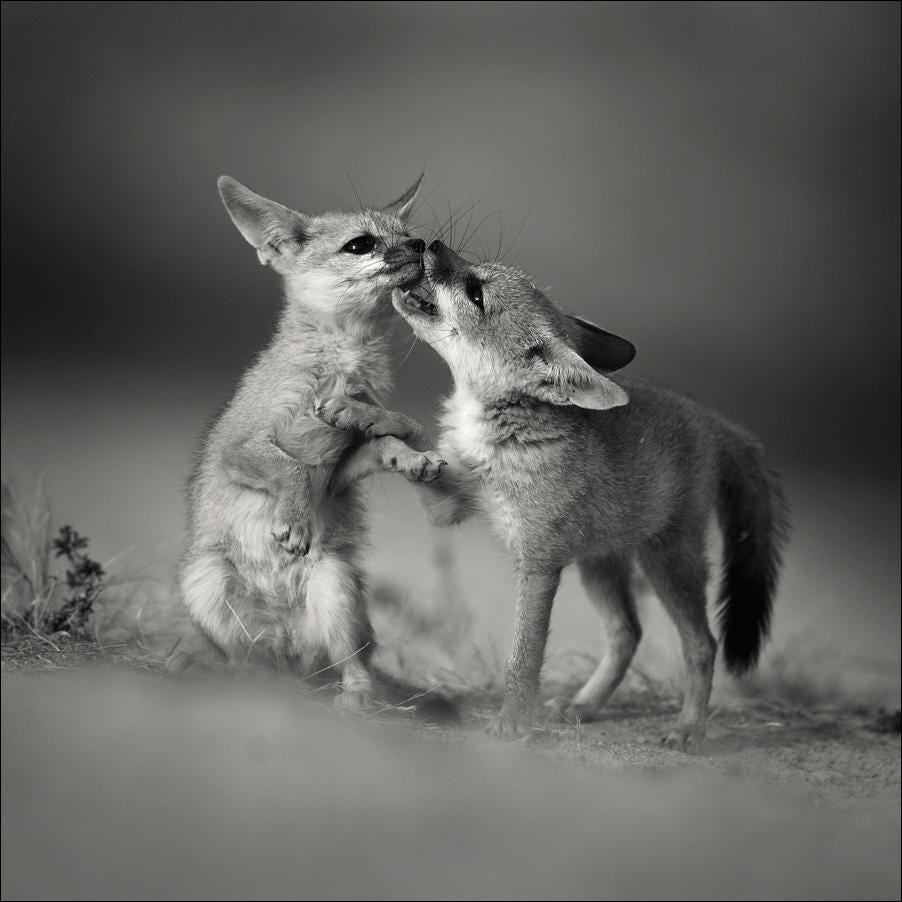
Across the mammalian world, play appears wherever prolonged development matters. Young wolves wrestle. Dolphins invent games. Ravens slide repeatedly down snow-covered roofs for no apparent reason. Primates chase, imitate, tease, explore, and experiment with one another in ways that seem strikingly inefficient. From the perspective of immediate survival, much of this behavior appears wasteful. It consumes energy. It creates risk. It produces no obvious material benefit. Yet evolution has preserved it across countless species because play accomplishes something direct instruction cannot.
Play is the laboratory of adaptation.
Within play, organisms explore possibilities before those possibilities become matters of survival. They discover the limits of their bodies, experiment with cooperation and competition, learn to read social cues, recover from mistakes, and develop the flexibility required to navigate an unpredictable world. Nothing important is being produced in the conventional sense. Something more important is being cultivated. The organism itself is becoming more capable.
Watch young children on a playground. They invent rules, abandon them, negotiate disagreements, imagine impossible worlds, fall down, recover, and begin again. Very little of what matters there would fit comfortably onto a standardized assessment, yet almost everything happening is development.
This reveals another characteristic of mammalian life. Development occurs not primarily through optimization but through exploration. Organisms become increasingly capable by venturing beyond what they already know. Curiosity is not an accidental feature of life. It is one of evolution’s oldest developmental strategies.
This also explains why play almost always disappears under conditions of chronic threat. A frightened organism narrows its attention. Curiosity gives way to vigilance. Imagination contracts. Exploration becomes a luxury that survival can no longer afford. The central question changes from What else is possible? to What must I do to remain safe? When danger dominates experience, development slows because the organism can no longer invest energy in experimentation.
This observation reaches far beyond childhood.
Adults do not outgrow the need for play because they have finished developing. They often stop developing because they lose the capacity to play. Here, play does not simply mean games or entertainment. It names a broader orientation toward reality characterized by curiosity, experimentation, imagination, and the willingness to encounter the unknown without demanding immediate certainty. It is the posture that allows people to revise assumptions, explore unfamiliar possibilities, and participate creatively in a world that continually exceeds their expectations.
This sheds light upon why certainty becomes so attractive during periods of rapid cultural change. When environments become increasingly complex, many people instinctively seek systems that eliminate ambiguity. Political ideologies, rigid religious frameworks, simplified cultural narratives, and absolute identities promise relief from the discomfort of not knowing. Yet development has always required the capacity to remain open longer than certainty feels comfortable. Play, in its deepest sense, is the organism’s willingness to inhabit possibility before conclusions have fully formed.
This insight reaches to the heart of existential health. One of the defining characteristics of maturity is not possessing all the answers but developing the capacity to remain genuinely curious in the presence of questions that cannot yet be resolved. Such openness is not indecision. It is developmental confidence. It reflects an organism secure enough to continue learning rather than prematurely closing itself against reality.
There is another reason play deserves far more attention than it typically receives. Human beings possess symbolic capacities unlike any other species. We imagine worlds that do not yet exist. We compose music, write novels, formulate scientific theories, establish systems of law, invent economic models, create religious traditions, and envision futures radically different from the present. These achievements may seem far removed from the playful behavior of young mammals. In reality, they emerge from the same developmental impulse.
The imagination that eventually produced philosophy, mathematics, democracy, literature, and science did not appear from nowhere. It grew from an organism that first learned to explore possibilities before they became realities. Long before human beings asked what life means, mammalian life was already practicing the developmental posture that would eventually make such questions possible.
The history of civilization therefore begins much earlier than civilization itself. Before human beings learned to build symbolic worlds, evolution had already cultivated organisms capable of exploring worlds that did not yet exist. Play prepared the ground upon which imagination would eventually flourish.
That insight brings us to another ancient feature of mammalian life that human civilization did not invent but profoundly transformed. Mammals do not simply seek attachment and development. They also live within social worlds where recognition, influence, cooperation, and status shape the experience of belonging itself.
Mammals Who Belong
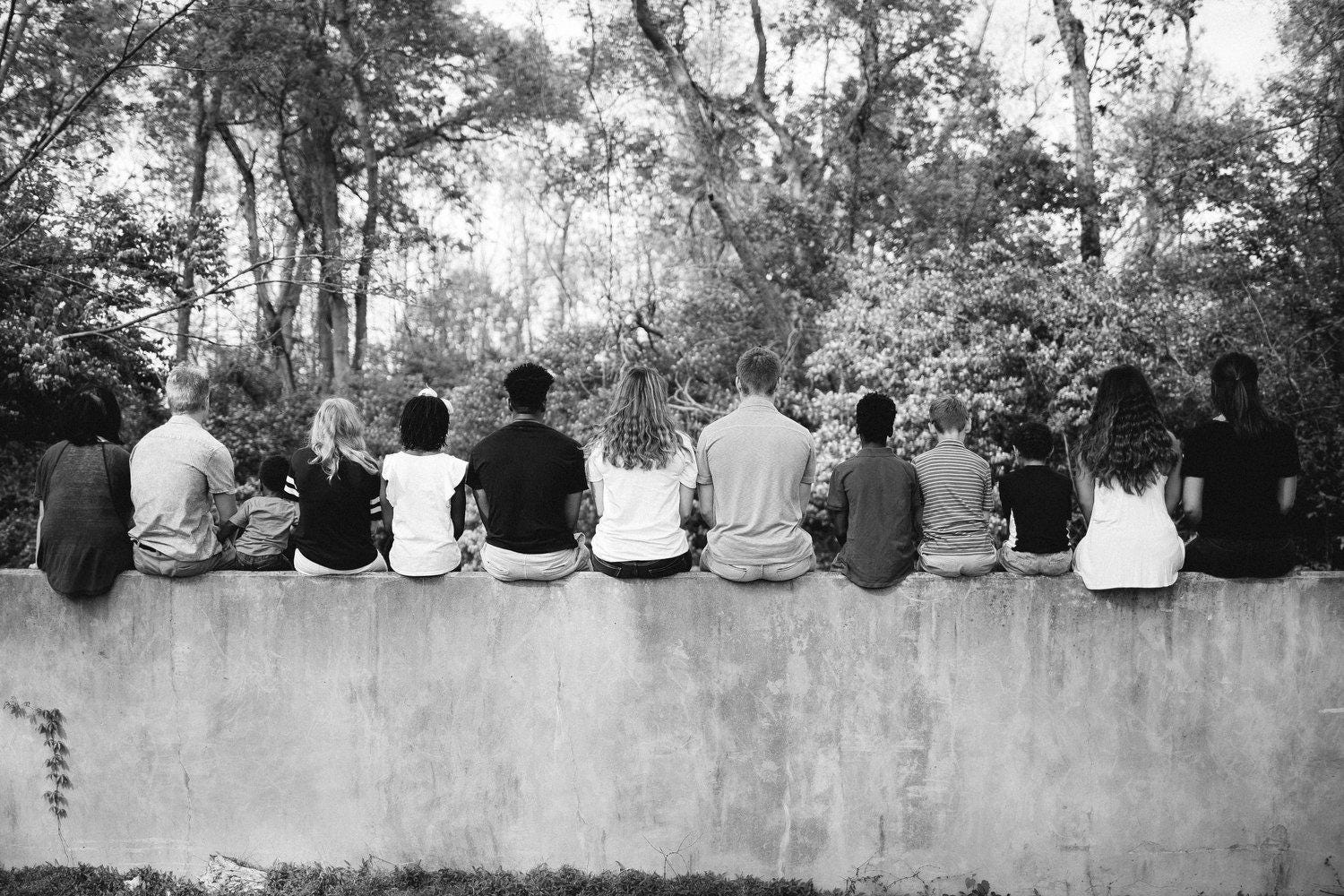
If attachment teaches us that mammals are built for relationship and play teaches us that development depends upon exploration, another aspect of our inheritance is often more difficult to acknowledge. Mammals do not simply seek connection. They also navigate status. Every social species must continually negotiate questions of influence, cooperation, competition, and belonging within the group. Access to resources, protection, mates, and opportunity has always been shaped, at least in part, by an individual’s place within the social life of the community.
Long before human beings invented politics, prestige, or professional success, mammals were already learning how to live within social hierarchies.
This inheritance remains surprisingly visible in human life, although civilization has transformed it almost beyond recognition. We are exquisitely sensitive to approval and rejection. Respect and humiliation affect us with remarkable intensity. Praise can alter our confidence, while exclusion can wound us more deeply than physical discomfort. We often imagine these responses to be products of culture alone, yet their roots extend much further back.
For most of evolutionary history, losing one’s place within the group was not simply embarrassing. It could become life-threatening. The organism therefore evolved to monitor social standing with extraordinary care because belonging was inseparable from survival.
Understanding this changes how we interpret many of the emotions that shape contemporary life. Shame, envy, pride, admiration, embarrassment, and the longing for recognition are not merely psychological experiences. They are also biological signals arising from an organism continually asking an ancient question:
Where do I stand in relation to those around me?
The nervous system is not merely tracking physical safety. It is also tracking social safety.
Human beings, however, did something no other mammal has done. We surrounded these ancient instincts with symbolic worlds of astonishing complexity.
Among other mammals, status is expressed through relatively direct realities: physical strength, age, reproductive success, alliances, or access to resources. Human beings retained these sensitivities while embedding them within systems of meaning that exist almost entirely through shared imagination. Wealth, educational credentials, professional titles, religious authority, political influence, social media followers, celebrity, reputation, moral virtue, and cultural prestige all become forms of symbolic status. They matter because human beings collectively agree that they matter.
The result is that our ancient mammalian inheritance now operates inside symbolic environments that evolution never anticipated.
A wolf does not compare itself with every wolf that has ever lived. An elephant does not spend its days measuring its worth against distant herds. Human beings, by contrast, can compare themselves with millions of strangers before breakfast. Through digital technologies, we inhabit environments saturated with carefully curated representations of success, beauty, influence, intelligence, and achievement. Ancient organisms evolved for life within relatively small communities now find themselves evaluating their standing against entire civilizations.
Consider an ordinary morning. Before leaving home, many people have already compared themselves with former classmates on LinkedIn, strangers on Instagram, colleagues through email, and headlines celebrating someone else’s success. No previous mammal ever awakened inside a social environment this vast.
It is hardly surprising that anxiety flourishes under such conditions.
The problem is not that status suddenly became important. Status has always mattered. The problem is that symbolic culture has dramatically expanded the number of ways people can experience themselves as falling behind. Success becomes endlessly redefinable because there is always another comparison available. Recognition becomes increasingly unstable because the standards themselves continually shift. An organism designed to monitor a few dozen meaningful relationships now finds itself immersed in a global marketplace of symbolic comparison from which there is no natural point of completion.
This reveals why machievement so often fails to produce lasting satisfaction. We frequently pursue recognition believing it will finally resolve the organism’s ancient longing for secure belonging.
Recognition and belonging are not the same thing, though modern civilization often treats them as interchangeable. Recognition can be granted by strangers. It elevates status, attracts attention, and rewards performance. Belonging, by contrast, emerges through relationship. It is the experience of being known rather than merely noticed. Recognition must continually be earned, defended, and renewed. Belonging creates a place where the organism can finally stop performing and rest. One offers visibility. The other offers home. The confusion between these two realities helps explain why so many people feel increasingly recognized while simultaneously feeling less connected than ever before.
We celebrate visibility while neglecting intimacy. We reward influence while overlooking trust. We admire success while paying comparatively little attention to the quality of the relationships within which success is pursued. As a result, many people become increasingly accomplished while remaining profoundly uncertain that they are genuinely known. The organism receives admiration while continuing to hunger for attachment.
This distinction reaches beyond individual psychology. Every society must organize leadership, responsibility, cooperation, and expertise. The more important question is not whether hierarchies exist, but what vision of the human person they quietly reward. That question belongs not only to psychology or evolutionary biology but to civilization itself.
We will return to it shortly.
For beneath every hierarchy, every ambition, and every struggle for recognition remains an organism whose deepest need has never been prestige but secure relationship. Status shapes our place within a community. It cannot replace the attachment through which mammalian life first learns what it means to belong.
This is why the most enduring forms of human fulfillment rarely arrive through admiration alone. They emerge through love, friendship, family, shared purpose, and communities in which people are valued for more than their position within a hierarchy. These relationships satisfy something status never can because they answer a need older than civilization itself.
And they also reveal something else.
To become a creature capable of profound attachment is also to become a creature vulnerable to profound loss.
Love Makes Grief Possible

If attachment is one of the defining characteristics of mammalian life, then grief is one of its inevitable consequences.
This should not surprise us, although modern culture often treats grief as though it were an unfortunate interruption to an otherwise healthy life. We speak of moving on, finding closure, getting back to normal, or returning to the person we were before loss entered our lives. Beneath much of this language lies an unspoken assumption that grief is fundamentally a problem to solve rather than a reality to inhabit. We assume that successful mourning gradually means leaving grief behind.
The mammalian story suggests something different.
Increasingly, ethologists have documented forms of mourning across the mammalian world. Elephants linger beside the bones of their dead. Orcas have carried deceased calves for days or even weeks. Chimpanzees alter their social behavior following the death of members of their group. Wolves search for missing pack members. While caution is always necessary when interpreting animal behavior, one conclusion has become increasingly difficult to avoid. Wherever deep attachment exists, profound loss follows.
From an evolutionary perspective, this is exactly what we should expect.
The same organism that develops through prolonged attachment cannot remain unchanged when those attachments disappear. Evolution did not create one system for love and another for grief. It created one system for relationship. Grief is not evidence that something has malfunctioned. It is evidence that the relationship mattered. The capacity for attachment and the capacity for grief are not separate achievements. They are different expressions of the same biological inheritance.
Human beings inherit this mammalian reality, but they also transform it in ways unlike any other species.
We do not simply lose those we love. We remember them. We imagine conversations that will never occur. We revisit places infused with shared meaning. We anticipate futures that will never unfold. We preserve photographs, compose music, establish memorials, tell stories, create rituals, and construct entire religious traditions around the persistence of love in the face of death. Symbolic consciousness does not replace grief. It gives grief new languages through which it continues shaping our lives.
This is one reason grief cannot be understood merely as an emotion. It is also a reorganization of reality.
Every enduring relationship gradually becomes woven into the architecture of our existence. It shapes our routines, our identity, our expectations, our sense of safety, our imagination of the future, and even our understanding of ourselves. No one exists in isolation. We become different people because particular people exist in our lives. When they disappear, it is not only the relationship that changes. The world itself changes.
The grieving person is therefore not simply adapting to absence. They are learning how to inhabit an altered reality.
This is why grief so often refuses to obey the timelines today’s culture prefers. It returns unexpectedly through familiar songs, ordinary places, shared jokes, anniversaries, and seemingly insignificant moments. It does not behave like a problem waiting to be solved because it is not solving anything. It is participating in the slow work of integrating a reality that the organism never wished to encounter.
Our discomfort with grief reflects something larger about modern civilization itself. Ours is a culture organized around efficiency, optimization, and forward momentum. Productivity, mastery, and control have become defining virtues. Grief refuses to submit to any of them. It cannot be hurried, optimized, or mastered. Instead, it quietly reveals that love always leaves us vulnerable to realities we cannot control. In a civilization devoted to mastery, grief remains one of humility's most enduring teachers.
Yet grief reveals something else that deserves equal attention.
The depth of grief is rarely proportional to the circumstances of death alone. It is proportional to the depth of attachment that preceded it.
We grieve because our lives have been changed by another life.
That insight reaches far beyond bereavement. Human beings grieve far more than death. We grieve childhoods we never experienced, communities we have left behind, identities we can no longer inhabit, futures that will never arrive, relationships that quietly dissolved, bodies that have changed with age, beliefs that once organized our world, and versions of ourselves that disappeared as life unfolded.
Much of adulthood consists of learning how to carry losses that no funeral ever acknowledges.
The person quietly deleting photographs after a divorce, the graduate packing up a dorm room for the last time, the believer leaving a church that once felt like home, the parent watching a child leave for college. None of these experiences involves a funeral, yet each asks the organism to inhabit a world that no longer exists.
These forms of grief often remain invisible because nothing tangible has died. Yet the organism experiences them through the same evolutionary inheritance that makes every significant attachment possible. The loss of certainty, belonging, vocation, health, innocence, or faith is not merely conceptual. It is lived by the same mammalian creature whose deepest capacities have always been organized around relationship.
This realization carries profound implications for existential health.
A culture that treats grief primarily as pathology will inevitably encourage people to suppress one of the deepest capacities of human existence. At the same time, a culture that romanticizes grief risks allowing loss to become an identity rather than an experience. Neither response honors the organism. The task is not to eliminate grief, nor to become defined by it. The task is to become large enough to carry grief without allowing it to extinguish our capacity for love, curiosity, participation, or hope.
This may be one of the clearest signs of existential maturity. It is not that life eventually ceases to wound us, but that our capacity to face reality gradually becomes greater than our need to avoid it. The remarkable thing about mammals is not simply that they attach. It is that they continue attaching despite the certainty of eventual loss.
Every act of love is therefore an act of extraordinary courage. Every enduring relationship quietly accepts a future in which one life will almost certainly outlast another. Long before philosophers debated mortality or theologians imagined eternity, mammalian life had already accepted this condition. It continued loving anyway.
By now, one thing should be becoming unmistakably clear.
Human beings never stopped being mammals.
And yet, somewhere in the long history of our species, something genuinely unprecedented emerged. Evolution produced a creature capable not only of attaching, grieving, exploring, and belonging, but of representing the world symbolically, imagining realities that did not yet exist, and asking what its own existence meant. Everything we now call civilization would grow from that extraordinary development.
The Symbolic Animal

At this point an important clarification becomes necessary. To say that human beings are mammals is not to reduce humanity to biology. On the contrary, it is precisely because we take biology seriously that we are able to appreciate what evolution eventually made possible. The mammalian story does not explain away consciousness, morality, beauty, language, or spirituality. It explains how a creature capable of these realities could emerge in the first place.
Current discussions often fall into one of two opposite mistakes. One reduces human beings almost entirely to biology, treating consciousness, morality, love, art, and religion as little more than evolutionary mechanisms. The other quietly moves in the opposite direction, treating biology as something humanity eventually transcended, as though culture, language, and spirit somehow floated free from the organism that made them possible. Both perspectives miss something essential.
Human life is neither reducible to biology nor detachable from it. New realities emerge without abandoning the foundations from which they arise. A symphony cannot exist without vibrating air, yet it is not reducible to acoustics. A novel cannot exist without ink or pixels, yet literature is not simply chemistry arranged into sentences. In the same way, human consciousness cannot exist apart from living organisms, yet neither can it be adequately explained by biology alone. Evolution did not merely produce a more intelligent mammal. It produced a mammal capable of inhabiting symbolic worlds.
Evolution is better understood as a process of emergence than replacement. New forms of complexity arise without abandoning the foundations that made them possible. Humanity did not cease being mammalian when symbolic life emerged. Symbolic life became another expression of mammalian life.
This changed everything.
Other mammals inhabit environments composed of landscapes, seasons, predators, relationships, and food. Human beings inhabit all of these realities while simultaneously living within worlds of language, memory, identity, morality, law, religion, politics, economics, and culture. We no longer respond only to what the world is. We respond to what the world means.
Meaning itself became part of the environment.
That single development transformed the trajectory of our species. Stories could survive the death of those who first told them. Knowledge accumulated across generations. Cooperation expanded far beyond kinship groups. Institutions became possible. Civilizations emerged. Human beings no longer depended solely upon biological evolution for adaptation. Cultural evolution began unfolding at a pace biological evolution could never match.
Every extraordinary achievement of civilization arises from this symbolic capacity. Science, mathematics, philosophy, literature, music, democracy, human rights, medicine, and religion all depend upon our ability to imagine realities that do not physically exist and then organize our lives around them. Our symbolic imagination made civilization possible.
It also made entirely new forms of suffering possible.
Human beings can become imprisoned by stories as easily as liberated by them. We divide ourselves according to nations, religions, ideologies, races, political identities, and economic systems that exist only because human beings collectively sustain them. We sacrifice living people for abstractions. We fear imagined futures more intensely than present realities. We become trapped inside symbolic worlds that gradually eclipse the living reality from which they first emerged.
None of this means that symbolic life is somehow unreal. Quite the opposite. Meaning is one of the most powerful realities human beings inhabit. Yet all meaning is experienced through living organisms. Belief is carried by nervous systems. Ideology is interpreted by mammals. Religion is practiced by biological creatures whose deepest capacities were shaped long before civilization appeared. The symbolic world did not replace biology. It emerged from it, remains rooted in it, and continually shapes it in return.
This is one of the defining mistakes of modern thought. We have often behaved as though civilization replaced nature, as though language superseded biology, or as though consciousness somehow escaped the organism that made consciousness possible. It did not. Human beings never stopped being mammals. We became mammals capable of becoming persons. That distinction is not a reduction of humanity. It is what makes humanity itself intelligible.
Every Civilization Begins with an Anthropology
Civilizations are often described in terms of their governments, economies, technologies, religions, or cultural achievements. We compare legal systems, political institutions, educational models, healthcare, military power, scientific progress, and economic productivity. These are among the visible expressions of a civilization. Beneath them all lies something less obvious and far more fundamental.
Every civilization begins with an answer to a question it rarely asks aloud: What is a human being?
This is not merely a philosophical question. It is an architectural one, because every society is built upon the kind of creature it believes human beings to be.
That understanding is then translated into institutions. Schools, economies, political systems, religious traditions, healthcare, and increasingly our technologies all embody assumptions about human nature, human development, and what it means to flourish. When those assumptions become detached from the organism they are meant to serve, civilization itself begins to drift out of alignment.
Anthropology is therefore never simply an academic discipline.
It quietly becomes civilization’s blueprint.
Most of the time this blueprint remains invisible because it is woven into ordinary life. Children rarely learn an explicit theory of what human beings are. They encounter that theory through the structure of education itself. Citizens seldom study the anthropology embedded within their economy, yet they experience it every day through the incentives, expectations, and values that system rewards. Technologies do not merely help us accomplish tasks. They also teach us what kinds of beings we are expected to become.
Every institution educates because every institution carries an anthropology.
This realization helps explain why disagreements between civilizations often prove so difficult to resolve. We imagine ourselves arguing about policies, beliefs, or moral principles. More often, the disagreement runs much deeper. Beneath competing political programs, religious doctrines, educational philosophies, and economic theories lie different answers to the question of what a human being is. Once those answers diverge, disagreement about almost everything else naturally follows.
Consider how differently modern disciplines answer this foundational question. Economics often portrays human beings as rational actors navigating systems of exchange. Evolutionary biology begins with the organism shaped by natural selection. Psychology focuses on cognition, emotion, and development, while neuroscience investigates the biological foundations of experience. Political philosophy asks what kinds of creatures can govern themselves, and religious traditions variously describe us as sinners, image-bearers, souls, awakened minds, or participants in a sacred reality. Artificial intelligence increasingly encourages us to compare ourselves with information-processing systems, raising entirely new questions about intelligence, creativity, and consciousness.
None of these perspectives is wholly wrong. Each illuminates something genuine. The difficulty begins when a partial description becomes a complete anthropology. The economist naturally sees incentives. The neuroscientist sees neural activity. The psychologist sees cognition and development. The theologian sees spiritual destiny. The technologist sees information. Each perspective reveals something important. None reveals the whole.
The result is one of the defining paradoxes of modern civilization.
Human beings become increasingly well understood in parts while becoming increasingly difficult to recognize as wholes.
This is why so many contemporary debates feel strangely incomplete. We redesign education before asking what kind of creature education exists to cultivate. We reorganize workplaces without asking what kind of organism must spend forty years inhabiting them. We develop increasingly powerful technologies without asking what forms of attention, imagination, dependence, and relationship they quietly encourage. Even our therapeutic models continue evolving without always returning to the deeper question of what flourishing actually means for the being receiving the therapy.
We check our phones while waiting in line, during conversations, before falling asleep, and within moments of waking. Rarely do we stop to ask what kind of organism is trying to process a world that almost never stops asking for its attention.
The questions multiply because the foundation remains unexamined.
This is not merely an intellectual problem.
It is a civilizational one.
Every society eventually produces institutions that mirror its understanding of human nature. A civilization that imagines people primarily as consumers gradually organizes itself around consumption. One that imagines them primarily as producers rewards productivity above nearly everything else. One that imagines them primarily as ideological identities increasingly encourages conflict around competing identities. Every partial anthropology eventually produces partial forms of flourishing because institutions can never consistently cultivate capacities they do not first recognize.
This is why the mammalian story matters so profoundly.
It is not because biology explains everything. It is because biology reminds us that before human beings became citizens, consumers, believers, workers, professionals, activists, or digital identities, we became a particular kind of living organism. Our symbolic worlds did not erase that inheritance. They emerged from it.
Every institution humanity has ever created continues to be inhabited by creatures who attach before they reason, who develop through relationship, who require play to mature, who seek belonging, who experience grief because they love, and whose symbolic lives remain inseparable from the biological organisms through which they are lived.
The deepest challenge facing the twenty-first century is therefore not simply that our technologies have become more powerful than ever before. It is that our civilizations have become increasingly sophisticated while operating from increasingly fragmented images of the human person. The issue before us is no longer whether we possess enough knowledge to continue advancing. It is whether we understand ourselves well enough to know what kind of future we are advancing toward.
It is here that existential health enters the conversation. Its aim is not to establish another competing ideology or add one more specialized discipline to an already fragmented landscape. It seeks instead to recover a sufficiently complete understanding of the human person that psychology, biology, philosophy, anthropology, spirituality, and culture can once again be recognized as dimensions of the same living reality rather than competing explanations of it.
Existential Health Begins with Reality

Every serious discipline begins with an image of the human being, whether that image is explicitly acknowledged or quietly assumed. Medicine approaches the person through the body. Psychology emphasizes cognition, emotion, and behavior. Economics focuses on exchange and incentives. Political theory examines power and governance. Theology explores humanity's relationship to ultimate reality. Each perspective illuminates something genuine because each attends carefully to one dimension of human existence. The problem begins when one dimension gradually comes to stand for the whole. We become increasingly skilled at explaining human beings in fragments while growing less capable of understanding the living person those fragments compose.
The challenge confronting the twenty-first century is therefore not simply that our knowledge has expanded. It is that our knowledge has expanded unevenly. We know vastly more about the brain, genetics, trauma, attachment, cognition, culture, and social systems than any previous generation. Yet increased knowledge has not automatically produced a more coherent understanding of the person. In many respects, specialization has had the opposite effect. The deeper we investigate individual aspects of human life, the easier it becomes to lose sight of the living organism in whom all of those dimensions remain inseparable.
Existential health begins as a response to this fragmentation. It does not propose another competing theory of human nature, nor does it seek to replace psychology, philosophy, neuroscience, anthropology, medicine, or spirituality with a new master discipline. Its purpose is both simpler and more ambitious. It asks what becomes visible when we begin with the whole person rather than one isolated dimension of human existence. Instead of asking only how people think, feel, believe, behave, or relate, it asks what capacities enable a human being to remain in an increasingly honest relationship with reality across every dimension of life.
This changes the meaning of health itself.
Health can no longer be understood simply as the absence of pathology, the presence of subjective well-being, or the successful achievement of culturally approved goals. Human beings frequently adapt to conditions that quietly diminish them. They become highly productive while remaining profoundly disconnected from themselves. They achieve social success while living in chronic loneliness. Entire societies normalize patterns of life that are economically efficient yet developmentally impoverished. Functioning alone cannot tell us whether a person is flourishing.
Nor can it tell us whether a civilization is flourishing.
If every civilization embodies an image of the human person, then every civilization must eventually be judged by the quality of that image. The question is no longer simply whether our institutions are efficient, innovative, prosperous, or technologically advanced. The deeper question is whether they are becoming more congruent with the organism they exist to serve.
What would education look like if it began with an adequate understanding of the developing human organism rather than primarily with the demands of the labor market?
What would therapy become if its goal extended beyond symptom reduction toward expanding a person’s capacity to inhabit reality?
What kind of economy would we build if we understood human beings as relational creatures rather than primarily as consumers and producers?
What would leadership become if it were measured not simply by influence or performance, but by its capacity to cultivate trust, development, and participation?
What forms of technology would we create if we designed them around the capacities of human attention instead of competing endlessly for it?
What kind of politics might emerge if our first concern were not ideological victory but the flourishing of the remarkable creature every citizen already is?
These are not separate questions. They are different expressions of the same question. What kind of being are we designing our world for? That is the question existential health insists upon asking.
Once this becomes clear, the preceding discussion has not really been about mammals at all. It has been about recovering an adequate anthropology. The mammalian story matters because it reminds us that every symbolic achievement of civilization remains rooted in a living organism with its own developmental history, biological inheritance, and relational needs. Human beings cannot flourish by satisfying only biological needs, nor can they flourish by attending only to meaning, identity, spirituality, or culture. Every dimension remains in continuous relationship with every other. The organism and the symbolic world are not competing realities but different expressions of the same life.
Existential health therefore begins with a commitment that is both simple and demanding. It begins with the conviction that reality deserves to be encountered in its fullness rather than in fragments. It refuses to reduce human beings to biology while refusing with equal determination to float free from biology into abstractions that no longer acknowledge the creature through whom every abstraction is lived. Its central concern is neither happiness nor success nor self-actualization in isolation. It is the lifelong cultivation of the capacities required to participate wisely, courageously, and honestly in reality as it actually is.
This is ultimately why remembering our mammalian inheritance matters. The point has never been to diminish humanity by emphasizing our continuity with the rest of life. It has been to recover a sufficiently complete understanding of the human person that our sciences, institutions, technologies, cultures, and civilizations can once again be built around reality rather than fragments of reality.
Because every civilization will eventually become an expression of the anthropology upon which it is built.
The future of civilization may depend upon whether that anthropology is finally large enough to hold the whole human being.
Remembering the Animal

Every age inherits an image of what it means to be human. Ancient civilizations often understood human beings through myth and cosmology. Religious traditions interpreted humanity in relation to God, salvation, or ultimate reality. The modern world increasingly turned toward science, psychology, economics, and technology. Each perspective contributed genuine insight, yet each also carried the temptation to mistake one dimension of reality for the whole. The result has not been ignorance but fragmentation. We have accumulated extraordinary knowledge while steadily losing sight of the integrated being to whom that knowledge belongs.
That fragmentation has become increasingly consequential because human civilization now possesses unprecedented power to redesign the conditions under which life unfolds. We shape educational systems, economic structures, political institutions, healthcare, cities, digital technologies, and increasingly even our own biology. Never before has a species possessed so much power to redesign its world while asking so infrequently what kind of creature that world is being designed to serve.
This, perhaps, is the defining question of the twenty-first century. The central challenge is no longer simply whether we can build more intelligent machines, develop more powerful technologies, extend life, or create more efficient institutions. Those are important questions, but they are not the deepest ones. Beneath them all lies another question that quietly determines the direction of every civilization: What kind of human being are these worlds being designed for?
Every civilization begins with an anthropology.
Whether acknowledged or not, every educational system already assumes something about how human beings learn and what education exists to cultivate. Every economy assumes something about what motivates people and what constitutes success. Every political philosophy carries assumptions about power, responsibility, cooperation, and freedom. Every technology quietly expresses beliefs about attention, intelligence, relationship, and value. Every therapeutic model embodies an understanding of flourishing. Every religious tradition rests upon an image of what human beings ultimately are.
The institutions change because the anthropology beneath them changes.
Seen in this light, many of the defining disagreements of our age begin to look different. We often imagine ourselves arguing about education, economics, politics, technology, psychology, or religion. More often, we are disagreeing about the human person itself. Until we become more conscious of the anthropology shaping our institutions, our solutions will continue addressing symptoms while leaving the deeper architecture untouched.
This is where existential health finds its place. Not as another ideology competing with existing disciplines, nor as a replacement for psychology, neuroscience, biology, anthropology, philosophy, or spirituality. Its purpose is to hold together what increasing specialization has gradually pulled apart. It begins with the conviction that human beings are neither merely biological organisms nor merely symbolic selves, but integrated creatures whose bodies, relationships, cultures, meanings, and aspirations continually shape one another.
Its concern is not simply whether people function effectively within the worlds they inherit. It asks whether those worlds have been built upon an adequate understanding of the creature expected to inhabit them. It asks whether our institutions cultivate capacities that allow human beings to flourish or whether they quietly reward ways of living that leave us increasingly fragmented from ourselves, one another, and reality.
This is the work now before us. Not to abandon science for spirituality, nor to replace biology with philosophy, but to recover an understanding of the human person large enough to hold everything we have learned. An anthropology that honors the organism without reducing us to biology. One that takes symbolic life seriously without pretending it floats free from the living creature through whom every experience of meaning is lived.
The future will be shaped by artificial intelligence, biotechnology, neuroscience, economics, and innovations we cannot yet imagine. Yet beneath every technological breakthrough, every political vision, every educational reform, every therapeutic model, and every spiritual movement lies the same quiet question that has accompanied us throughout this essay: What kind of creature are we becoming more capable of serving?
Civilization will always become an expression of the image of the human person upon which it is built.
If that image is fragmented, our institutions will gradually become fragmented with it. If that image becomes more complete, the possibilities before us change as well.
Remembering that we are mammals is therefore not the conclusion of this essay. It is its beginning. It reminds us to start with reality before constructing theories, institutions, or civilizations. Only then can we hope to build a future that is not merely more advanced, but more deeply aligned with the remarkable creature we already are.
If this essay resonated with you, I hope you’ll consider becoming a paid subscriber.
Your subscription supports more than my writing. It helps build the emerging field of existential health and makes it possible to continue developing the ideas, conversations, programs, and community growing around this work.
It also includes membership in the Center for Non-Religious Spirituality, with access to the daily Existential Health Reader, weekly gatherings, discussion groups, and an engaged community of people exploring what it means to flourish in a rapidly changing world.
If that feels like work worth supporting, I’d be grateful to have you with us.
I have always felt our civilization has erred in going all in on individuality. Most of human existence was done in small tribes of people who worked together. The competition mindset of capitalism is literally incompatible to our own biology. This was a very thoughtful and validating article, well done.
Yes, the seeking for status and belonging is very strong in most people. Yet some of us never had much ambition or desire to follow the herd. I embraced being a child free spinster and loner. Mating and dating never satisfied and left me feeling lonelier than when actually alone. The words themselves - childless spinster & loner - frighten people. They have been spoken to me as criticism, but I like those labels. They are badges of how I’m okay and Brave to be different than the majority of my species. I’m just a minority outlier. It’s my life to live. My choice. I’ve had “opportunities” to be a conventional woman but then I would be living a lie and hate myself for compromising my true feelings. By the time people are over 50 like I am 90% have had at least one child or one marriage. Not me. Most can’t imagine going it alone. What would other people say? And I was raised Mormon which is a belief system totally based on marriage being that stairway to heaven a woman needs to even get past the gatekeepers to the “celestial kingdom”, I just don’t believe that. I don’t agree with that nonsense. I read and think for myself. There’s a lot of ideology to choose from. I feel like I’m in a supermarket of ideologies I just pick the brands most people don’t. My brand doesn’t sell well. It has no advertisements or catchy jingles or celebrity endorsements. I’m happily a celibate secular nun with no libido since menopause - yay! I just conquered the systemic belief and peer pressure that I hAVE to have sex or be with a partner to be acceptable.
My existential health is pretty strong because I dared to transcend social norms. I don’t need anyone to agree with me, or be like me. Everyone has different values priorities and needs.
I’m glad you said we start out with a cultural anthropological framework. I often feel like I look at society through that lens to understand it. I feel like I’m studying the majority who live fear-based lives of being “different” and yet it’s always the few who are different and are questioning social norms that impress me the most. We keep the example of alternative lifestyles and ways of thinking alive for the herd.
When people organize around an institutions organizations and fitting in - going along to get along- cults form- hive minds, controlled minds, closed minds. It takes solitude to individuate according to Carl Jung. Questioning why things are the way they are and how arbitrarily we exist in systems socially engineered to keep us together for non-enjoyable reasons is at the core of humanity’s plight.