

Is God Dead? The Wrong Question
In Search of Ground in an Age of Freedom

Introduction: The Question That Refuses to Die
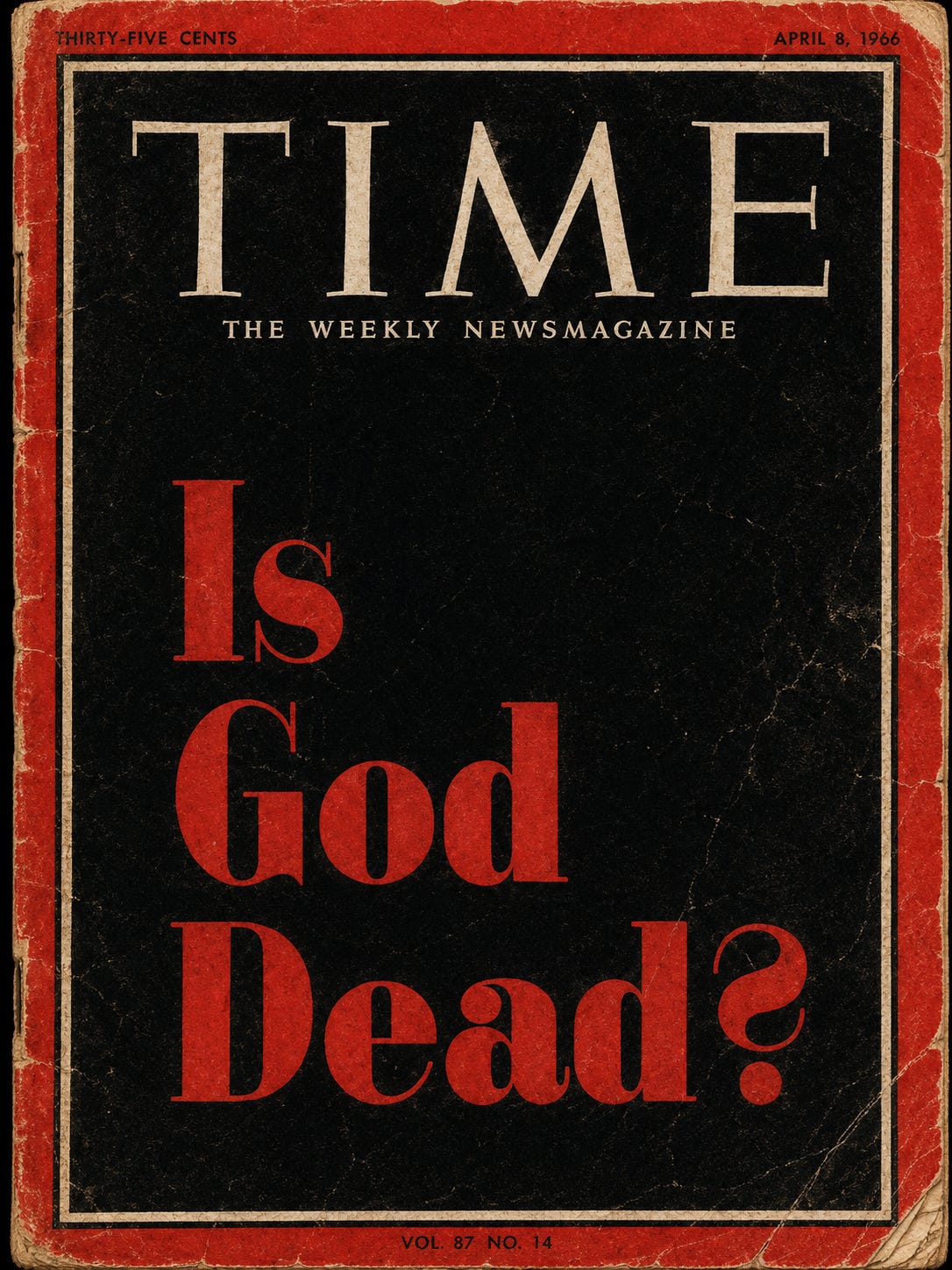
In April of 1966, Time magazine published one of the most famous covers in its history. Against a stark black background appeared three words in red type large enough to provoke both fascination and outrage: Is God Dead?
The issue arrived during a period of profound cultural upheaval. Scientific advancement, social transformation, biblical criticism, and growing skepticism toward traditional authority had combined to create the sense that something fundamental was shifting beneath the foundations of Western civilization. The cover captured a growing suspicion that the religious certainties which had shaped previous generations no longer possessed the authority they once commanded.
The question itself was not new. Nearly a century earlier, Friedrich Nietzsche had placed the words “God is dead” into the mouth of a madman who runs through a marketplace announcing that humanity has killed God. Few philosophical statements have been quoted more often. Few have been more consistently misunderstood.
Nietzsche was not making a scientific claim about the nonexistence of a supernatural being. Nor was he celebrating the triumph of atheism over religion. His concern lay elsewhere.
What he recognized with unusual clarity was that Western civilization had organized itself around a particular vision of reality for centuries, and that vision was beginning to lose its power. The God of Christianity functioned not merely as an object of belief but as the organizing center of an entire world. God anchored morality, identity, purpose, meaning, authority, and social order. To lose God was not simply to lose a theological doctrine. It was to lose the framework through which countless people understood themselves and their place in existence.
This is what Nietzsche’s contemporaries often failed to appreciate. They assumed the debate concerned belief. Nietzsche understood that the deeper issue concerned orientation. The crisis would not begin when people stopped believing in God. It would begin when the structures built upon that belief could no longer be taken for granted. The death of God was never primarily a theological event. It was a civilizational event.
More than a century later, we continue to live inside the consequences of that diagnosis.
Yet something curious has happened along the way. Both religion and atheism have frequently reduced the conversation to a dispute over the existence of God. Meanwhile, the deeper questions that concerned Nietzsche often remain unaddressed.
As inherited frameworks of meaning begin to collapse, what remains to guide us?
When traditional sources of identity lose their authority, how do we understand who we are?
What are we to do when freedom expands faster than our capacity to carry it?
How do we live when certainty gives way to possibility?
Religion was never merely a collection of supernatural beliefs. It functioned as a framework for organizing human existence, connecting individual lives to larger narratives of meaning, morality, belonging, suffering, and purpose.
This observation points toward a possibility that both traditional religion and traditional atheism frequently overlook. The most important question facing the modern world may not be whether God exists. The deeper matter concerns what happens after the collapse of inherited certainty. At its core, the decisive issue of our age is developmental before it is theological.
The story that follows is therefore not primarily about God. It concerns human beings, the structures that have historically organized human existence, and what happens when those structures begin to weaken. Along the way, it explores the relationship between theology, philosophy, psychology, anthropology, and the search for meaning, while examining why so many modern people feel simultaneously liberated and lost.
Most importantly, it is a story about the possibility that the future of spirituality, theology, and human development may depend less upon what we believe than upon what we are capable of carrying.
The famous question posed by Time magazine still echoes through contemporary culture. Yet the question may have been pointing toward something larger than many of its participants realized. The issue was never merely whether God is dead. The deeper issue is whether human beings can develop the capacities required to live after the collapse of certainty.
What Nietzsche Actually Saw
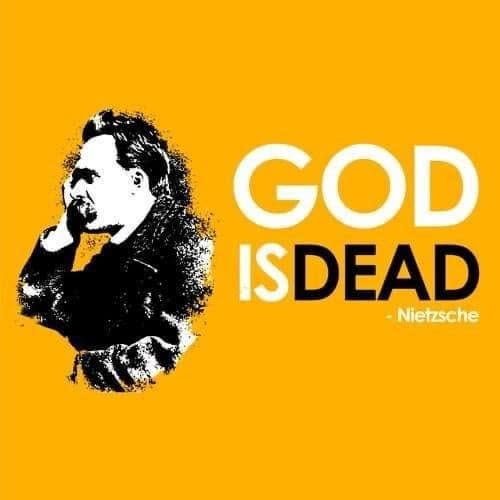
Few philosophers have been quoted more frequently and understood less accurately than Friedrich Nietzsche. More than a century after his death, the phrase “God is dead” continues to function as a kind of cultural shorthand for atheism, secularism, or the rejection of religion.
For many Christians, Nietzsche remains the philosopher who declared war on God. For many atheists, he is celebrated as one of the great intellectual liberators who helped free humanity from religious superstition. Both interpretations contain elements of truth, yet neither fully captures what Nietzsche was attempting to say.
The difficulty begins with the fact that Nietzsche was never primarily interested in winning an argument about God’s existence. He was interested in understanding what human beings become when the foundations of their world begin to erode. His concern was not merely theological. It was psychological, cultural, existential, and civilizational.
When Nietzsche placed the declaration “God is dead” into the mouth of the madman in The Gay Science, he was describing a historical transformation already underway. The madman does not triumphantly announce God’s death as though he has discovered some new philosophical proof. Instead, he speaks with alarm. His words carry the tone of catastrophe rather than celebration. He asks where humanity is moving now that it has “unchained the earth from its sun.” The image is striking because it reveals what Nietzsche believed was actually at stake. The issue was never simply the abandonment of belief. It was the loss of an orienting center.
For centuries, Christianity had functioned as far more than a religious system. It provided a comprehensive vision of reality. Human beings knew where they came from, why they existed, how they should live, what constituted good and evil, and what awaited them after death. The Christian story offered a framework large enough to situate individual lives within a larger cosmic narrative. Whether one agreed with its claims or not, it supplied answers to questions that every human being must eventually confront.
The rise of modernity gradually destabilized this framework. Scientific discoveries challenged traditional understandings of the cosmos. Historical criticism called longstanding assumptions about scripture into question. Political revolutions weakened inherited authority structures. New forms of knowledge emerged that no longer depended upon religious institutions for validation. Piece by piece, the intellectual world that had sustained traditional Christianity began to fracture.
What distinguished Nietzsche from many of his contemporaries was his recognition that the consequences of this transformation extended far beyond theology. Others focused on whether Christianity remained intellectually defensible. Nietzsche focused on what would happen if it no longer was. He understood that beliefs rarely exist in isolation. They are embedded within larger structures of meaning, identity, morality, and culture. Remove the foundation and eventually the entire structure begins to shift.
This is why Nietzsche’s writings often display a curious mixture of critique and concern. He was certainly critical of Christianity, particularly what he viewed as its life-denying tendencies. Yet he was equally critical of those who imagined that simply abandoning religion would solve humanity’s problems. In many respects, Nietzsche was less interested in dismantling Christianity than in exposing the illusion that one could remove it without consequence.
He recognized that the collapse of a shared worldview creates a vacuum. Human beings do not cease seeking meaning when traditional sources of meaning disappear. They seek new ones. The need for orientation persists. The desire for belonging endures. The search for purpose continues. So does the longing to locate oneself within a larger story. The death of God would therefore not eliminate these needs. It would merely force them to find expression elsewhere.
History has largely vindicated this insight. The twentieth and twenty-first centuries have witnessed countless attempts to replace the functions once performed by religion. Nationalism, political ideologies, consumerism, technological utopianism, self-help movements, identity-based movements, and various forms of spirituality have all sought, in different ways, to provide frameworks capable of organizing human existence. Some have achieved remarkable influence. None have fully resolved the underlying challenge.
The persistence of this challenge reveals something important about the nature of religion itself. Modern discussions often reduce religion to a collection of beliefs about supernatural realities. Yet religion has always been more than a set of propositions. It functions as a way of orienting human beings within existence. It addresses questions that emerge from the structure of human experience itself. Why am I here? How should I live? What gives life meaning? How do I confront suffering? What do I owe other people? How should I understand my mortality?
These questions do not disappear when religious belief declines. They remain because they arise from the conditions of being human.
Seen in this light, Nietzsche’s importance lies not in his critique of religion but in his diagnosis of what follows its decline. He understood that modernity was creating a situation unprecedented in human history. Traditional structures of authority were weakening while individual freedom was expanding. Human beings were increasingly expected to construct their own identities, determine their own values, and create their own sense of meaning. This development offered extraordinary possibilities for autonomy and self-determination. It also imposed burdens that previous generations were less frequently required to carry.
The significance of Nietzsche’s insight therefore extends far beyond the question of belief. He recognized that the decline of traditional authority would create challenges that could not be solved through argument alone. The issue was not simply whether Christianity remained true. The issue was what would happen to human beings when the structures that had long provided meaning, orientation, and coherence began to weaken.
More than a century later, that question remains unresolved. The conditions Nietzsche identified have not disappeared. They have intensified. The collapse of inherited certainty continues to shape modern life in ways both obvious and subtle. The question confronting us is no longer whether God is dead. The more pressing question concerns what human beings become in the aftermath.
To understand that question more fully, however, we must examine another curious feature of the modern landscape. Despite their apparent opposition, Christians and atheists often remain locked within the same conceptual framework. Their disagreements are real, but so is their shared assumption about what the conversation is fundamentally about. Understanding that shared assumption reveals why the debate between them has become increasingly inadequate for addressing the deeper challenges of our time.
Why Christians and Atheists Need Each Other
One of the stranger features of modern intellectual life is that Christianity and atheism often define themselves against one another while simultaneously depending upon one another. For more than two centuries, believers and unbelievers have debated the existence of God, each treating the other as its primary intellectual opponent.
Yet beneath their disagreements lies a curious symmetry.
Both Christians and atheists frequently assume they are arguing about the same thing. The Christian asserts that God exists. The atheist denies that God exists. The conflict appears straightforward. One affirms, the other rejects.
What often goes unquestioned, however, is the definition of God being assumed before the argument even begins.
The God being defended and the God being rejected is frequently imagined as a supreme supernatural being who exists independently of the natural world, intervenes in history, issues moral commands, and functions as the ultimate explanatory principle for reality. The debate then becomes whether such a being exists.
In this sense, many atheists are not rejecting God in general. They are rejecting a particular theological construction of God. Likewise, many Christians are not defending the entirety of religious experience, spiritual life, or ultimate reality. They are defending a specific theological interpretation of those realities. Both sides remain bound to the same conceptual architecture.
This helps explain why debates between Christians and atheists so often feel repetitive. The participants rarely question the framework itself. They merely take opposing positions within it.
The irony is that some of the most significant developments in theology over the past several centuries have involved questioning that very framework.
Long before contemporary debates between religion and atheism emerged, theologians, mystics, and philosophers were already questioning simplistic images of God as a supernatural being existing alongside other beings. Serious theological reflection has long recognized that ultimate reality may be far more complex than popular debates often assume.
Yet popular discourse has largely remained trapped within older categories. Christians and atheists often continue arguing over conceptions of God that many serious theologians abandoned generations ago.
This has created a strange alliance between religious fundamentalism and militant atheism. Although they oppose one another, both often assume religion rises or falls on the existence of a particular supernatural being. The disagreement is real, but so are the shared assumptions. Each side helps preserve a framework that many serious theological traditions have long questioned. The result is that many people assume they must choose between defending traditional metaphysical claims and abandoning spirituality, meaning, mystery, and theological inquiry altogether.
Both responses impoverish the conversation. Religion has never functioned merely as a set of claims about supernatural realities. It emerged because human beings found themselves confronted by realities that exceeded ordinary explanation: suffering, love, mortality, consciousness, beauty, belonging, and the persistent challenge of making sense of existence itself.
Atheism performs an important function within this process because it continually challenges theology’s tendency toward idolatry. One of the recurring dangers within religion is the tendency to mistake human concepts for ultimate reality itself. Theological systems become rigid. Symbols become literalized. Metaphors harden into dogmas. The finite is confused with the infinite. Atheistic critique often exposes these distortions. It forces religious traditions to confront their own assumptions and to distinguish between reality itself and the conceptual frameworks used to describe it.
In this respect, atheism has frequently functioned as an unwelcome but necessary conversation partner for theology. Many of the most powerful critiques of religion have identified genuine pathologies. Religious institutions have often perpetuated authoritarianism, tribalism, exclusion, superstition, and psychological dependency. They have justified violence, sanctified hierarchy, and defended systems of oppression. To ignore these failures would be intellectually dishonest.
Yet atheism also encounters limits of its own. While it can dismantle inadequate explanations, it cannot eliminate the realities those explanations sought to address. Disproving a doctrine does not solve the problem of mortality. Exposing a religious illusion does not answer the question of meaning. Rejecting divine command theory does not automatically generate a compelling moral vision. Human beings remain confronted by the same existential realities whether they interpret them religiously or not.
This is why the triumphalist narratives occasionally found within both Christianity and atheism ultimately fail. Neither religion nor atheism resolves the human condition. Both represent attempts to engage realities that remain larger than either framework.
The dependence of Christians and atheists upon one another becomes especially visible whenever either side imagines it has achieved final victory. Religious traditions that isolate themselves from critique often descend into dogmatism and self-deception. Atheistic worldviews that dismiss the existential dimensions of human experience frequently struggle to account for the enduring human search for meaning, belonging, and transcendence. Each position reveals the blind spots of the other.
What emerges from this recognition is not a bland compromise. The goal is not to merge Christianity and atheism into some vague middle ground. Rather, it is to recognize that both traditions are participating in a larger conversation concerning the nature of reality and humanity’s place within it. Their disagreements matter, but they are not the whole story.
The question beneath their debate concerns something more fundamental. How do human beings orient themselves within existence? How do finite creatures make sense of consciousness, mortality, freedom, suffering, and love? How do we construct meaningful lives in a universe that offers no simple guarantees?
These questions remain regardless of where one stands on the existence of God.
Indeed, it may be precisely because these questions remain unresolved that Christianity and atheism continue their long and often contentious relationship. Both are responding to the same underlying realities. Both are attempting to navigate the same human condition. Both are wrestling, in different ways, with the challenge of making sense of existence.
From this view, the future may not belong to Christianity or atheism as they have traditionally understood themselves. The future may belong to those capable of moving beyond the limitations of both while retaining the insights each has contributed. Such a move does not require abandoning theology. It requires reimagining what theology is for.
To understand why that task has become increasingly necessary, we must examine the condition of theology itself. For while theology has produced some of humanity’s most profound reflections on existence, it has also become trapped within assumptions that have rendered much of its contemporary practice increasingly disconnected from the realities it seeks to understand.
The Failure of Modern Theology
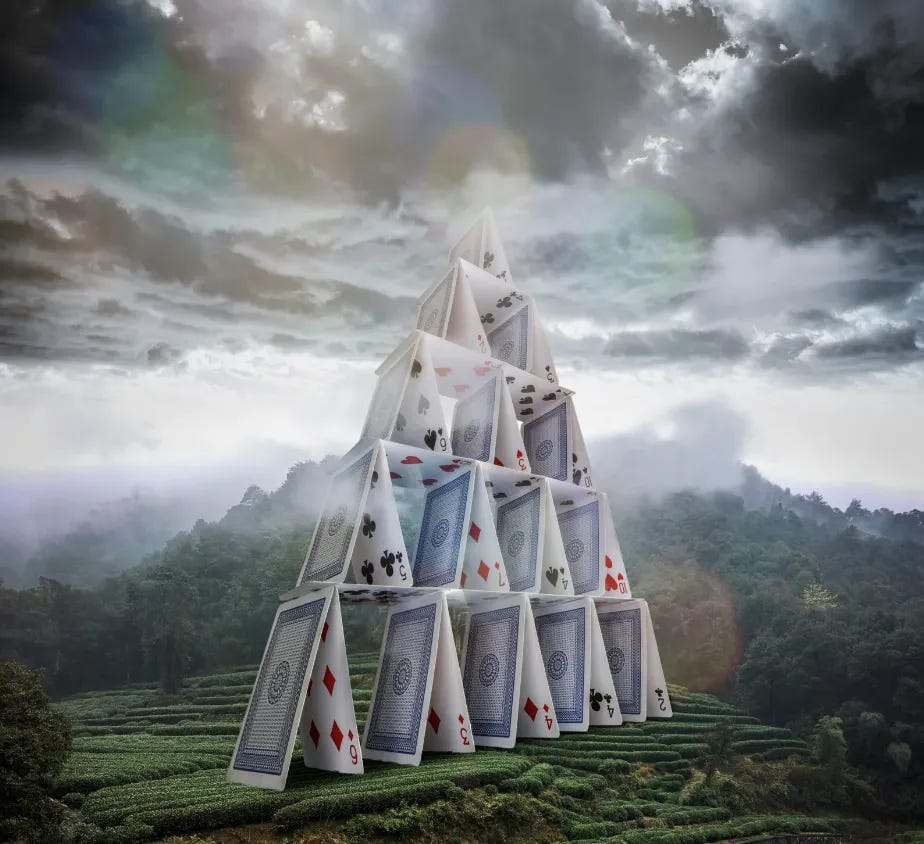
The crisis facing theology today is frequently misunderstood. While secularization, scientific advancement, and declining religious participation all contribute to theology’s challenges, the deeper crisis is that theology has increasingly become disconnected from the reality it was originally intended to explore.
Theology remains active as an academic discipline, but activity should not be confused with vitality.
Theology emerged because human beings found themselves confronted by questions that could not be avoided. What is the nature of reality? What does it mean to exist? How should human beings understand suffering, mortality, freedom, love, beauty, consciousness, and meaning? What is the relationship between the finite and the infinite? How should we live?
These questions remain as urgent today as they were thousands of years ago.
What has changed is theology’s relationship to those questions.
Much contemporary theology has become preoccupied with the interpretation and defense of inherited answers rather than the direct investigation of reality itself. The result is a form of intellectual circularity in which theological reflection increasingly revolves around doctrinal disputes, historical controversies, and inherited formulations while remaining disconnected from the existential realities confronting contemporary human beings. At the very moment people are wrestling with questions of meaning, identity, mortality, belonging, and uncertainty, large portions of theology remain occupied with defending conceptual structures inherited from worlds that no longer exist.
This is not to dismiss the value of tradition. Every discipline depends upon those who came before. Theological traditions contain profound wisdom accumulated across centuries of reflection. The problem arises when tradition becomes the destination rather than the starting point. Theology begins to preserve answers instead of cultivating inquiry. The protection of inherited formulations gradually becomes more important than the pursuit of truth itself.
At its best, theology functions as an exploration of ultimate reality. At its worst, it becomes a system for managing certainty.
The distinction matters.
Theological certainty has often provided psychological comfort, institutional stability, and communal cohesion. Yet certainty and truth are not the same thing. Human beings have repeatedly demonstrated an extraordinary capacity to construct coherent systems that bear only a partial relationship to reality. The history of theology contains moments of extraordinary insight alongside moments of profound blindness. The same traditions capable of producing Augustine, Eckhart, Julian of Norwich, and Bonhoeffer also produced inquisitions, religious wars, colonial justifications, and theological defenses of slavery.
The problem is not that theology sometimes gets things wrong. Every discipline does. The problem emerges when theology loses the capacity for self-correction because preserving the system becomes more important than engaging reality.
This challenge becomes particularly visible in theology’s relationship to modern knowledge.
For much of its history, theology functioned as a kind of intellectual umbrella under which other forms of inquiry operated. Questions concerning nature, consciousness, ethics, human behavior, cosmology, and society frequently fell within theology’s domain. As specialized disciplines emerged, many of these questions migrated elsewhere. Psychology began studying human behavior. Anthropology examined culture. Neuroscience investigated consciousness. Physics explored the structure of the cosmos. Sociology analyzed social systems.
Rather than embracing these developments as opportunities for expansion, large portions of theology responded defensively. New forms of knowledge were often perceived as threats rather than resources. The result was an increasingly fragmented intellectual landscape in which theology isolated itself from conversations that should have enriched it.
This isolation came at a significant cost.
Human beings do not encounter reality through theology alone. We encounter reality through biology, psychology, relationships, history, embodiment, culture, language, and lived experience. Any serious exploration of ultimate reality must therefore engage these dimensions as well. Theology cannot adequately understand the human condition while remaining detached from the disciplines studying the human condition.
The tragedy is that many of the most important theological questions are now being explored outside theology itself.
Meaning is often explored through psychology. Belonging increasingly falls within sociology. Consciousness appears in neuroscience and philosophy of mind. Human flourishing, suffering, and transcendence now emerge through developmental psychology, psychotherapy, and contemplative studies.
The questions remain theological in scope even when theology no longer participates in the conversation.
Perhaps nowhere is this more evident than in theology’s relationship to existential experience.
Religion originally emerged from human beings confronting the realities of existence. Birth and death. Wonder and terror. Beauty and suffering. Love and loss. The experience came first. The interpretation came afterward. Theology was born from humanity’s attempt to understand realities already present within lived experience.
Modern theology often reverses this sequence.
Interpretation comes first.
Doctrine comes first.
Systems come first.
Experience is filtered through frameworks already in place.
As a result, experience frequently becomes something that must be filtered through existing categories rather than something capable of transforming them.
Yet reality does not ask permission from our systems.
Human beings continue falling in love. They continue grieving. They continue confronting mortality. They continue experiencing awe, despair, beauty, uncertainty, longing, transcendence, and mystery. These realities emerge regardless of doctrinal commitments. They confront believers and unbelievers alike. Any theology incapable of engaging them directly eventually becomes detached from the world it claims to describe.
The challenge becomes even more pronounced in an age increasingly characterized by religious disaffiliation. Millions of people no longer inhabit traditional religious institutions. Yet the existential questions that gave rise to religion remain firmly intact. People continue searching for meaning, identity, purpose, belonging, and orientation. The hunger endures even when the traditional forms no longer satisfy.
This presents theology with a choice. It can continue functioning primarily as the guardian of inherited answers. Or it can recover its older vocation as a fearless investigation into ultimate reality.
Such a recovery would require a dramatic expansion of theological imagination. Theology would need to become genuinely interdisciplinary, drawing insight from philosophy, anthropology, psychology, neuroscience, contemplative traditions, evolutionary theory, sociology, literature, and the natural sciences. It would require intellectual humility, recognizing that no single tradition possesses a monopoly on truth. It would require the courage to follow reality wherever it leads rather than defending conclusions already reached.
Most importantly, it would require theology to remember that its task is larger than preserving belief.
The deepest purpose of theology is not to protect certainty.
It is to illuminate reality.
This distinction becomes increasingly important as we confront the broader consequences of the collapse of inherited meaning structures. For if theology has often failed to understand the significance of this transformation, it is because it has not fully appreciated what religion was actually doing in the first place.
The question is not merely what people believed.
The question is what those beliefs were carrying.
To understand the modern crisis, we must therefore look beyond doctrine and examine the larger role religion played in organizing human existence. We must examine what happened when one of humanity’s most powerful meaning-making structures began to fracture.
In short, we must understand the collapse of the God container.
The Collapse of the God Container
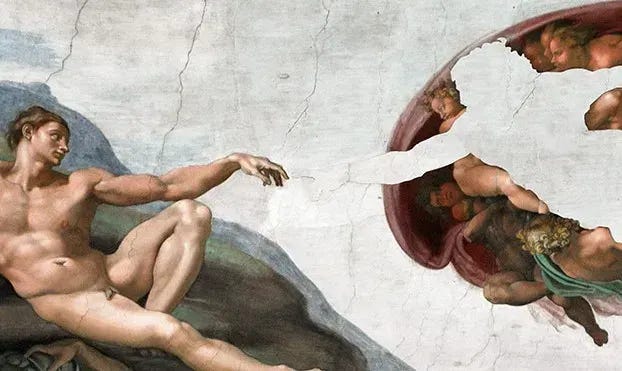
One of the reasons the debate between religion and atheism has become increasingly sterile is that both sides often mistake the contents of the conversation for its underlying structure. The argument usually revolves around the existence or nonexistence of God, as though the central issue concerns the reality of a supernatural being. Yet from a historical, anthropological, and existential perspective, the more significant question concerns the role the God-concept has played within human societies.
Whatever else God may or may not be, the idea of God functioned for centuries as a container capable of holding together an extraordinary range of human concerns. Meaning, morality, identity, belonging, suffering, hope, purpose, love, responsibility, and mortality were gathered into a larger framework that allowed individuals to locate themselves within a coherent vision of reality. The power of religion did not reside solely in its doctrines. It resided in its ability to organize existence.
This observation requires us to reconsider what religion was actually doing. Contemporary discussions often reduce religion to a set of beliefs that can be either affirmed or denied. Such a view overlooks the broader role religious systems played in human development. Religions were never merely collections of propositions about the supernatural. They were meaning-making ecosystems. They provided stories large enough to explain where human beings came from, why they suffered, how they should live, what obligations they owed one another, and what significance their lives possessed within the larger structure of reality.
Religion supplied orientation. Individuals inherited narratives that connected personal experience to a larger vision of reality. Questions of meaning, suffering, morality, belonging, and mortality were situated within stories that extended beyond the individual self. Whether those stories were ultimately true is a separate question. Their power lay in providing a framework capable of holding together the uncertainties of existence.
The remarkable achievement of religion was not that it eliminated uncertainty. It was that it made uncertainty inhabitable.
This is one reason predictions concerning the inevitable disappearance of religion have repeatedly proven inadequate. Such predictions often assume that once people cease believing in God, the human needs associated with religion will somehow disappear as well. Yet the decline of belief has never eliminated the realities belief once helped people navigate. Human beings remain confronted by suffering. Death remains unavoidable. The need for belonging has not vanished. Questions of purpose continue to surface with remarkable persistence. The longing for significance remains embedded within the structure of human existence itself.
What has changed is not the existence of these realities but the weakening of the structures that previously helped organize them.
Seen in this light, the modern crisis appears less theological than existential. The issue is not simply that traditional beliefs have become less persuasive. It’s that the container itself has begun to fracture. Meaning, mortality, belonging, purpose, and identity remain, but the frameworks that once held them together have weakened.
The collapse of the God container has therefore redistributed existential responsibility. Questions once addressed collectively now fall increasingly upon the individual. Modern people are often expected to construct for themselves what previous generations largely inherited.
The expansion of freedom is often celebrated as one of modernity’s great achievements, and rightly so. Human beings today possess opportunities for self-determination that would have been unimaginable in many earlier periods of history. Yet freedom carries demands of its own. Every increase in freedom creates a corresponding increase in responsibility. Every expansion of choice creates new possibilities for uncertainty. Every weakening of external authority increases the burden placed upon the individual to navigate reality without inherited maps.
This is why modern people often experience the strange combination of greater freedom and greater disorientation. The problem is not that individuals possess too much freedom. The problem is that the developmental capacities required to carry that freedom have not necessarily expanded at the same pace.
For centuries, religion functioned as a form of existential scaffolding. It carried questions that individuals did not have to carry alone. It provided symbolic structures capable of containing uncertainty, suffering, and mortality. When those structures weaken, the burden does not disappear. It shifts.
The modern individual now finds themselves responsible for answering questions previous generations inherited answers to. What is the meaning of my life? What values should guide my decisions? What obligations do I owe others? How should I understand suffering? What does it mean to live well? What gives existence significance? These questions cannot be avoided. They emerge from the very fact of being human.
Many contemporary pathologies can be understood through this lens. The rise of anxiety, loneliness, identity confusion, ideological extremism, and various forms of existential despair may reflect more than individual psychological dysfunction. They may represent attempts to navigate a landscape in which inherited structures of orientation have weakened while the need for orientation continues.
This helps explain why the functions once concentrated within religion have increasingly migrated elsewhere. Politics has become a source of identity. Technology promises forms of salvation once associated with religion. Self-help systems offer frameworks for meaning and transformation. Human beings continue searching for what religion once provided because the needs religion addressed have not disappeared.
The modern world has not become less spiritual. It has become spiritually decentralized. The search for meaning continues across countless competing frameworks rather than within a single dominant structure. The result is unprecedented freedom alongside unprecedented fragmentation.
This is where the collapse of the God container reveals its deepest significance. The crisis is not fundamentally about belief. It is about integration. Religious systems historically gathered the dimensions of human existence into larger coherent wholes. Modern individuals are increasingly left to perform that work of integration themselves.
The challenge facing the modern world is therefore not whether religion survives. The challenge concerns whether new forms of integration can emerge capable of helping human beings navigate the conditions of contemporary existence. The question is not simply what replaces religion. It’s what capacities become necessary when religion can no longer perform the functions it once performed.
This is where the conversation must move beyond theology alone. For what is ultimately at stake is not merely belief, but the human ability to engage reality without collapsing into either certainty or despair. The collapse of the God container has exposed a developmental challenge that many societies are only beginning to recognize.
The issue is not that meaning has disappeared. It’s that meaning is no longer carried for us in the ways it once was.
What modernity has revealed is that the loss of inherited structures does not eliminate the need for orientation. It merely transfers responsibility for orientation to the individual. The result is a growing gap between the freedoms modern people possess and the capacities required to inhabit those freedoms well.
It is this gap that increasingly defines the spiritual and existential challenge of our age.
The Great Decoupling
The collapse of the God container did not create the modern crisis by itself. It merely exposed a deeper transformation that had been unfolding beneath the surface of modern life for centuries.
The defining achievement of modernity has been the dramatic expansion of human freedom. Individuals today possess opportunities, choices, rights, mobility, access to information, and forms of self-determination that previous generations could scarcely imagine. In many respects, this represents genuine progress. Human beings are less constrained by inherited social roles. More people possess the freedom to question authority, pursue education, relocate, redefine their identities, challenge traditions, and shape their own futures.
Yet beneath these extraordinary gains lies a paradox that increasingly defines contemporary existence.
As modern societies expanded human freedom, they simultaneously increased the demands placed upon the individual. The structures that once carried many of life’s existential burdens gradually weakened. Traditional religion lost authority. Communities became more fragmented. Extended family systems became less stable. Shared cultural narratives became increasingly contested. Institutions that once provided orientation became objects of skepticism themselves.
The result is that modern individuals are often required to carry far more psychological, existential, and developmental weight than previous generations.
This is what I mean by the Great Decoupling.
For most of human history, meaning structures and human capacities developed together. The world was often restrictive, hierarchical, and unjust, but it was also highly structured. People inherited narratives that explained who they were, where they belonged, how they should live, and what constituted a meaningful existence. The answers may have been imperfect. They may have been oppressive. They may have been wrong. Yet they provided orientation.
Modernity dismantled many of these structures.
In countless ways, this dismantling was necessary. Human progress frequently requires questioning inherited assumptions. Scientific advances required challenging religious authority. Democratic societies required challenging political authority. Personal freedom required challenging social authority. Much of what is best about the modern world emerged because people refused to remain confined within inherited frameworks.
The problem is that dismantling structures and developing capacities are not the same process.
A society can remove external constraints faster than it develops the internal resources required to navigate the freedoms that follow.
This is the Great Decoupling.
The problem is not that freedom has expanded. The problem is that the capacities required to inhabit freedom have not always expanded alongside it.
This helps explain one of the most perplexing features of contemporary society. Many people possess lives that would appear extraordinarily privileged by historical standards. They enjoy educational opportunities, technological access, personal autonomy, legal protections, and lifestyle options unavailable to most previous generations. Yet despite these gains, many experience profound anxiety, fragmentation, loneliness, uncertainty, and existential instability.
The common explanation attributes these struggles primarily to mental health problems. While psychological factors certainly matter, such explanations often overlook the broader developmental context. What if many forms of contemporary distress are not merely psychological disorders but symptoms of a deeper mismatch between the demands of modern life and the capacities required to meet those demands?
Modern individuals are expected to construct identities, create meaning, determine values, and navigate uncertainty in ways previous generations often inherited from religion, tradition, community, and culture. They are expected to exercise unprecedented freedom without always possessing the developmental resources necessary to carry it well.
The challenge becomes even more apparent when we consider the sheer complexity of contemporary life. Previous generations typically inhabited relatively stable social environments. Their identities were shaped by family, geography, religion, occupation, and culture. Modern individuals encounter an overwhelming abundance of possibilities. Every aspect of life becomes subject to choice. Career paths, relationships, beliefs, identities, lifestyles, communities, and values become matters of personal determination.
Choice expands. Complexity expands. Responsibility expands. What does not necessarily expand at the same pace is the capacity required to carry them.
This distinction between freedom and capacity may be one of the most overlooked features of contemporary culture. Modern societies devote enormous attention to capability. We celebrate intelligence, achievement, productivity, innovation, and performance.
Far less attention is devoted to capacity. Capability concerns what we can do. Capacity concerns what we can hold.
Modernity has systematically expanded capability. We know more, build more, produce more, communicate more, and control more than any previous generation. Yet the developmental capacities required to navigate uncertainty, ambiguity, mortality, complexity, and freedom have not expanded at the same pace. The result is a civilization that is increasingly powerful while often remaining existentially fragile.
A person may possess extraordinary capability while lacking the capacity to navigate uncertainty, disappointment, mortality, conflict, ambiguity, loneliness, or failure. Entire societies can become highly capable while remaining developmentally fragile.
This helps explain why technological advancement has not produced corresponding levels of existential well-being. We have become increasingly effective at solving practical problems while remaining deeply challenged by existential ones. We know how to communicate instantly across the planet. We know how to access vast stores of information. We know how to manipulate genetics, build artificial intelligence, and explore distant planets.
Yet many people struggle to answer questions concerning meaning, belonging, identity, purpose, and how to live.
The issue is not a lack of information.
It is a lack of integration.
The Great Decoupling reveals a developmental challenge hidden within the success story of modernity itself. As freedom expands, the demand for capacity expands with it.
Nowhere is this more visible than in the contemporary search for certainty.
Despite living in cultures that celebrate freedom, many people remain drawn toward systems that promise absolute answers. Political extremism, ideological rigidity, conspiracy thinking, authoritarian movements, and various forms of fundamentalism can all be understood, at least in part, as responses to the burden of uncertainty. When the demands of reality exceed our capacity to hold them, certainty becomes psychologically attractive.
Certainty reduces complexity.
Certainty reduces ambiguity.
Certainty reduces responsibility.
Certainty offers relief.
This dynamic helps explain why the decline of traditional religion has not produced a purely rational society. Human beings continue seeking structures capable of organizing reality because the need for orientation remains. When one system weakens, others emerge to fill the void.
The challenge of the twenty-first century is therefore not simply political, economic, technological, or theological.
It is developmental.
The central question is whether human beings can cultivate the capacities required to engage reality without retreating into illusion, ideology, or inherited certainty. Can we develop the ability to navigate ambiguity without paralysis? Can we inhabit freedom without becoming overwhelmed by it? Can we confront mortality without denial? Can we sustain meaning without relying upon structures that no longer command belief?
These questions point toward a dimension of human flourishing that neither traditional religion nor contemporary secular culture has adequately addressed.
What modernity requires is not merely greater freedom.
It requires greater capacity.
The future may depend less upon what human beings are capable of doing than upon what they are capable of carrying.
This insight brings us to the heart of the argument. If the Great Decoupling describes the developmental challenge of modernity, then the next question becomes obvious. What capacities are actually required to inhabit contemporary life well? What would it mean to cultivate them intentionally?
These questions lead directly toward the framework I have come to call existential health.
The Rise of Existential Health

If the collapse of inherited meaning structures exposed the limitations of both religion and secularism, and if the Great Decoupling describes the widening gap between modern freedoms and the capacities required to inhabit them, then a deeper question emerges.
What exactly are human beings being asked to become?
This question sits at the center of the modern condition.
For centuries, many of the challenges associated with meaning, identity, belonging, morality, and existential orientation were carried by larger structures. Religion provided answers. Communities provided continuity. Traditions supplied narratives. Institutions offered frameworks for interpreting reality. Individuals certainly faced suffering, uncertainty, and responsibility, but they did so within worlds that helped organize those experiences.
The contemporary individual increasingly stands in a different relationship to existence.
The collapse of inherited certainty has not removed life’s fundamental challenges. It has exposed them. Questions that were once partially absorbed by external structures now appear with greater immediacy. Human beings are confronted more directly by freedom, uncertainty, mortality, responsibility, ambiguity, and the necessity of constructing meaningful lives without guarantees.
This shift has created a developmental demand that neither traditional religion nor contemporary psychology fully addresses. The challenge is not simply believing the right things or feeling better. The challenge is becoming more capable of engaging reality itself.
This is the context in which the concept of existential health emerges.
Existential health begins with a simple observation. Human beings can be physically healthy, psychologically functional, and socially successful while remaining profoundly disconnected from their own lives. Their struggle is not primarily clinical.
Traditional frameworks often lack adequate language for describing this condition.
Mental health language can identify anxiety, depression, trauma, and various forms of psychological distress. Religious language can address questions of faith, morality, and spirituality. Yet neither framework fully captures the broader challenge of learning how to inhabit existence itself.
Existential health concerns the quality of a person’s relationship to reality. It asks whether an individual can engage life honestly, consciously, and responsibly, confronting uncertainty, mortality, freedom, and meaning without retreating into denial or illusion.
Consider a person leaving a religious tradition that once provided certainty, identity, community, and purpose. The crisis they experience is rarely theological alone. The beliefs may no longer persuade them, yet the structures those beliefs carried have not been replaced. The challenge is no longer deciding what to believe. The challenge is learning how to live without guarantees while remaining capable of meaning, belonging, responsibility, and love. Existential health concerns the capacities that make such a transition possible.
Existential health is not happiness or emotional comfort. A person may experience grief, uncertainty, disappointment, or loss while remaining deeply grounded in reality. The question is whether they can remain in relationship with reality as it is.
This emphasis on reality distinguishes existential health from many contemporary approaches to human flourishing. Rather than helping people avoid discomfort, uncertainty, or limitation, existential health seeks to increase their capacity for reality. Avoidance may provide relief, but it rarely produces development.
This shift in emphasis becomes increasingly important within the conditions created by the Great Decoupling. The modern world requires individuals to carry forms of uncertainty that previous generations often delegated to external structures. Questions concerning identity, purpose, belonging, morality, meaning, and self-authorship now fall more directly upon the individual. These demands cannot be met through information alone. They require development.
Development, in this context, refers to the expansion of human capacity. As discussed earlier, modern societies excel at developing capability but are far less intentional about cultivating capacity. Yet capacity increasingly determines whether freedom becomes liberating or overwhelming.
This is why existential health is fundamentally developmental. It concerns the gradual expansion of a person’s ability to engage reality without retreating into denial, ideology, dependency, or illusion.
Such development involves multiple dimensions of human experience. Reality contact enables a person to perceive and engage what is actually present rather than what they wish were present. Self-authorship allows conscious participation in the formation of one’s own life rather than simply inheriting identities or reacting against them. Mortality awareness makes it possible to acknowledge finitude without becoming consumed by it, while discernment helps distinguish between reality and projection, between genuine insight and psychological need.
Belonging, in this context, is not conformity to a group but the ability to participate meaningfully in relationships without surrendering one’s integrity. Meaning-making involves constructing significance without requiring absolute certainty.
These capacities are not acquired through information alone. They emerge through lived engagement with existence itself.
This is one reason many people experience spiritual or existential crises as periods of disorientation. Existing frameworks begin to break down before new capacities have fully developed. The collapse of certainty often feels like collapse because individuals lose structures they previously relied upon before they have cultivated the internal resources necessary to navigate without them.
What appears as crisis may therefore be developmental.
What appears as disintegration may sometimes represent reconstruction without a map.
This perspective transforms how we understand both religion and spirituality.
The central question is no longer whether a particular belief system is true or false. The deeper question concerns what capacities a belief system cultivates or inhibits. Does it increase a person's ability to engage reality, deepen their capacity for uncertainty, and strengthen their ability to love, discern, and participate more fully in existence?
These questions move beyond traditional debates between religion and atheism. They shift attention from what people believe to what those beliefs enable them to become.
In this light, existential health does not replace theology. It extends the theological project into new territory. Theology has long concerned itself with ultimate reality and humanity’s relationship to it. Existential health asks what capacities are required for human beings to participate in that reality consciously and responsibly.
The future of spirituality may depend less upon preserving inherited answers than upon cultivating these capacities. The fundamental challenge of our time is not merely determining what is true. It is becoming capable of living in relationship with truth once it is encountered.
This developmental task represents one of the great unfinished projects of modernity. We have expanded freedom, knowledge, and possibility at extraordinary rates. What remains uncertain is whether we can develop the corresponding capacities required to carry them.
The future may depend upon that answer.
Yet even existential health raises a further question. If the collapse of inherited certainty requires new forms of development, and if theology is to remain relevant within this emerging landscape, what kind of theology becomes possible after the collapse of traditional theism?
That question leads us toward the possibility of a theology beyond theism itself.
A Theology Beyond Theism

At this point, some readers may suspect that the argument being advanced here is ultimately atheistic. Others may conclude that it represents a sophisticated attempt to preserve religion after the collapse of traditional belief. Both interpretations miss something important.
The challenge confronting theology is not whether it can survive the decline of traditional theism. The challenge is whether it can recover its deeper vocation.
For much of modern history, theology has become increasingly identified with the defense of particular beliefs about God. The discipline has often operated as though its primary responsibility were preserving specific metaphysical claims inherited from earlier periods of history. Questions concerning divine attributes, supernatural interventions, miracles, sacred texts, and doctrinal formulations have frequently occupied the center of theological reflection.
These concerns are not unimportant. The difficulty arises when theology becomes confined to them.
When this happens, theology gradually narrows itself into a specialized debate about religious propositions. It begins speaking primarily to those already invested in the conversation. Its relevance becomes increasingly dependent upon the acceptance of particular assumptions. The result is that theology often appears disconnected from the broader realities shaping contemporary human existence.
Yet this narrowing represents a departure from theology’s deeper historical purpose.
At its most profound, theology has never merely concerned itself with belief. Theology emerged from humanity’s encounter with mystery, reality, existence, and the questions these encounters generate. Long before theology became associated with defending doctrines, it represented an attempt to understand the relationship between human beings and whatever lies at the deepest level of reality itself.
Seen from this perspective, theology begins not with answers but with wonder.
Human beings awaken to consciousness and discover themselves existing within a reality they did not create and do not fully understand. They encounter beauty, suffering, love, mortality, freedom, and mystery. They recognize that existence itself presents questions that cannot be reduced to technical explanations. Theology emerges from this encounter.
The problem is that over time many theological traditions became increasingly preoccupied with the contents of their answers and increasingly detached from the experiences that gave rise to those answers in the first place.
This is where the distinction between theology and theism becomes important.
Theism is one way of understanding ultimate reality. Theology is the broader inquiry into ultimate reality itself. The two are related but not identical.
Historically, theology has often operated as though theism and theology were inseparable. To question theism was frequently assumed to be equivalent to questioning theology. The decline of theism therefore appeared to threaten theology’s very existence.
Yet there is another possibility.
What if theology is larger than theism?
What if theology stays viable precisely because the questions that gave rise to it persist regardless of whether traditional theistic frameworks continue to persuade?
The future of theology may therefore depend upon its willingness to return to these questions rather than merely defending inherited answers.
This transition reflects what I have elsewhere called theology after God. The challenge is not simply theological. It concerns how human beings respond when inherited structures of certainty no longer carry the weight they once did. The movement from metaphysical orphanhood to responsibility without alibi marks a shift away from dependence upon external guarantees and toward the developmental task of engaging reality directly.
Such a shift would not represent the abandonment of theology. It would represent its expansion.
A theology beyond theism begins by recognizing that no single framework possesses exhaustive access to reality. Religious traditions, philosophy, psychology, anthropology, contemplative practice, and the sciences each illuminate different dimensions of existence. The task of theology in the twenty-first century may therefore be less about protecting boundaries and more about facilitating conversation across them.
This requires a different posture toward knowledge itself.
Traditional theology often operated within a model of certainty. The purpose of theological reflection was frequently understood as clarifying, defending, and preserving truths already known. A theology beyond theism operates differently. It understands itself as participating in an ongoing process of discovery. Reality always exceeds our descriptions of it. Human understanding is partial. Every conceptual framework is provisional.
Such an approach does not weaken theology. It deepens it. Humility is not the enemy of conviction. It is the recognition that reality always exceeds our ability to capture it completely. This perspective also transforms how theology understands God.
Within many traditional frameworks, God functions primarily as an object of belief. The central question becomes whether such an object exists. The debate between theism and atheism largely unfolds within this paradigm.
A theology beyond theism shifts the conversation.
The question becomes less concerned with whether God exists as a supernatural being and more concerned with what human beings are attempting to name when they use the word God in the first place.
This is not a new question. Throughout theological history, many thinkers have suggested that ultimate reality exceeds our concepts of it. Again and again, theology has returned to the recognition that reality is larger than the frameworks used to describe it.
These traditions suggest that theology’s future may lie not in defending increasingly fragile images of God but in exploring the depth dimension of existence itself.
Such exploration inevitably intersects with the concerns of existential health.
If theology concerns humanity’s relationship to ultimate reality, then it must also concern the capacities required to engage that reality. Questions of meaning, self-authorship, discernment, belonging, responsibility, mortality, and reality contact become theological questions because they concern how human beings participate in existence.
The boundary separating theology from human development begins to dissolve. Spiritual maturity and existential maturity increasingly appear as overlapping realities. Theological inquiry becomes inseparable from the cultivation of human capacity. This shift may represent one of the most important developments available to theology today.
For centuries, theology largely focused on what human beings should believe about reality. Questions of doctrine, metaphysics, divine attributes, and religious truth occupied the center of theological reflection. While such questions remain important, they no longer appear sufficient to address the challenges confronting modern life.
Increasingly, the more pressing question concerns what kind of human beings are capable of engaging reality well. The central challenge of the twenty-first century may not be a crisis of belief so much as a crisis of capacity. Human beings are being asked to navigate unprecedented freedom, complexity, uncertainty, and responsibility. The issue is not merely whether we possess adequate answers. It is whether we possess the developmental resources required to live with the questions.
From this perspective, theology’s future may depend less upon producing agreement and more upon fostering development. Theological inquiry becomes inseparable from the cultivation of human capacities. Can theology help people expand their capacity for uncertainty rather than merely offering certainty? Can it deepen their ability to engage suffering without despair, inhabit freedom without overwhelm, confront mortality without denial, and participate in community without surrendering autonomy? Can it cultivate greater reality contact, discernment, responsibility, self-authorship, and love? Can it foster forms of wisdom adequate to the complexity of contemporary life?
Such questions do not abandon theology. They return it to one of its oldest concerns: the formation of human beings. The future relevance of theology may depend less upon its ability to defend inherited propositions and more upon its ability to help people become capable of engaging reality with greater depth, wisdom, honesty, and participation.
These questions move theology beyond the familiar battlegrounds of religion versus atheism. They place the discipline within a larger developmental project concerned with the flourishing of human beings in relationship to reality itself.
The stakes of this transformation extend beyond theology.
The modern world increasingly suffers from a crisis of orientation. Traditional structures have weakened. New forms of certainty repeatedly prove inadequate. Human beings possess extraordinary power while often lacking corresponding depth. We have expanded capability far more rapidly than capacity.
Under such conditions, theology faces a choice.
It can continue defending increasingly fragile certainties inherited from previous eras.
Or it can become one of the disciplines helping humanity navigate the developmental challenges emerging before us.
A theology beyond theism does not reject religion.
It does not reject God.
It does not reject spiritual traditions.
It rejects only the assumption that theology’s highest purpose is the preservation of certainty.
Its deeper purpose is participation in the ongoing human search for reality, meaning, wisdom, and truth.
Such a vision may ultimately prove more faithful to theology’s origins than many of its contemporary forms. For theology began not as a system of answers but as a response to wonder. It emerged from humanity’s encounter with existence itself.
That encounter remains.
The question is whether we possess the capacities necessary to engage it.
And that question points directly toward what may be the defining spiritual challenge of the twenty-first century.
The Defining Spiritual Question of the Twenty-First Century
Every age is shaped by a question.
The question is not always obvious while it is unfolding. People living through major historical transitions rarely possess the distance necessary to fully understand the nature of the transformation occurring around them. They experience the symptoms before they understand the diagnosis. They feel the tensions before they possess language for them.
Looking backward, however, certain questions become visible.
The medieval world was organized around questions of salvation and divine order. The Enlightenment elevated questions of reason, knowledge, and human autonomy. The nineteenth and twentieth centuries became increasingly preoccupied with questions of belief, skepticism, science, and the viability of religion in an age of modernity.
The disappearance of old answers did not eliminate the realities they were attempting to address. Meaning, mortality, belonging, suffering, freedom, and purpose did not disappear with religion’s decline.
They simply migrated. Questions once concentrated within religious institutions reappeared throughout culture itself, emerging in psychology, politics, identity, technology, self-help, wellness culture, social movements, and countless forms of contemporary spirituality.
In retrospect, this should not surprise us.
The human condition did not fundamentally change because traditional belief systems weakened. Human beings remain finite creatures who become aware of their own existence. We still awaken each morning within a reality we did not create. We still love people who eventually die. We still experience beauty that exceeds explanation. We still suffer. We still wonder. We still search.
These realities are not theological accidents. They are existential facts. The deeper challenge confronting the modern world concerns something larger than belief. It concerns whether human beings can develop the capacities required to inhabit the realities modern life increasingly places before them.
The modern individual inherited an extraordinary degree of freedom. They also inherited an extraordinary degree of responsibility. This is why so many contemporary struggles resist simple solutions. They are not merely political problems, economic problems, psychological problems, or theological problems.
They are developmental problems.
The central challenge is not determining what people should believe. It’s whether human beings can cultivate the capacities required to inhabit the realities modern life increasingly places before them.
How do we confront uncertainty without becoming consumed by anxiety?
What does it mean to inhabit freedom without becoming overwhelmed by possibility?
How might we face mortality without retreating into denial?
Can participation in community coexist with genuine autonomy?
Is it possible to sustain meaning without requiring absolute certainty?
Can openness to mystery coexist with critical thought?
These questions point toward what I believe is the defining spiritual challenge of the twenty-first century.
The question is not whether God exists. Nor is it whether religion survives or secularism wins. The defining spiritual question of the twenty-first century is whether human beings can become capable of carrying reality.
This question reaches beneath theology and atheism alike. It reaches beneath politics, ideology, and identity. It concerns the relationship between consciousness and existence itself.
Human beings possess an extraordinary ability to avoid reality. We construct narratives, ideologies, belief systems, identities, and psychological defenses that help protect us from aspects of existence we find difficult to face. These strategies are understandable. Reality can be overwhelming. Mortality can be frightening. Uncertainty can feel intolerable.
Yet the avoidance of reality carries costs.
Lives organized around distraction often reflect an inability to acknowledge mortality. Dogmatism frequently emerges from an intolerance for uncertainty. Denial can become a strategy for avoiding suffering, while simplistic ideologies offer refuge from the demands of complexity.
The developmental challenge of our age therefore concerns the expansion of capacity.
Can we increase our capacity for uncertainty?
Deepen our capacity for reality?
Strengthen our capacity for responsibility?
Expand our capacity for love?
Remain present to existence without requiring guarantees?
These questions are spiritual because they concern what kind of human beings we are becoming.
This understanding also helps explain why existential health has become increasingly important. Existential health is not merely another category of wellness. It concerns the developmental capacities required to engage existence itself. It asks whether a person can remain in contact with reality while sustaining meaning, belonging, purpose, and participation. It asks whether individuals can inhabit freedom without fragmentation and uncertainty without collapse.
The future may depend upon these capacities more than we currently recognize.
Humanity now possesses unprecedented technological power. Artificial intelligence, biotechnology, global communication systems, and emerging technologies continue to expand our ability to reshape the world around us. The central challenge is no longer simply what we can do. It is whether we possess the wisdom, discernment, and maturity required to live responsibly with the consequences of what we can do.
This may be the defining tension of the century ahead.
The future will not be determined solely by what we invent.
It will also be determined by what kind of people we become.
This is why the spiritual question of our time is ultimately developmental rather than doctrinal. The future of humanity may depend less upon reaching agreement concerning metaphysical propositions and more upon cultivating the capacities necessary to engage reality responsibly, compassionately, and honestly.
Such a project does not eliminate theology. It deepens it.
It does not eliminate spirituality. It matures it.
It does not eliminate religion. It clarifies what religion was often attempting to accomplish all along.
The great challenge before us is not simply learning new things about reality. It is becoming the kind of beings capable of living in relationship with reality once it is encountered. That challenge belongs equally to believers and atheists, religious people and secular people, theologians and scientists. It belongs to anyone who must confront the fact of being alive.
And that means it belongs to all of us.
Conclusion: After God
When Time magazine asked “Is God Dead?” in 1966, it captured a moment of profound cultural uncertainty. The question seemed capable of summarizing the crisis of an entire civilization. If God was dead, what would become of religion? What would become of morality? What would become of meaning? What would become of human beings themselves?
Nearly sixty years later, we possess enough historical distance to recognize that the question was both important and incomplete.
The significance of the death of God was never simply about God.
The deeper issue concerned what happens when the structures that once organized human existence lose their authority.
The decades since have demonstrated that the collapse of inherited certainty did not produce the future many expected. Religion did not disappear. Neither did spirituality. Neither did humanity’s search for meaning. Scientific progress, technological advancement, and increasing secularization solved many important problems, but they did not eliminate the realities that originally gave rise to religion. Human beings remain confronted by suffering, mortality, freedom, uncertainty, love, beauty, loneliness, responsibility, and the persistent challenge of making sense of existence.
The questions survived the answers.
In many ways, this is the story beneath the story of modernity. The twentieth century spent enormous energy debating belief. The twenty-first century increasingly finds itself confronting the realities that remain after those debates. Suffering persists. Mortality is unavoidable. The need for meaning endures. Freedom remains. The challenge is no longer determining whether inherited certainties can be restored. The challenge is learning how to live in their absence.
We are living through a civilizational transition whose implications are still unfolding. The old maps no longer command universal trust. New maps remain incomplete. Many people find themselves navigating between worlds, carrying questions that previous generations rarely had to carry in quite the same way.
The great challenge before us is therefore neither the preservation of old certainties nor the celebration of their collapse.
The challenge is learning how to inhabit the world that emerges afterward.
The task before us is not to return to a past that can no longer contain us. Nor is it to abandon the search for meaning altogether. The task is to become equal to the realities we now face.
Perhaps this is what Nietzsche ultimately saw more clearly than most. The death of God was never the destination. It was the beginning of a new chapter in the human story. The real question was never whether humanity could survive the collapse of certainty. The real question was what humanity might become because of it.
That question remains open. The answer will not be determined solely by what we believe. It will be determined by the capacities we cultivate, the realities we are willing to face, and the kind of human beings we become.
The defining challenge of the twenty-first century may not be what we believe. It may be whether we can become large enough to inhabit freedom without requiring certainty.
The future may belong to those who can carry more reality than previous generations were required to carry.
I have read this essay carefully, and I find it a sophisticated, well-written piece that reframes the old “Is God Dead?” question from Nietzsche and the 1966 Time magazine cover. It turns the discussion into a developmental, existential, and post-theistic exploration of meaning in our modern world. Drawing from philosophy, theology, psychology, and cultural analysis, the author argues that the real crisis we face is not simply the decline of belief in a supernatural God, but our struggle as human beings to develop the inner capacities needed to carry freedom, uncertainty, suffering, and meaning once the old “God containers” begin to weaken.
The core thesis strikes me as clear and compelling. Nietzsche saw a civilizational shift when Christianity’s orienting framework lost its hold, leaving a vacuum behind. The author calls this modernity’s “Great Decoupling,” where human freedom and capability have expanded far faster than our ability to handle them well. Traditional religion and atheism both fall short in addressing this gap, so the writer proposes “existential health”—things like reality contact, self-authorship, mortality awareness, discernment, and meaning-making—together with a “theology beyond theism” that focuses more on human development than on defending old doctrinal certainties. The central spiritual question for the twenty-first century, in this view, is whether we can become capable of “carrying more reality” without collapsing into illusion or despair.
The writing itself is elegant and accessible. I appreciate the strong metaphors—the “God container” and the “Great Decoupling”—which make complex ideas easier to hold. The essay integrates insights from many disciplines without falling into simplistic religion-versus-atheism fights. It gives atheism credit for challenging idolatry and rigid systems, while also pointing out its limits when it comes to deeper existential questions like meaning and mortality. The tone feels hopeful and constructive, turning the crisis into an invitation to greater maturity rather than nihilism. That resonates with my own long journey of faith, especially the miraculous healings I have known—the 2007 pulmonary embolism and the 2020 awakening in Estela’s presence—where I encountered the living reality of God beyond easy categories.
At the same time, I see limitations in the essay. It sometimes paints traditional and contemporary theology too broadly as rigid doctrinal preservation disconnected from lived experience. This underplays the rich streams of contemplative mysticism, existential theology, and ongoing conversations between faith and science that have always been part of the tradition. A “theology beyond theism” risks becoming so broad and symbolic that it may feel thin to those of us who have known God as personal, relational, and actively intervening—as I have in my own life. While the piece rightly names religion’s historical failures and pathologies, I wish it gave more weight to grace, divine initiative, and the sustaining power of Christian community, which have carried me through weakness, pain, and the challenges of aging with Alzheimer’s.
The diagnosis of modernity’s existential fragility makes sense to me from what I observe, but it would be stronger with more concrete data on loneliness, anxiety, and polarization. It also assumes a fairly steady secularization story that does not hold true everywhere, especially in many parts of the world where faith remains vibrant. The repetition of key ideas works for emphasis in a long essay, yet at times it makes sections feel more like philosophical reflection than tightly argued analysis. Nietzsche’s sharper edges against Christianity are softened here into a mainly psychological and cultural reading.
Overall, I consider this a strong, thought-provoking contribution—roughly an eight out of ten. It shines as cultural diagnosis and an invitation to deeper human flourishing. It aligns well with my own interests in theology, deconstruction, poetry, and personal reflection on faith amid the real struggles of later life. The emphasis on capacity and development gives me useful language for my writing and for navigating this stage of existence with Estela at my side. If this were a draft of mine, I would want to refine it by weaving in more of the living, relational presence of Jesus Christ and the concrete hope that comes from personal encounter with God. The essay moves the conversation in a productive direction, and I am grateful for the chance to engage it.
I find this lens of developmental capacity to be very helpful. These views align nicely with those taught by the Integral Life Community, Ken Wilbur, Robb Smith and others. Check out "The New Story of Wholeness" at Integral Life.