

Freedom as Threat
The Grand Inquisitor and the Psychology of Existential Avoidance

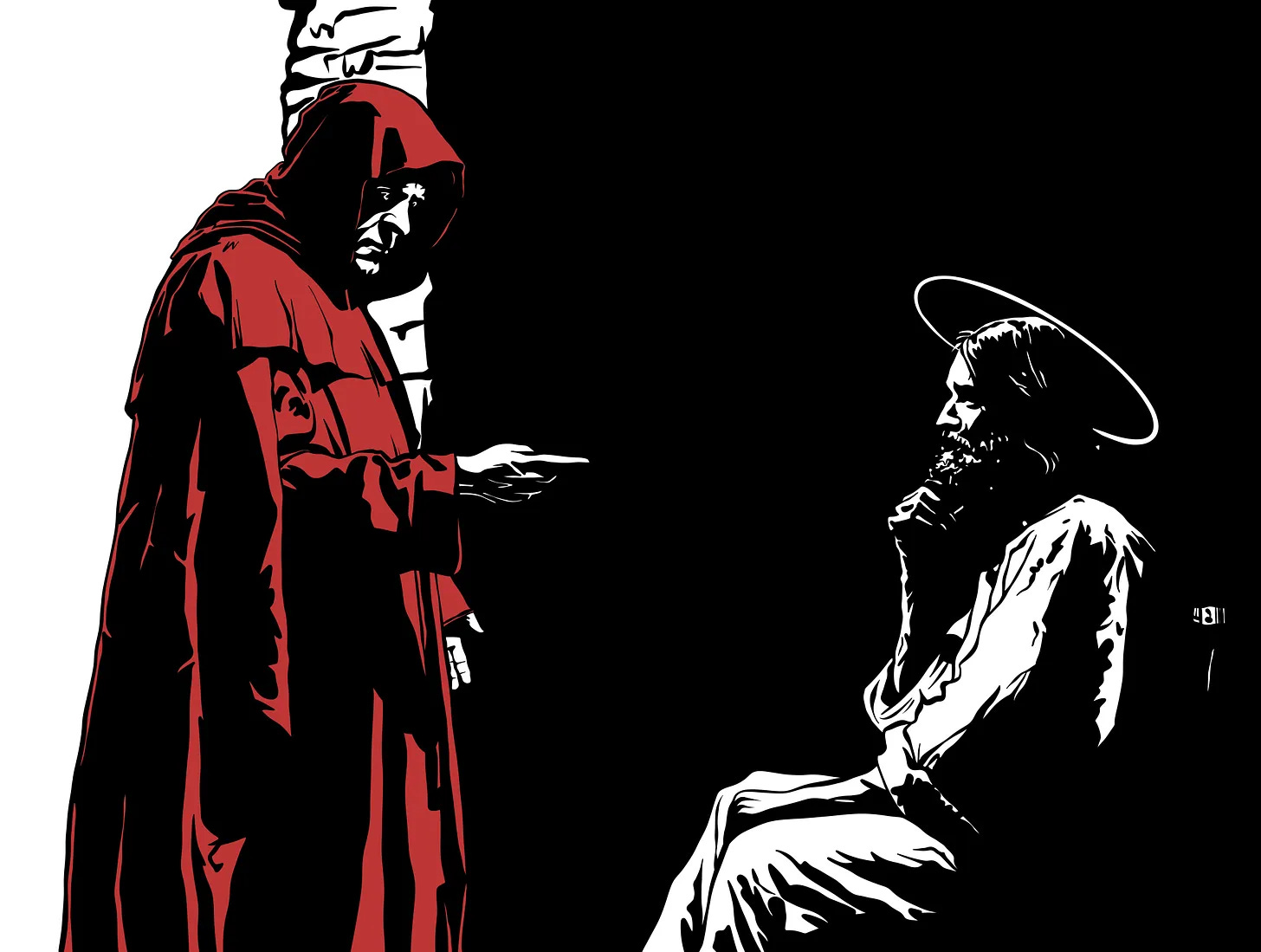
What follows isn’t a typical Substack essay.
It’s an adapted version of a journal‑style article I wrote - the kind usually written for philosophy, psychology, or existential studies publications -reworked and condensed here for my paid subscribers without sacrificing its intellectual rigor. I’m sharing it publicly because the questions it wrestles with don’t belong only in academic journals. They belong wherever people are trying to make sense of anxiety, meaning, freedom, and the quiet ways we avoid responsibility for our own lives.
The essay takes Dostoevsky’s Grand Inquisitor—a short but devastating parable inside The Brothers Karamazov—and reads it not as theology, but as existential psychology. The central claim is simple and unsettling: human beings don’t primarily resist freedom because they’re oppressed, but because freedom is experienced as a burden. Again and again, we trade existential responsibility for relief—certainty, authority, comfort, someone else to decide.
If that sounds abstract, it isn’t. This dynamic shows up daily in therapy rooms, spiritual crises, political movements, institutional life, and our personal attempts to feel okay without having to face what’s true. The article explores how this trade‑off works psychologically, how it’s reinforced culturally, and why existential health requires something far more demanding than comfort.
This is a longer, more structured piece than I usually publish here. It’s meant to be read slowly. You don’t need a background in philosophy or psychology—only a willingness to sit with questions that don’t resolve quickly.
Jesus returns offering freedom.
The Inquisitor responds by offering relief.
That exchange hasn’t stopped shaping our lives.
Keep reading with a 7-day free trial
Subscribe to Deconstructionology with Jim Palmer to keep reading this post and get 7 days of free access to the full post archives.