

Biology, Plus What?
Unpacking the Myth of Human Nature


Allow me a few orientational thoughts. Perhaps you are a longtime subscriber or just started reading my work this week. I named this Substack newsletter, Deconstructionology.
Deconstruction is the act of breaking something down into its parts in order to analyze, reinterpret, or question its meaning. It’s examining how something is built in order to reveal buried assumptions or hidden structures. I often deconstruct religious, secular and cultural constructions that shape human life, and often do harm.
Deconstructionology, therefore, is the disciplined practice (“‑ology”) of breaking down inherited beliefs, systems, and scripts so people can see what they’re made of, what they cost, and what becomes possible on the other side.
Deconstruction is often misunderstood as a casual questioning or an intellectual exercise, but in reality it is a demanding descent into the foundations that once held a life together. The deeper one goes, the more familiar certainties dissolve—beliefs, identities, moral frameworks, and sources of meaning that once felt stable are exposed as constructed, contingent, and sometimes coercive. This depth is precisely where the reward lies: not in comfort or reassurance, but in clarity, integrity, and a more honest relationship with reality.
Yet this process exacts a cost. It requires the courage to face loss, ambiguity, and existential disorientation without rushing to replace old answers with new dogmas. Deconstruction offers no guarantees, only the possibility of greater freedom and depth—but that possibility is reserved for those willing to endure the unprotected journey it demands.
This article’s subject of human nature is an example of this. The myth of human nature functions as one of the deepest load‑bearing beams in our cultural and religious architectures, quietly shaping everything from theology and politics to shame, control, and self‑understanding. To deconstruct at this depth is to ask a dangerous question: not merely what do we believe, but what have we been told we are—and who benefits from that story remaining unquestioned.
What are we born with?

Few ideas exert as much quiet influence over human life as the idea of human nature. It appears in moral arguments, political theories, religious doctrines, and everyday judgments about responsibility and blame. We invoke it to explain cruelty and compassion, to justify punishment and forgiveness, to defend systems of control or to argue for trust in human goodness. And yet, despite its ubiquity, the concept itself is rarely examined with the care its consequences demand.
The question “What are we born with?” is often treated as if it has a straightforward answer. Human beings are often portrayed as leaning decisively in one moral direction or another, as though the ambiguity of lived experience could be resolved by classification. Such claims promise clarity, offering a stable account of what human beings are and, by extension, how they should be managed, educated, corrected, or redeemed.
But these accounts frequently function less as empirical descriptions than as organizing myths—narratives that reduce complexity, ease moral uncertainty, and confer legitimacy on particular social arrangements.
This article begins from the suspicion that much of what passes for knowledge about human nature is better understood as story rather than fact. Not story in the sense of fiction, but in the sense of interpretive frameworks that quietly shape how individuals and societies respond to suffering, difference, and failure. When these frameworks harden into absolutes, they do not merely misdescribe human beings; they structure institutions, authorize power, and delimit the range of moral possibility.
Drawing on evolutionary biology, philosophy, and existential thought, I am challenging the assumption that human nature is a fixed essence that precedes history, culture, and development. I argue instead that what we call “human nature” is an emergent, dynamic condition - one formed at the intersection of biological capacities, relational vulnerability, cultural context, and the unavoidable givens of human existence. To mistake this condition for destiny is not only, in my view, a conceptual error; it carries ethical and existential costs.
At stake in this inquiry is not a more refined definition of humanity, but a more honest orientation to being human. How we answer the question of what we are shapes how we live with uncertainty, how we assign responsibility, and how we respond to one another in a world that offers no final guarantees. To unpack the myth of human nature, then, is not to dissolve responsibility, but to recover it by refusing stories that promise certainty at the expense of truth.
Human Nature as Superstition
Distinguished evolutionary biologist Michael Ghiselin once posed a proactive question with an unsettling answer:
“What does evolution teach us about human nature? It teaches us that human nature is a superstition.”
This line appears in Michael T. Ghiselin’s work Metaphysics and the Origin of Species, which is widely cited in the philosophy of biology literature.
Ghiselin’s claim is not that human beings lack recurring traits or biological regularities, but that biological species do not possess fixed essences in the Aristotelian sense. Meaning: that human nature is a fixed essence, a stable set of defining traits shared by all humans across time.
On Ghiselin’s view, “human nature” becomes misleading when it is treated as a timeless, uniform essence shared uniformly across the species, rather than as a population-level pattern characterized by variation, plasticity, and change.
From an evolutionary perspective, variability is not an anomaly to be explained away; it is a primary fact of life. Difference, flexibility, and responsiveness to environment are among the conditions that make adaptation possible, and any concept of “nature” that presupposes invariance is out of joint with the basic logic of evolutionary explanation.
Consequently, to speak of a stable “human nature” as if it were an inner blueprint is to import a pre-evolutionary metaphysics into a biological framework that fundamentally undermines it. What evolution reveals is not an essence waiting to be discovered, but a dynamic process in which capacities emerge, interact with environments, and are continually reshaped across time, culture, and circumstance.
In other words, “human nature” is best understood not as a fixed essence, but as an emergent property of complex biological, psychological, relational, and cultural systems. It arises from the interaction of evolved capacities—such as cognition, emotion, sociality, and language—with developmental processes and environmental contexts.
What we call “human nature” is neither reducible to genetics nor independent of history and culture. The regularities we observe in human behavior are real, but they are contingent, plastic, and continually reshaped through interaction and change. To treat these emergent patterns as timeless or destiny‑setting is to mistake a process for an essence. The “superstition” is treating historically and developmentally contingent tendencies as though they were fixed, universal, and morally determinative.
Questioning the Human Nature Narrative

Contemporary discourse frequently treats “human nature” as a fixed object of analysis—something that can be summarized in doctrinal statements, encoded in legal systems, diagnosed in moral frameworks, and corrected through ideological or therapeutic programs.
Humans are said to be inherently selfish or altruistic, sinful or rational, violent or cooperative, broken or noble. These descriptors are rarely offered tentatively. They function as settled conclusions, as if the matter has already been resolved and only its implications remain to be managed.
Yet such characterizations do not remain neutral observations. They operate as foundational premises upon which entire worldviews are constructed and defended. Once a particular account of human nature is accepted, it quietly authorizes specific institutional arrangements and power relations.
If humans are assumed to be dangerous by nature, systems of surveillance, control, and punishment appear necessary and justified. If humans are presumed to be naturally good or self-regulating, responsibility for harm is more easily displaced onto ignorance, bad actors, or structural failures. In either case, judgments about who deserves compassion, who requires correction, and who must be disciplined are rarely separable from the underlying narrative a culture tells about what human beings fundamentally are.
For this reason, I do not treat the question of human nature as abstract or merely theoretical. It is structurally determinative. Assumptions about what humans are shape ethical norms, political institutions, educational philosophies, religious doctrines, and systems of care and punishment. These assumptions determine whether suffering is met with curiosity or condemnation, whether failure invites repair or exclusion, and whether responsibility is cultivated or outsourced.
And yet, despite their far‑reaching consequences, such assumptions are often sustained by simplified myths—frequently inherited, seldom interrogated, and persistently reinforced because they offer psychological relief from uncertainty we find difficult to tolerate.
The appeal of these myths lies in their capacity to provide clarity, stability, and closure. Fixed stories about human nature promise orientation in a world that is otherwise ambiguous and unsettling. They reduce complexity, narrow moral ambiguity, and transform the unpredictability of human behavior into something that feels manageable.
The cost of this clarity, however, is substantial. False certainty produces what may be described as existential malnutrition: a diminished capacity to encounter reality without distortion, to assume responsibility without collapse, and to live without reliance on metaphysical or moral guarantees that cannot ultimately be sustained.
From this perspective, existential health is not, as I understand it, a matter of possessing the right beliefs about human nature, but of maintaining an honest relationship with uncertainty, complexity, and limitation. It is the capacity to remain oriented to reality without resorting to consoling illusions—whether religious, ideological, or therapeutic—that promise resolution at the expense of truth.
When our stories about human nature harden into absolutes, they may offer reassurance, but they do so by weakening the very capacities required for ethical maturity, accountability, and growth.
Biology, Plus What?
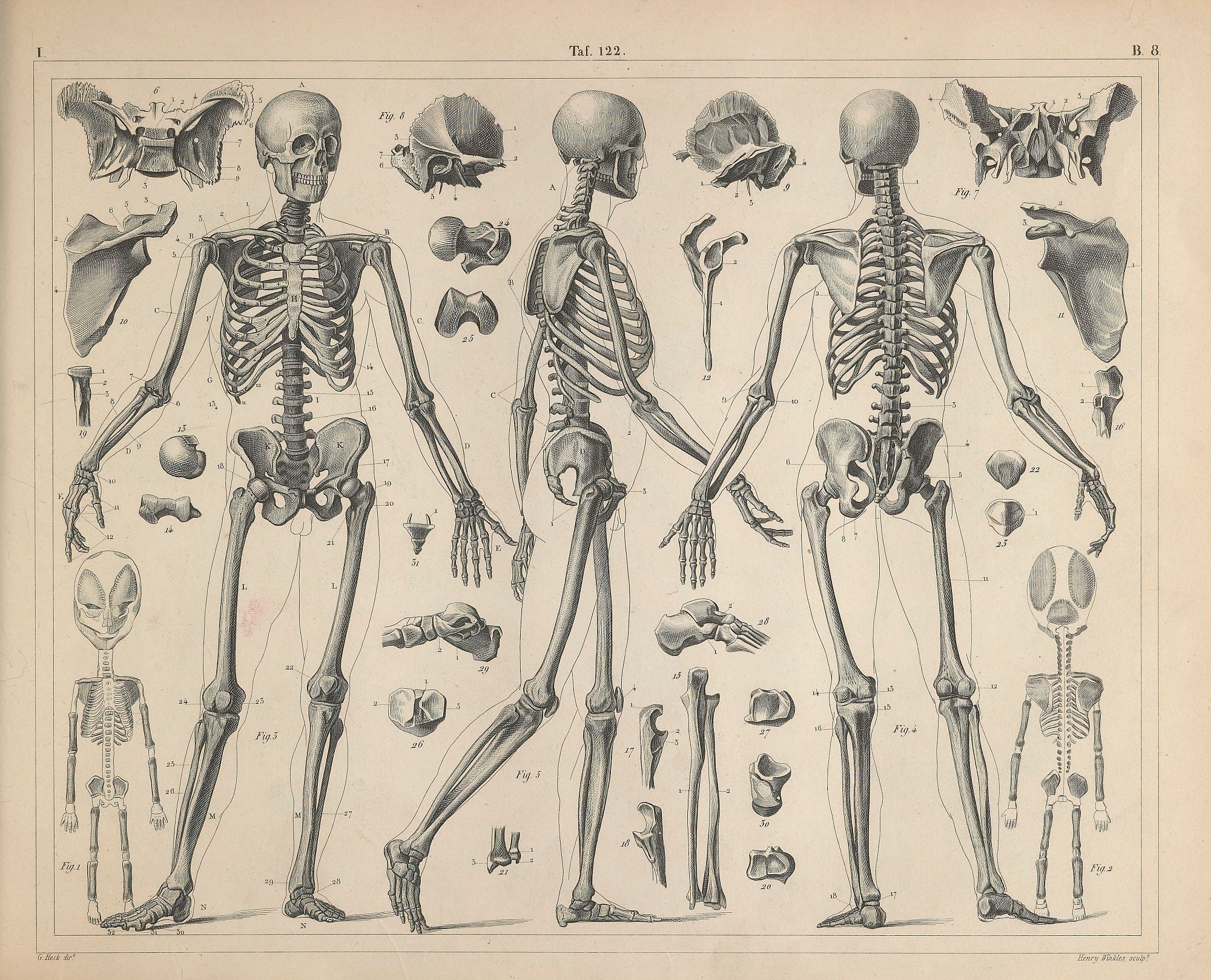
At the center of this discussion lies a deceptively simple set of questions.
What constitutes the human being?
Do we share a common essence, or are we better understood as the outcome of interacting biological, developmental, and cultural processes?
Are we created in the image of a transcendent moral source, or shaped by evolutionary pressures and environmental conditions?
Are our fundamental tendencies competitive or cooperative, destructive or generative?
These questions recur across philosophy, theology, biology, and the human sciences not because they admit of easy answers, but because they bear directly on how human beings understand responsibility, agency, and moral accountability.
The persistence of these questions reveals something essential about our species—something I take to be central to the argument that follows.
Human beings are not merely biological organisms responding mechanically to stimuli. We are interpretive beings who must make sense of our own existence. We do not simply live; we reflect on living. We do not merely suffer; we seek explanations for suffering, construct narratives around it, and locate it within broader frameworks of meaning. And we do not merely die; we develop symbolic systems—religious, cultural, political, and philosophical—to negotiate the psychological, moral, and social implications of mortality.
This interpretive capacity is not incidental to being human; it is constitutive of it. Our survival has depended not only on physical adaptation, but on our ability to generate shared meanings, coordinate action through symbols, and situate individual lives within larger stories that extend beyond the self.
Yet this same capacity also carries risk—one I believe we routinely underestimate. The stories we construct about what it means to be human can either cultivate responsibility and ethical maturity or obscure reality through oversimplification and myth. In this sense, the question of human nature is inseparable from the question of how human beings live with uncertainty, limitation, and finitude. What we believe ourselves to be quietly governs how we respond to suffering, power, difference, and the demands of living together in a world that offers no final explanations.
Ghiselin’s Skepticism
Ghiselin’s skepticism emerges from a Darwinian framework in which variability is primary. Species do not exhibit fixed natures but demonstrate continuous variation across time, geography, and environment. If evolutionary theory is taken seriously, the notion of an immutable human essence appears increasingly untenable.
And yet, this conclusion cannot be carried too far. Human beings clearly share a common biological architecture. We possess nervous systems, attachment needs, linguistic capacity, social instincts, moral emotions, and embodied vulnerability. These features are not arbitrary. They are products of evolutionary history. To deny their significance is not sophistication but ideology.
What follows from this tension is a more nuanced position. Human nature is neither a timeless essence nor a conceptual illusion. It is better understood as an architecture: a constellation of evolved capacities and constraints that are shaped, intensified, redirected, and often distorted through development, culture, language, power relations, and trauma.
In this sense, human nature is not a static noun but an ongoing process. It is enacted rather than possessed. It cannot be solved like an equation, only engaged as a set of conditions within which responsibility must be exercised.
Much of the historical debate has been framed in terms of two opposing positions: the blank slate and innatism. The former suggests that humans are born without inherent mental content and are shaped entirely by experience. The latter proposes that the mind arrives equipped with innate structures or ideas.
Both positions represent attempts to account for what is given and what is acquired. The difficulty arises when either framework is treated as exhaustive. The blank slate risks naïve optimism regarding human malleability, while innatism easily slips into fatalism.
Contemporary research increasingly supports an interactionist view, in which biological predispositions and environmental influences are understood as mutually constitutive rather than mutually exclusive.
From this perspective, much human suffering cannot, in my view, be attributed to human nature itself, but to the narratives constructed around it. Societies do not merely misunderstand themselves; they institutionalize those misunderstandings. Educational systems, religious doctrines, moral codes, and punitive structures frequently reflect distorted assumptions about what people are capable of and what they require.
At a public lecture on human behavior, a speaker assured the audience—with impressive confidence—that human beings are naturally selfish, and that any apparent altruism is merely self‑interest in better lighting. During the question period, someone asked whether this also applied to people who run into burning buildings to rescue strangers.
The speaker paused, nodded thoughtfully, and replied that such individuals were still acting selfishly—motivated, he explained, by an internal need to feel heroic. A moment later, another audience member raised a hand and asked whether the same explanation would apply if the rescuer died in the fire. The speaker hesitated, adjusted his glasses, and said that in such cases the individual must have miscalculated the personal payoff.
When our assumptions about human nature calcify into settled truths, they do not merely misdescribe human behavior; they generate shame, justify violence, and sustain systems of control that can withstand almost any counterexample—so long as the theory itself remains untouched.
Bad Theology and Rose-Colored Humanism

Two particularly influential narratives continue to shape contemporary thought. The Christian tradition largely framed human nature as fallen, depraved, and in need of external redemption. The Enlightenment, in contrast, emphasized human goodness and the possibility of moral progress through reason and education.
Each narrative contains a partial truth. Humans are capable of profound harm, and ignorance plays a significant role in suffering. Yet each narrative becomes destructive when treated as comprehensive. Human beings are neither purely corrupt nor reliably benevolent. They are capable of extraordinary compassion and extraordinary violence, often within the same life. To deny this complexity is to abandon adult moral reasoning in favor of simplification.
Existential health begins with a refusal to lie about these realities. It concerns the capacity of individuals and societies to relate honestly to the fundamental conditions of existence—mortality, uncertainty, desire, meaning, and belonging.
When stories about human nature obscure these conditions, they produce maladaptive coping strategies: denial, scapegoating, magical thinking, and the abdication of responsibility. Religion enters this discussion not as a caricatured antagonist, but as one of the most powerful narrative systems in human history, particularly in its formulation of original sin.
The doctrine of original sin represents a form of theological innatism that assigns moral corruption prior to action. It defines identity before experience and relocates responsibility for repair to an external agent. The psychological and developmental consequences are substantial.
Such a framework encourages compliance rather than growth, dependence rather than agency, and fear rather than truth-seeking. When combined with reward-and-punishment schemas, it sustains belief systems through anxiety rather than coherence.
Against this backdrop, an alternative account of human nature emerges—one grounded in responsibility rather than rescue. Human beings are born with capacities for care and harm, shaped by conditions they did not choose, and accountable for what they do with what they inherit. This perspective neither denies destructiveness nor excuses it. It does not promise perfection, but it demands participation. It reframes growth as an ongoing, imperfect process rather than a salvific event.
Eve and Jean-Paul

The re‑reading of the Genesis figure Eve illustrates this shift with particular clarity. Interpreted existentially, the narrative does not describe the sudden entry of moral corruption into an otherwise pristine world, but the emergence of self‑consciousness and the weight of moral responsibility.
The act of eating from the tree of the knowledge of good and evil marks a transition from unreflective existence to reflective awareness—from a state of immediacy into one in which human beings become conscious of themselves as agents capable of choice, consequence, and evaluation. In this reading, the so‑called “Fall” is not a collapse into depravity but an awakening into the conditions of mature human life.
What the narrative dramatizes is the moment in which innocence gives way to understanding. With the opening of the eyes comes the recognition of vulnerability, finitude, and accountability. Shame, in this context, is not evidence of inherent corruption but of newly acquired self‑awareness—the recognition that one is exposed, limited, and responsible in a world no longer buffered by ignorance. Knowledge brings freedom, but it also brings anxiety. To know good and evil is to become answerable for one’s actions, and to carry the burden of discernment without the protection of moral simplicity.
Read this way, Eve’s action represents the courage to know, rather than the failure to obey. The narrative stages a fundamental existential truth—one that continues to confront us—that human freedom cannot be exercised without cost. To step into awareness is to relinquish the comforts of unexamined existence and to accept the responsibility of living without guarantees.
The expulsion from Eden thus symbolizes not divine punishment but the irreversible passage into a world where meaning must be negotiated rather than given, and where ethical life begins precisely because innocence can no longer be maintained.
This interpretation aligns with existential philosophy’s insistence that human beings are not defined by a pre‑given essence but by how we respond to the conditions they awaken into—a claim I take to be ethically decisive. As Jean-Paul Sartre would later articulate, freedom and responsibility are inseparable, and the burden of choice cannot be delegated to external authorities.
In this light, the story of Eve becomes less a cautionary tale about disobedience and more a mythic account of the birth of human responsibility—the moment when humanity begins the difficult work of living consciously within a world that demands judgment, courage, and care.
Knowledge brings freedom, and freedom brings burden. As Sartre observed, human beings are condemned to be free, responsible for what they make of themselves in the absence of external justification. This insight situates human nature not in essence, but in response.
Human beings, then, come into the world not with a fixed essence but with a constellation of interrelated capacities—capacities for rationality and reflection, for relationship and attachment, for language, empathy, fear, and meaning‑making—alongside corresponding vulnerabilities to loss, shame, scarcity, and the dynamics of power.
These capacities are never expressed in isolation; they are formed, intensified, or distorted within particular developmental, cultural, and historical contexts that either cultivate human possibility or deform it. All of this unfolds under unavoidable existential conditions—mortality, uncertainty, and groundlessness—that no individual or society can transcend. Taken together, these elements constitute what I mean by “human nature”: not a verdict handed down in advance, but a condition into which one is thrown and within which a life must be negotiated.
The stakes of this understanding extend beyond individual psychology. Narratives about human nature scale into social systems. A story of inherent depravity produces control-oriented institutions. A story of inherent goodness produces systems that underestimate harm. A story that acknowledges complexity makes possible structures oriented toward development, accountability, repair, and ethical participation without coercion.
In this light, human nature becomes superstitious only when treated as destiny—when it is invoked to excuse harm, justify domination, or evade responsibility. Human beings are neither angels nor demons, neither blank slates nor doomed creatures. They are capable of reflection, transformation, and destruction. The burden and dignity of being human lies in the capacity to remain awake to these conditions and to act within them responsibly.
If existential health signifies anything, it is this capacity, as I understand it: to refuse false stories, to confront the givens of existence without illusion, and to participate consciously in the ongoing work of becoming human.
Every Moment A New World
Federico García Lorca (1898–1936) was a Spanish poet, playwright, and theatre director, widely regarded as one of the most important literary figures of the twentieth century. He wrote
“Every step we take on earth brings us to a new world.”
In poetic form, this names that being human is not a static condition but an ongoing emergence. The “new world” Lorca points to is not primarily geographic or external. It is existential. Each step alters the field of meaning in which we live, because action changes not only circumstances but the interpretive horizon through which we understand ourselves and reality.
Lorca’s line undermines the idea of a fixed human essence. If every step brings us to a new world, then human nature cannot be a settled core that merely expresses itself over time. It is something that takes shape through movement—through choice, response, interpretation, and responsibility. In other words, human nature is not a noun but a verb: not an essence we possess, but a process we inhabit. What we are is continually being reconfigured by how we engage the conditions of existence.
His words also clarify why myths of human nature are so powerful—and so dangerous. Fixed stories promise a stable world: a moral landscape that does not shift beneath our feet. Lorca suggests the opposite. The world is always changing because we are changing within it. To deny this is to cling to false certainty, to pretend that our steps do not matter as much as they do. In this sense, existential malnutrition arises when we refuse to acknowledge that each action reconstitutes the world we must then live in.
If every step brings a new world, then health is not the achievement of final coherence or certainty, but the capacity to remain oriented amid change. Existential health is the ability to take responsibility for the worlds our steps create—to live awake to the fact that meaning is not inherited whole, but formed through participation. Lorca’s sentence thus becomes a compelling summary of the central thesis: to be human is to be continually arriving, without guarantees, into worlds we are helping to make.
Living Without the Myth

The question “What are we born with?” cannot be answered by appealing to a fixed inventory of traits, nor by replacing one reductive story of human nature with another.
What emerges instead from evolutionary biology, existential philosophy, and lived experience is a more demanding conclusion: that human beings are born into a condition rather than endowed with an essence. We arrive equipped with capacities and vulnerabilities, shaped by forces we did not choose, and exposed to existential givens—mortality, uncertainty, and groundlessness—that no cultural or ideological system can finally resolve.
To abandon the myth of a fixed human nature is not to abandon moral seriousness or responsibility. On the contrary, it intensifies both. When human behavior is no longer explained away by appeals to inherent goodness or inherent corruption, responsibility can no longer be outsourced to nature, fate, or theology. What remains is the task of discernment: learning how to live responsibly within complexity, ambiguity, and limitation, without the reassurance of guarantees.
This shift has consequences that extend well beyond philosophical debate. Stories about human nature scale into institutions, laws, educational systems, and religious frameworks. They shape how societies respond to failure and suffering, whether with curiosity or condemnation, repair or punishment. A story that treats human beings as essentially broken tends to justify control and coercion; a story that treats them as essentially good tends to underestimate harm. Only an account that holds together human vulnerability and human responsibility can support structures oriented toward development, accountability, and care without illusion.
In this sense, existential health is not the possession of a correct doctrine about what humans are, but the cultivated capacity to live without false certainty. It is the ability to remain oriented to reality as it is, to tolerate ambiguity without collapse, and to act ethically in the absence of metaphysical assurances.
To live this way is neither comfortable nor simple. It requires relinquishing innocence—whether religious, ideological, or therapeutic—and accepting that meaning is not inherited whole but formed through participation.
If human nature is not destiny, then neither is despair. What we are born with does not dictate what we become, but it does define the conditions under which becoming takes place.
The task before us is not to recover an essence we never had, but to take responsibility for the worlds we create through our choices, interpretations, and actions. To do so is to live awake to the fact that being human is not a problem to be solved, but a condition to be met—again and again—without guarantees, and yet with care.
If this work resonates and you want to go deeper, becoming a paid subscriber helps keep it independent, focused, and uncompromised. Your support makes space for deeper essays, harder questions, and work that doesn’t rush toward easy answers.
I agree with this article completely except for one thing you keep going back to the Bible and trying to twist some of what it says into this new understanding. All we need to do is just state plainly that the Bible was wrong because the people didn’t know what they were talking about. We now know what we were talking about and that’s why I agree with everything you say in this article except let’s just leave the Bible alone forget about it. Especially if the Genesis part we could keep Jesus the same if they are correct are the ones that are correct. Otherwise the rest of its junk.
"Humans are said to be inherently selfish or altruistic, sinful or rational, violent or cooperative, broken or noble. These descriptors are rarely offered tentatively. They function as settled conclusions, as if the matter has already been resolved and only its implications remain to be managed."
Thank you for this. It is very hard right now not to assume all of humanity is irredeemably selfish and violent. I needed this reminder.