

Aliens After God
Understanding the Age of Technological Re-Enchantment

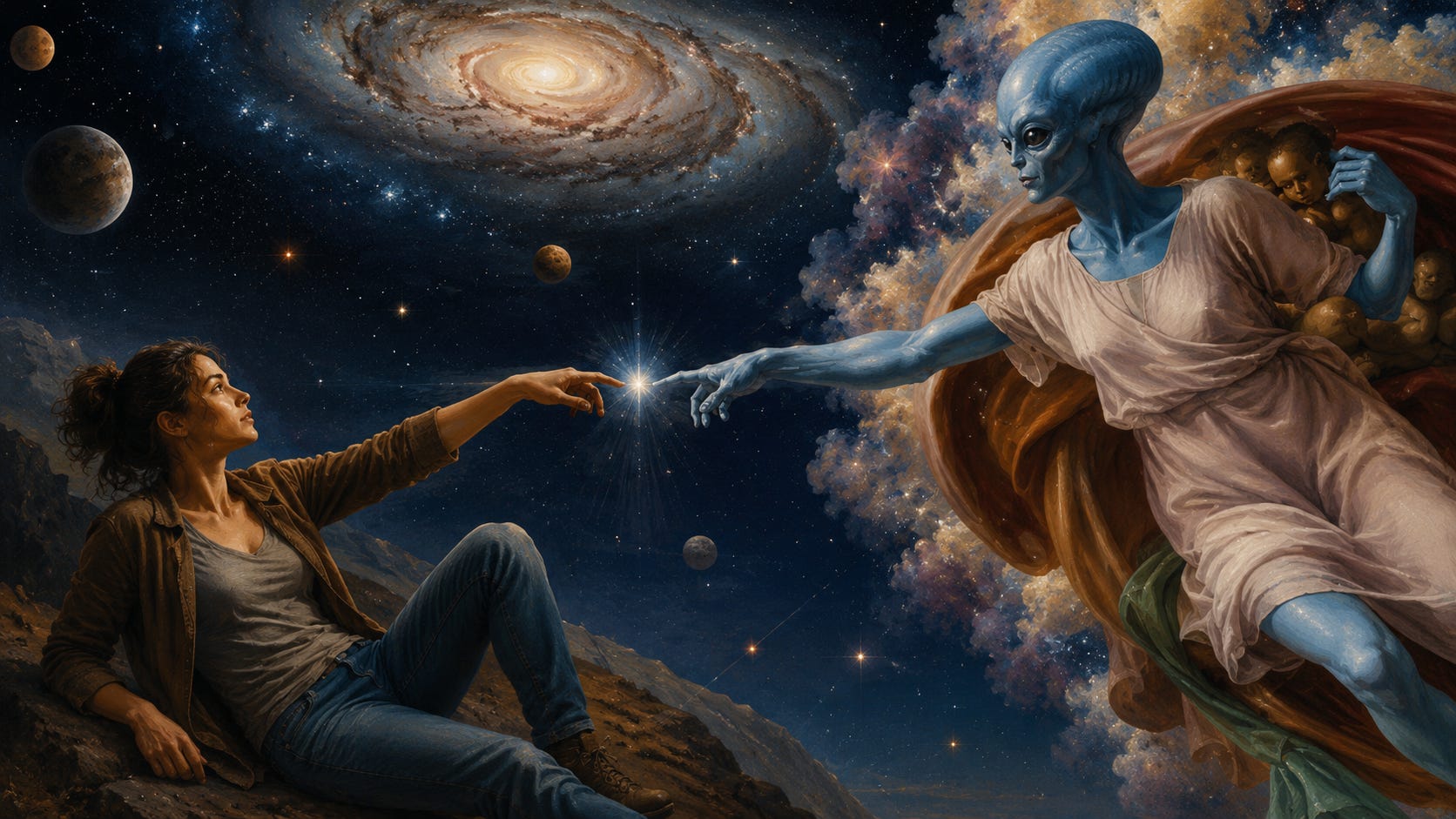
For most of my writing life, I have largely ignored the subject of aliens, UFOs, extraterrestrial life, and related speculation. My work in existential health has focused far more on meaning, mortality, identity, symbolic life, religious deconstruction, social fragmentation, and the psychological condition of modern humanity under technological civilization. The subject of extraterrestrials often seemed too saturated with sensationalism, conspiracy culture, pseudoscience, and entertainment mythology to warrant serious attention.
But recently I was invited into several conversations exploring the contemporary fascination with UFOs, extraterrestrial intelligence, and disclosure culture. As I began researching the topic more carefully, something unexpected happened. I realized the subject was not peripheral to my work at all. In many ways, it was directly connected to some of the deepest spiritual dynamics shaping modern civilization.
Part of what caught my attention was not simply the question of whether extraterrestrial life objectively exists somewhere in the universe. It was the extraordinary psychological and cultural energy now surrounding the topic itself.
In recent years, congressional hearings on Unidentified Anomalous Phenomena (UAPs), Pentagon investigations, military whistleblower testimony, leaked military footage, and ongoing government declassification efforts have increasingly pushed the subject from the fringes of culture into mainstream public consciousness.
Most recently, public fascination intensified again after the Pentagon released another large batch of declassified UFO and UAP files containing military footage, historical reports, astronaut testimony, and decades of government records related to unexplained aerial phenomena. The release generated enormous public attention, with Pentagon officials reporting hundreds of millions of visits to the new archive within hours of launch.
At the same time, serious academic and scientific inquiry into UAP phenomena has steadily expanded in recent years as researchers, astronomers, military analysts, physicists, and information scientists increasingly treat the topic as worthy of formal investigation rather than automatic ridicule.
What interested me, however, was not merely the data itself. It was what the current fascination with extraterrestrials appeared to reveal about the existential condition of technological civilization.
The more I examined the phenomenon, it became clear that our obsession with aliens is not ultimately about aliens alone. It is about meaning, transcendence, and metaphysical longing surviving within secular civilization after the collapse of inherited religious worlds. It reflects psychologically disoriented human beings searching for revelation, cosmic belonging, hidden intelligence, meaning, and symbolic participation within a reality that increasingly feels fragmented, unstable, disenchanted, and spiritually empty.
In other words, the subject turned out to be deeply relevant to existential health after all.
Return of the Sacred in a Secular Age
One of the great contradictions of Western civilization is that many people who consider themselves secular, rational, scientific, and post-religious remain deeply fascinated by extraterrestrials, UFOs, hidden cosmic intelligences, interdimensional beings, and the possibility that advanced forms of life may be observing humanity from beyond the stars.
Entire media ecosystems now exist around these subjects. Governments release footage of unexplained aerial phenomena to enormous public interest. Podcasts, documentaries, conferences, online forums, and speculative communities attract millions attempting to decipher the meaning of possible extraterrestrial existence. What makes this especially revealing is that much of this fascination exists among populations that simultaneously dismiss traditional religion as primitive mythology or pre-scientific superstition.
This contradiction reveals something important about the current human condition. The fascination with aliens is not ultimately about aliens. It is about the persistence of existential hunger after the weakening of inherited systems of meaning.
Human beings do not stop being meaning-seeking creatures simply because confidence in traditional religion declines. The psychological and symbolic structures that once produced religious imagination do not suddenly disappear under secularization. They remain active beneath the surface of contemporary life searching for new forms through which to express themselves.
The modern world often assumed that once religion weakened, humanity would naturally become more rational, empirical, and psychologically disenchanted. But human beings are not merely rational creatures. We are symbolic beings. We construct narratives capable of metabolizing mortality, suffering, uncertainty, awe, loneliness, fragility, beauty, and the overwhelming mystery of existence itself.
Traditional religions provided symbolic worlds large enough to contain these realities. They situated individual life inside larger cosmological frameworks that offered orientation, continuity, moral structure, and psychological coherence. As those structures weakened, many assumed humanity would become less mythological.
What actually occurred was far more psychologically complicated. We did not become less mythological. We became less conscious of the mythologies shaping us.
Modern Civilization Did Not Escape Myth

One of the central assumptions of secular modernity is that humanity gradually evolved beyond mythological consciousness itself. According to this narrative, earlier civilizations interpreted reality through religion, symbolism, sacred cosmology, and metaphysical imagination because they lacked scientific maturity. Western civilization, by contrast, imagines itself grounded primarily in rationality, empiricism, evidence, and technological understanding.
But this narrative collapses under serious examination.
Human beings did not become non-mythological after the decline of religion because mythological consciousness is not merely a primitive cultural stage humanity eventually outgrows. It is a structural feature of consciousness itself. Human beings require symbolic frameworks through which existence becomes psychologically intelligible.
We do not simply inhabit material reality. We inhabit interpreted reality.
Consciousness continuously organizes experience through narratives of meaning, identity, morality, belonging, destiny, danger, transcendence, and purpose. Remove older symbolic systems without cultivating deeper symbolic awareness, and new mythologies inevitably emerge to replace them.
This is precisely what occurred within late modern civilization.
The world dismantled many inherited religious structures while falsely imagining this process would eliminate mythological consciousness altogether. Instead, mythological energies migrated into secular systems while the culture itself increasingly lost the symbolic literacy necessary to recognize what was happening.
The result is not a civilization free from myth, but one that is unconsciously generating new mythologies while insisting they are merely rational, scientific, political, or technological frameworks.
A society consciously engaging symbolic life can examine its own metaphors, narratives, rituals, projections, and spiritual needs. But when symbolic structures operate unconsciously, mythologies increasingly become mistaken for objective reality itself. The result is a diminished capacity to recognize how psychological, metaphysical, and spiritual longings continue shaping collective consciousness beneath secular language.
The decline of religion did not eliminate humanity’s longing for transcendence, revelation, belonging, meaning, or the sense that consciousness participates in something larger than isolated existence. Technological civilization did not abolish these needs. It redirected them into secular symbolic systems.
From Sacred Cosmos to Digital Hyperreality
For most of human history, we inhabited deeply symbolic worlds. Premodern civilizations did not experience reality as psychologically neutral, mechanistic, or spiritually empty. The cosmos itself was understood as alive with metaphysical significance. Gods, spirits, angels, ancestors, sacred orders, divine intelligences, and transcendent realities were woven directly into humanity’s understanding of existence.
Reality was not merely material. It was participatory.
Human beings experienced themselves as situated within larger cosmological structures that provided continuity, orientation, moral order, existential meaning, and symbolic coherence. Suffering, mortality, beauty, catastrophe, and human destiny all unfolded within intelligible metaphysical frameworks capable of psychologically containing existence itself.
The Enlightenment dramatically transformed this relationship to reality.
Scientific rationality, empirical inquiry, secularization, and technological advancement generated extraordinary intellectual and material progress. The modern world increasingly rejected mythological and religious explanations in favor of mechanism, reason, evidence, and material analysis. Nature became less enchanted and more mechanical. Reality became increasingly interpreted through systems, laws, structures, and measurable processes rather than sacred cosmologies.
This transformation liberated humanity in many important ways. It diminished the authority of oppressive institutions, accelerated scientific discovery, expanded individual freedom, and radically increased humanity’s capacity to understand and manipulate the physical world.
But disenchantment carried psychological consequences industrial society did not fully anticipate.
As industrial civilization expanded, older symbolic structures dissolved faster than new forms of meaningful orientation emerged to replace them. Meaning became increasingly privatized. Transcendence receded from public life. Human beings were increasingly encouraged to understand themselves less as participants within sacred cosmological orders and more as autonomous individuals existing inside an indifferent material universe.
Industrial modernity solved many material problems while simultaneously destabilizing the symbolic conditions that had historically grounded human consciousness.
Human beings solved many material problems while becoming increasingly unsure what reality itself means. The postmodern and digital eras accelerated this fragmentation even further.
Shared narratives fractured. Institutional trust eroded. Reality itself became increasingly mediated through screens, algorithms, simulations, information systems, and digitally constructed identities. The internet transformed consciousness into a permanently connected yet psychologically destabilizing environment saturated with competing realities, symbolic overload, emotional amplification, and continuous informational stimulation.
Under such conditions, older forms of meaning collapsed while new forms of mythological consciousness began rapidly regenerating through technological systems themselves.
This is one reason modern civilization increasingly oscillates between radical skepticism and radical belief at the same time. The individual often distrusts traditional religion while simultaneously becoming vulnerable to conspiracy systems, technological salvation narratives, digital cult formations, apocalyptic ideologies, extraterrestrial mythologies, simulation theories, techno-spirituality, and algorithmically amplified systems of symbolic projection.
The world did not become less mythological after disenchantment. It became fragmented, psychologically destabilized, and increasingly unconscious of the mythological structures reorganizing themselves beneath digital culture.
We are now entering a phase of technological re-enchantment: the reconstruction of transcendence, myth, revelation, and metaphysical longing through technological and cosmic frameworks after the collapse of traditional religious authority
Artificial intelligence, extraterrestrial speculation, digital transcendence, virtual worlds, simulation theory, transhumanism, disclosure culture, and technologically mediated visions of revelation increasingly function as emerging symbolic systems through which we continue searching for meaning, orientation, transcendence, and metaphysical participation after the collapse of older sacred worlds.
The modern world attempted to strip transcendence from reality.
But human consciousness never stopped searching for it.
The Return of Myth
Once you see this clearly, large parts of contemporary culture begin to look very different. Many supposedly secular domains increasingly function with unmistakably religious intensity despite imagining themselves post-religious.
Conspiracy culture, technological utopianism, artificial intelligence discourse, simulation theory, transhumanism, and extraterrestrial mythology increasingly function as secularized forms of revelation, salvation, apocalypse, transcendence, immortality, and metaphysical participation inside technological civilization.
The modern world often believes it has escaped mythological consciousness while continuing to organize psychological and collective life around displaced forms of cosmic meaning, hidden knowledge, redemption, destiny, and revelation.
Modern mythologies rarely announce themselves as mythologies. They present themselves as pure information, hidden truth, scientific inevitability, technological destiny, political revelation, or suppressed knowledge waiting to be disclosed. Yet beneath their secular language often operate the same psychological structures that animated older religious worlds: prophecy, apocalypse, salvation, initiation, revelation, cosmic struggle, chosen communities, hidden enemies, transcendence, and redemption.
The heavens may have emptied of angels. But technological civilization is gradually repopulating the cosmos with aliens, simulations, superintelligence, interdimensional beings, digital transcendence, and technologically mediated visions of revelation and apocalypse.
The forms changed because civilization changed. The existential structures beneath them did not.
The Crisis Beneath Modern Consciousness

The deeper issue beneath all of this is not whether extraterrestrials objectively exist somewhere in the universe. It’s what this symbolic migration reveals about the existential condition of modern humanity itself.
Western civilization has dismantled many inherited structures that once provided psychological orientation, meaning, metaphysical coherence, and symbolic containment for human life. But nothing equally stable has emerged to replace them.
As a result, large portions of modern consciousness now exist in circumstances of profound existential fragmentation.
People still experience mortality, awe, loneliness, suffering, fear, insignificance, longing, and metaphysical uncertainty. But many no longer possess coherent symbolic frameworks capable of integrating those realities into psychologically sustainable forms of meaning. The result is not liberation from existential struggle. The result is often ontological instability.
Human beings increasingly find themselves suspended between worlds:
no longer fully believing in inherited religious cosmologies, yet unable to function as purely material beings inside a disenchanted universe.
This produces a condition of deep metaphysical homelessness.
The modern person is frequently told they inhabit a meaningless cosmos governed only by accident, mechanism, consumption, optimization, and technological systems. Yet consciousness itself resists living entirely inside that framework. Human beings continue searching for significance, transcendence, intelligibility, belonging, and participation in realities larger than the isolated self.
The hunger never disappeared.
It merely became psychologically displaced.
Western culture increasingly oscillates between technological triumphalism and existential destabilization at the same time. Societies become more technologically sophisticated while populations simultaneously experience rising anxiety, nihilism, symbolic confusion, identity fragmentation, conspiratorial thinking, spiritual disorientation, and chronic meaning instability.
The issue is not simply intellectual confusion. It is the erosion of coherent reality.
Extraterrestrial fascination matters culturally and psychologically far beyond the question of whether alien civilizations objectively exist. Alien mythology reveals the return of metaphysical longing inside a civilization still attempting to imagine itself beyond metaphysics altogether.
The world may not be becoming less mythological at all.
It may be entering one of the most psychologically myth-saturated periods in human history while lacking the symbolic self-awareness necessary to recognize what is happening.
Extraterrestrials as Secular Angels

Historically, human beings populated reality with mediating intelligences existing between ordinary human life and ultimate reality. Gods, angels, spirits, celestial messengers, ancestors, and divine beings occupied symbolic territory linking humanity to transcendence. These figures were not simply supernatural decorations added onto human existence. They carried enormous psychological and spiritual significance. They represented humanity’s attempts to imagine forms of intelligence greater than itself while simultaneously projecting onto those figures its deepest fears, moral concerns, hopes, and longings for guidance.
What is striking about many contemporary alien narratives is how structurally similar they are to older religious cosmologies despite emerging within technologically sophisticated societies.
Extraterrestrials are frequently imagined as beings possessing superior intelligence, advanced powers, heightened consciousness, access to hidden knowledge, and technological capacities indistinguishable from miracles. They descend from the heavens. They observe humanity. They warn of planetary catastrophe. They possess insight into humanity’s future. They transcend national boundaries and earthly limitations. In some narratives they even function as moral evaluators judging whether humanity is sufficiently evolved to enter a higher stage of existence.
The symbolic continuity is difficult to ignore. The modern imagination often believes it has abandoned mythological consciousness while unconsciously reproducing ancient mythological structures through technological language. In premodern societies angels descended from heavenly realms bearing revelation. In technological civilization extraterrestrials descend from interstellar space bearing revelation. The symbolic vocabulary changes, but the underlying human structure remains remarkably familiar.
Even the emotional tone surrounding extraterrestrial encounters mirrors religious experience with startling precision. Contact narratives frequently include overwhelming awe, paralysis, altered states of consciousness, telepathic communication, feelings of existential insignificance, encounters with superior intelligence, and transformative experiences that permanently alter an individual’s understanding of reality. Many abductee and contact stories resemble modernized visionary literature. The experiencer encounters beings from beyond ordinary reality, receives hidden knowledge, undergoes psychological transformation, and returns altered by contact with a higher order of existence.
This does not necessarily invalidate such experiences. Human beings remain mythological creatures even within secular civilization. The symbolic structures through which consciousness interprets transcendence remain deeply active regardless of whether they emerge through explicitly religious language. We may have dismantled traditional heavens, but psychologically it continues searching for beings capable of mediating between ordinary human existence and realities perceived as larger, deeper, and more ultimate than ourselves.
Aliens as Modern Myth
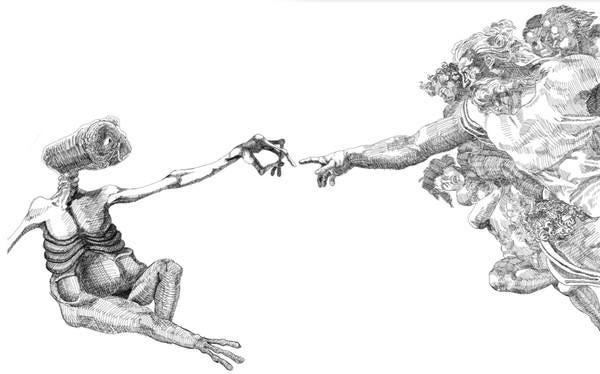
Extraterrestrials occupy a uniquely powerful symbolic position within modern consciousness because they allow technological civilization to recover transcendence without returning to traditional religion.
This is psychologically significant.
Many people remain deeply uncomfortable with institutional religion, metaphysical authority, dogma, supernaturalism, and systems requiring submission to inherited theological structures. Yet the collapse of traditional religion did not eliminate humanity’s longing for mystery, cosmic belonging, revelation, or contact with forms of intelligence greater than itself.
Alien mythology emerged precisely within this tension.
Extraterrestrials allow modern consciousness to reintroduce transcendence while preserving its self-image as rational, scientific, and post-religious. Angels appear premodern. Gods appear mythological. But advanced extraterrestrials remain symbolically compatible with technological civilization because they can be imagined within scientific possibility even when functioning psychologically in deeply mythological ways.
This makes alien narratives uniquely suited to secular modernity.
Alien narratives preserve transcendence while bypassing many of the institutional, theological, and doctrinal structures that secular consciousness no longer trusts. In doing so, they allow technological civilization to recover metaphysical imagination while continuing to imagine itself post-religious and intellectually emancipated from myth altogether.
In many respects, extraterrestrials function as technologically plausible transcendence.
Alien fascination often carries a very different psychological tone than traditional religious belief. The contremporary fascination with extraterrestrials frequently allows individuals to experience awe, revelation, cosmic participation, existential mystery, and symbolic re-enchantment while avoiding many of the moral, institutional, and spiritual demands historically associated with religion.
Traditional religions often required surrender, discipline, moral accountability, communal obligation, spiritual transformation, and submission to metaphysical authority structures larger than the individual self. Alien spirituality frequently preserves transcendence while leaving the modern autonomous self largely intact.
A person can remain psychologically sovereign while still participating in cosmic mystery.
This is extraordinarily attractive under our current reality where institutional distrust, individualism, therapeutic culture, and suspicion toward authority have become deeply normalized.
The modern world rejected the old heavens. But it never stopped searching for intelligence beyond itself.
Disclosure and Institutional Collapse

One of the most fascinating aspects of modern UFO culture is its obsession with “disclosure.”
“Disclosure Culture” refers to the growing belief that hidden truths about extraterrestrial life, UFOs, advanced technologies, or concealed realities are being intentionally withheld from the public by governments, institutions, or elite power structures, and that humanity is approaching a moment of large-scale revelation that will fundamentally transform human consciousness, civilization, and our understanding of reality itself.
Beneath its surface, disclosure culture functions not merely as a scientific or political phenomenon, but as a secular form of apocalyptic expectation centered on unveiling, revelation, hidden knowledge, and the belief that reality itself is larger than official narratives admit. Disclosure narratives emerge most powerfully during periods where institutional legitimacy begins collapsing.
Historically, apocalyptic movements intensify during eras of civilizational instability. The Greek term apokalypsis originally referred not to catastrophe, but to unveiling. Apocalyptic traditions emerged when populations believed hidden truths were concealed beneath ordinary appearances and that history was moving toward some climactic revelation that would permanently alter human understanding.
Contemporary disclosure culture reproduces this structure almost perfectly. There are hidden realities. Powerful institutions conceal them. Humanity remains asleep. A revelatory event is approaching that will fundamentally transform civilization’s understanding of itself and the cosmos.
The pattern is inseparable from the broader crisis of trust unfolding throughout modern civilization. Confidence in governments, media systems, religious authorities, scientific institutions, educational structures, and cultural gatekeepers has eroded dramatically across much of the world. Shared reality itself increasingly fragments into competing epistemological tribes. Under such circumstances, populations become highly susceptible to revelation frameworks promising hidden truth beneath official appearances.
Disclosure culture therefore reflects something much larger than alien speculation. It reflects the collapse of confidence in reality-management systems themselves. Large numbers of people no longer believe institutions are capable of mediating truth honestly. This creates fertile conditions for narratives centered on hidden knowledge, concealed realities, secret elites, and revelatory awakening.
The emotional intensity surrounding disclosure is not merely informational. It reflects a deeper longing for reality to be larger, stranger, and more meaningful than the spiritually flattened surface conditions of everyday life suggest. Beneath it lies the hope that civilization itself may still contain hidden depth beneath its fragmentation, exhaustion, and nihilism.
The Internet as a Myth-Making Machine
The rise of digital civilization has dramatically accelerated the fragmentation and reproduction of mythological consciousness in ways previous civilizations never experienced.
Historically, mythological systems were stabilized through relatively centralized institutions: religions, kingdoms, sacred traditions, educational structures, and shared cosmologies that provided populations with common symbolic worlds. Even when civilizations disagreed internally, large portions of society still participated within relatively coherent frameworks of reality.
The internet fundamentally altered this condition.
Digital networks transformed myth-production from a largely institutional process into a decentralized and continuously accelerating psychological environment in which symbolic systems now emerge, mutate, amplify, and spread at extraordinary speed.
This has enormous consequences for human consciousness.
We no longer inhabit a single shared symbolic reality. Increasingly, populations exist inside competing algorithmically reinforced worlds organized around different truths, narratives, moral structures, apocalyptic visions, revelation systems, enemies, and conceptions of reality itself.
Under such conditions, mythological consciousness becomes increasingly unstable, fragmented, and contagious.
Conspiracy systems, online cults, apocalyptic subcultures, disclosure communities, extremist ideologies, techno-spiritual movements, and digitally mediated reality frameworks now spread through networks optimized for emotional intensity, symbolic stimulation, fear, outrage, belonging, and the promise of deeper significance.
The internet did not create mythological consciousness.
It industrialized it.
Algorithms amplify emotionally charged symbolic content because emotionally activated populations remain more engaged. This creates environments where fear, revelation, apocalypse, hidden knowledge, identity absolutism, and existential drama spread more effectively than psychological coherence or epistemological restraint.
As institutional trust collapses, many people increasingly retreat into digitally reinforced symbolic tribes capable of restoring orientation, belonging, meaning, and certainty. Entire alternative cosmologies emerge online in real time.
The result is not merely misinformation. It is the fragmentation of shared reality itself, where emotionally satisfying unreality increasingly competes with truth.
Technological civilization is now confronting a historically unprecedented problem: populations increasingly shaped by algorithmically fragmented realities that destabilize shared perception itself.
Digital systems optimized for engagement rather than coherence continuously reward emotional activation, tribal identity, symbolic extremity, outrage, fear, revelation narratives, and existential stimulation. Over time, this creates conditions in which large portions of the population no longer inhabit sufficiently shared frameworks of reality to sustain collective trust, democratic consensus, or epistemological stability.
The danger extends far beyond misinformation.
Technological civilization may be producing populations too psychologically fragmented to sustain democratic reality itself.
Human beings cannot collectively govern complex societies once shared reality collapses into competing algorithmically reinforced symbolic worlds organized primarily around emotional intensity rather than truth, wisdom, or existential maturity.
This is not simply a technological crisis.
It is a crisis of consciousness.
Modern civilization now faces a historically unprecedented condition in which billions of people possess access to infinite information while simultaneously losing stable frameworks capable of organizing information into psychologically coherent forms of meaning.
Information abundance without symbolic coherence does not produce wisdom. It often produces disorientation. Civilization became informationally saturated while spiritually starved.
Technologically advanced societies increasingly drift toward paranoia, unreality, conspiratorial thinking, apocalyptic imagination, and psychological destabilization despite possessing unprecedented scientific knowledge and informational access.
Human consciousness requires more than information.
It requires orientation.
And digital civilization increasingly destabilizes the very structures through which orientation becomes possible.
Technology as the New Metaphysics
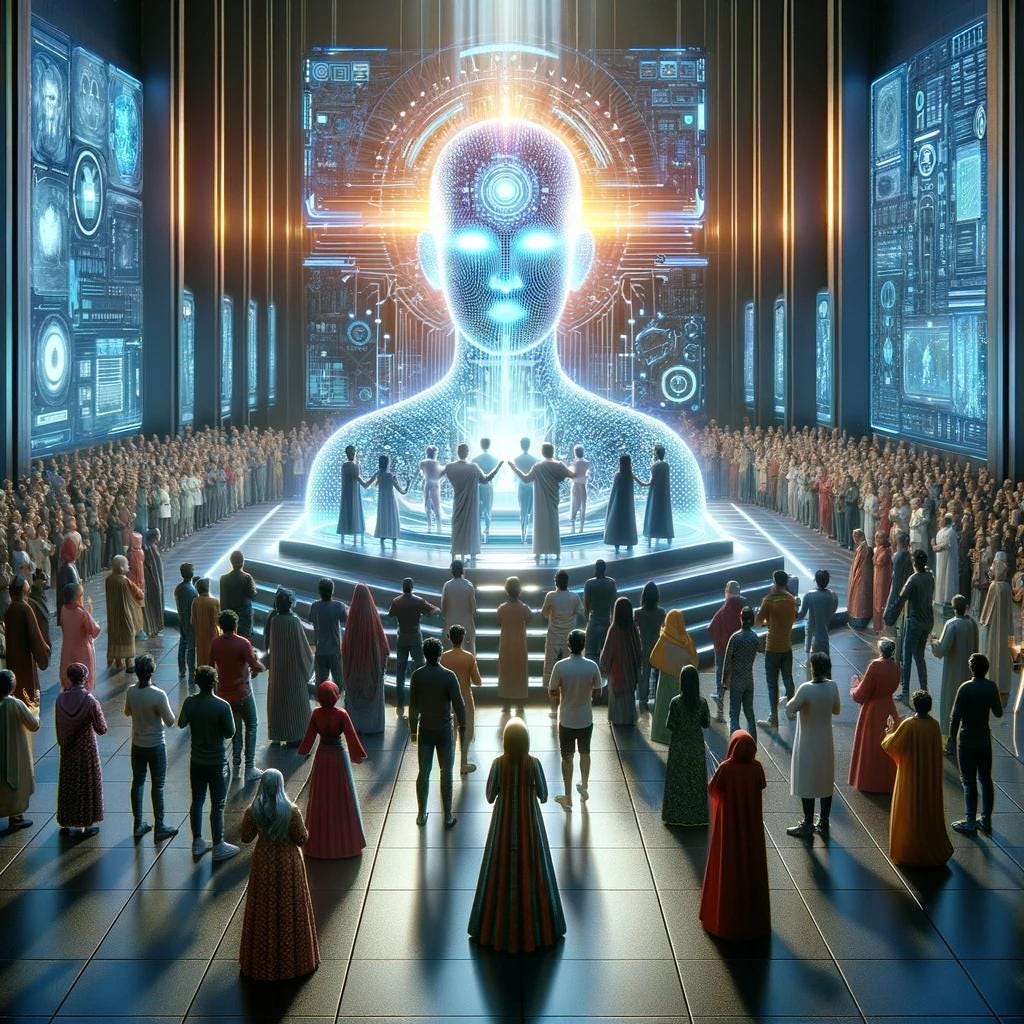
Another reason extraterrestrial narratives resonate so powerfully today is because technological civilization increasingly grants technology symbolic authority once reserved for religion. Throughout most of human history transcendence was imagined spiritually. In late modernity transcendence is increasingly imagined technologically.
Humanity fantasizes about overcoming mortality through biotechnology, transcending biological limitations through artificial intelligence, escaping planetary fragility through space colonization, engineering enhanced consciousness through neurotechnology, and eventually transforming the human species itself through technological evolution. The language may appear secular, but the underlying aspirations remain profoundly metaphysical.
Our civilization did not abolish transcendence. It outsourced transcendence to technology.
Earlier civilizations projected salvation into divine realms governed by supernatural intelligences. Technological civilization increasingly projects salvation into future technological capacities. Heaven becomes interstellar civilization. Miracle becomes advanced engineering. Omniscience becomes artificial intelligence. Resurrection becomes digital consciousness. Immortality becomes transhuman biotechnology.
Extraterrestrials often function as symbolic embodiments of this technological transcendence. Alien civilizations are imagined as beings who solved the problems humanity remains trapped within: war, ecological destruction, violence, scarcity, ignorance, and mortality itself. In this sense, alien mythology frequently reflects displaced longing for redeemed existence.
The decline of religion did not eliminate humanity’s longing for transcendence.
It transformed the symbolic language through which transcendence is imagined.
The New Technological Mythology
Modern civilization frequently imagines myth and rationality as opposites. But myth never disappeared because human beings cannot become post-symbolic creatures. Consciousness itself requires narratives capable of situating suffering, mortality, uncertainty, identity, and aspiration within larger frameworks of meaning.
But the attempt to fully disenchant reality produced consequences our civilization did not anticipate.
Human beings can survive hardship more easily than spiritual emptiness.
As traditional metaphysical systems weakened, symbolic energy did not disappear. It migrated into new cultural forms adapted to technological civilization itself. The Western world dismantled older sacred cosmologies while unconsciously reconstructing transcendence through extraterrestrial mythology, technological utopianism, artificial intelligence discourse, simulation theory, transhumanism, and techno-spirituality.
Late technological civilization is now rebuilding symbolic worlds once again through technological forms of revelation, apocalypse, immortality, salvation, and cosmic meaning.
Life After Disenchantment

One of the great failures of modern civilization was the belief that human beings could psychologically thrive after reality had been stripped of symbolic depth, metaphysical intimacy, existential participation, and transcendent orientation. Modernity assumed people would eventually adapt to a flatter and more mechanistic understanding of existence organized primarily around rationality, materialism, consumption, and technological management.
The Western world dismantled transcendence faster than it learned how to live without it.
But human beings do not live by mechanism alone.
People can endure suffering more easily than existential vacancy. They can survive hardship more easily than prolonged meaninglessness. Eventually the psyche begins searching for orientation again because consciousness cannot remain spiritually uncontained indefinitely.
We increasingly suffer from forms of metaphysical homelessness, spiritual exhaustion, chronic meaning instability, ontological insecurity, and psychologically flattened existence. Many people move through technologically saturated environments filled with stimulation, information, distraction, productivity, and endless communication while simultaneously experiencing profound forms of inner dislocation difficult to fully name.
We are often expected to construct meaning privately while suspended inside immense technological systems that provide consumption, stimulation, entertainment, and optimization, but little symbolic depth capable of grounding human existence psychologically.
This creates enormous strain on consciousness.
Human beings increasingly find themselves trapped between worlds:
no longer fully held by older structures of transcendence,
yet unable to flourish inside purely disenchanted understandings of reality.
The result is often not liberation, but ontological instability.
Meaning feels fragile. Continuity feels fractured. Reality itself can begin feeling psychologically thin, distant, and strangely unreal.
Under such conditions, people naturally begin searching once again for transcendence, belonging, revelation, orientation, and participation in realities larger than isolated individual existence.
The sacred canopy collapsed. But the human longing it never disappeared.
The mistake was not science itself. The mistake was assuming that scientific explanation alone could replace the symbolic, psychological, and metaphysical functions older structures once provided.
The Failure of Pure Materialism
None of this means scientific inquiry, rationality, or technological advancement are themselves the problem.
Science remains one of humanity’s greatest achievements. The scientific method has dramatically expanded human understanding of the physical universe while improving and extending countless human lives. The problem is not science.
The problem emerges when scientific materialism transforms from a methodological tool into a total metaphysical worldview.
Science explains how things work. But explanation alone does not provide meaning.
Science can describe neurological activity associated with love, awe, grief, or beauty, but description alone does not resolve the spiritual realities those experiences carry within human life. Information does not automatically generate wisdom. Data does not produce belonging. Technological mastery does not create psychological maturity. Explanation alone cannot satisfy the deeper human need for orientation, participation, continuity, transcendence, and psychological grounding.
Human beings do not merely seek accurate information about reality. We want a meaningful relationship to reality. Our current crisis is not lack of information. It is collapse of orientation.
One of the central mistakes of modern civilization was assuming that scientific and material explanations would eventually dissolve existential questions alongside older religious frameworks. But the collapse of inherited metaphysical systems did not eliminate humanity’s need for meaning, moral orientation, awe, belonging, or transcendence. It removed many of the structures through which those needs had historically been metabolized.
This is partly why technologically advanced societies can become simultaneously more informed and more destabilized at the same time. Scientific knowledge can explain the mechanics of the cosmos while leaving unanswered the deeper human questions consciousness continues asking beneath technological life:
Why does existence matter?
What makes life meaningful?
How should human beings live?
What ultimately grounds value?
What does it mean to belong within reality itself?
Scientific materialism often struggles with these questions not because science lacks intelligence, but because symbolic meaning and human orientation operate differently than empirical explanation.
Human beings require more than mechanism. We require worlds capable of sustaining psychological coherence across the full depth of conscious life.
What Fragmentation Feels Like

For many people, existential fragmentation does not initially appear as philosophical crisis. It appears as exhaustion.
It surfaces as the strange psychological experience of being constantly stimulated yet internally disconnected, as endless consumption of information without deeper orientation, as chronic distraction masking underlying emptiness, and as the growing inability to distinguish what genuinely matters from what merely captures attention.
Many people move through technologically saturated environments surrounded by communication, entertainment, content, outrage, crisis narratives, ideological conflict, and algorithmically amplified emotional intensity while simultaneously experiencing profound forms of inner dislocation difficult to name directly.
Our lives are increasingly haunted by disorientation: untethered from stable meaning, estranged from continuity, and disconnected from any deeper sense of participation within reality itself.
People are frequently told they are radically free while simultaneously feeling existentially ungrounded. Older symbolic structures dissolved while newer ones failed to provide comparable depth. The result is often not liberation, but chronic ontological uncertainty.
Human beings increasingly no longer know what to believe, what constitutes truth, what gives life meaning, or what larger framework their existence belongs within. This creates enormous strain on consciousness.
We evolved within symbolic worlds capable of organizing reality into psychologically coherent forms. But late modern civilization increasingly surrounds individuals with fractured symbolic systems, competing realities, collapsing institutions, destabilized identities, endless stimulation, and technologically accelerated environments that continuously erode psychological continuity itself.
The result is often a persistent feeling that reality itself has become strangely unreal. For many people, this is now an ordinary feature of daily life: lying awake at one in the morning scrolling through catastrophe, conspiracy theories, political collapse, disclosure videos, artificial intelligence predictions, simulated realities, and algorithmically amplified apocalypse. Beneath the search for information is often a deeper search for orientation.
It also appears in the experience of consuming endless amounts of content while becoming increasingly uncertain what is actually true.
The peculiar loneliness of hyperconnectivity reveals the same pattern: people remain continuously linked to streams of communication, stimulation, outrage, performance, and information while simultaneously feeling spiritually abandoned beneath the surface of digital life. Connectivity expanded while existential coherence collapsed.
It appears in the gradual erosion of stable reality itself.
Algorithms increasingly shape perception by feeding people emotionally charged symbolic worlds optimized not for truth, wisdom, or psychological coherence, but for engagement, stimulation, and emotional activation. Over time, many drift through fragmented realities that reorganize consciousness around fear, revelation, tribal belonging, hidden knowledge, and fantasies of civilizational transformation.
Under such conditions, extraterrestrial disclosure content can begin functioning less as curiosity and more as existential stimulation. The desire for revelation intensifies because ordinary reality increasingly feels spiritually flattened, emotionally exhausted, and symbolically incapable of satisfying deeper human longings for meaning, mystery, participation, and transcendence.
Many people no longer simply seek information. They seek re-enchantment.
Many people oscillate between nihilism and fantasy because both emerge from the same underlying condition: the collapse of stable ontological grounding.
Some retreat into despair. Some retreat into ideology, others into technological salvation fantasies, conspiracy systems, spiritual consumerism, or extraterrestrial mythologies, but beneath these reactions often lies the same deeper hunger: the longing to feel existentially situated again within a meaningful and intelligible reality.
But beneath these reactions often lies the same deeper hunger:
the longing to feel grounded again within a meaningful and intelligible reality.
Modern civilization possesses extraordinary technological sophistication. But many people no longer feel psychologically at home within existence itself.
Alien Fascination and the Search for Meaning

At its deepest level, our current fascination with extraterrestrials is not fundamentally about outer space. It is about the deteriorating existential condition of modern humanity itself.
Alien narratives exert such psychological power because they emerge inside populations increasingly struggling with metaphysical loneliness, spiritual exhaustion, spiritual disorientation, and the loss of any stable sense that consciousness meaningfully belongs within reality itself.
We possess unprecedented technological power, scientific knowledge, material capability, and informational access. Yet many people increasingly experience themselves as psychologically untethered, spiritually uncontained, and existentially isolated beneath the surface of technological life.
Our current crisis is not merely political or economic.
It is existential.
We no longer simply feel uncertain about institutions or ideology. Increasingly, many feel uncertain about reality itself, uncertain what is true, uncertain what gives life meaning, uncertain whether existence contains any deeper intelligibility beyond consumption, stimulation, performance, and survival.
The question “Are we alone?” carries such emotional intensity because beneath it lies a deeper metaphysical wound. Modern humanity increasingly experiences itself as cosmically abandoned.
Many people no longer experience themselves as participants within meaningful cosmological orders. Instead, they experience themselves as isolated consciousnesses suspended within vast technological systems and an apparently indifferent universe devoid of symbolic depth or existential intimacy.
This produces profound metaphysical loneliness.
Metaphysical loneliness differs from ordinary loneliness. A person can possess relationships, entertainment, communication, and digital connection while still experiencing spiritual estrangement from reality itself. Western civilization increasingly generates precisely this condition. People remain hyperconnected informationally while feeling disconnected from meaning, transcendence, continuity, participation, and belonging.
The desire to discover intelligent life elsewhere in the cosmos often conceals a deeper longing to believe consciousness itself belongs within reality and is not merely an accidental byproduct of indifferent material processes.
Extraterrestrial narratives frequently take on spiritual and revelatory dimensions. Alien civilizations are often imagined not merely as technologically advanced, but as existentially integrated. They become projection surfaces for humanity’s longing for a more coherent mode of being. Advanced extraterrestrials are frequently imagined as beings who transcended violence, fragmentation, ecological destruction, greed, mortality anxiety, and existential confusion itself.
Disclosure narratives reflect this same hunger for reorientation. Disclosure promises not merely new information, but revelation. It offers the possibility that beneath the fragmentation, exhaustion, confusion, and spiritual flatness of our lives, some hidden coherence still exists waiting to be unveiled.
The emotional power of disclosure culture therefore cannot be understood purely politically or scientifically. It reflects populations psychologically exhausted by reality systems that no longer provide stable existential orientation. The skies have become one of the last remaining symbolic spaces onto which technological civilization can still project transcendence.
Increasingly, civilization is projecting onto it its hopes, fears, salvation fantasies, apocalypse narratives, longing for revelation, terror of annihilation, and desperate need to believe that consciousness still belongs within the universe after all.
The Rebirth of Mythological Civilization

The modern world continues telling itself a story in which humanity is gradually progressing beyond myth, religion, metaphysics, and symbolic consciousness into increasingly rational forms of existence. But the evidence increasingly suggests something far stranger may be happening. We are not witnessing the end of mythological civilization. We may be witnessing its transformation into new technological forms.
Artificial intelligence, extraterrestrial speculation, simulation theory, transhumanism, digital consciousness, techno-spirituality, apocalyptic politics, online cult formation, and fragmented systems of reality construction are not isolated cultural phenomena. They may represent early expressions of a civilization unconsciously rebuilding symbolic worlds after the collapse of older religious structures. Not institutional religion in the traditional sense, but technologically mediated systems of transcendence, revelation, salvation, apocalypse, immortality, and cosmic meaning.
We dismantled the old heavens but never resolved the existential conditions that created them. Human beings remain creatures confronting mortality, fragility, loneliness, uncertainty, suffering, and the unbearable mystery of consciousness itself. We remain meaning-seeking creatures attempting to locate ourselves within realities larger than our isolated individual existence. The decline of traditional religion did not eliminate these conditions. It merely stripped away many of the symbolic structures that once helped civilizations metabolize them collectively.
But human beings cannot endure spiritual vacancy indefinitely.
Eventually consciousness begins rebuilding symbolic systems capable of restoring orientation, participation, transcendence, and metaphysical belonging. Human beings continue reconstructing meaning through the symbolic vocabularies available to technological civilization.
This is why our fascination with aliens matters far beyond the question of whether extraterrestrial life objectively exists somewhere in the universe. The fascination reveals something deeper about the spiritual condition of technological civilization itself.
None of this requires dismissing the possibility of extraterrestrial life itself. Given the scale of the cosmos, the existence of nonhuman intelligence elsewhere in the universe remains entirely plausible. But the cultural and psychological significance of alien fascination does not depend upon whether such beings objectively exist. The deeper question concerns what contemporary civilization projects onto them and why these narratives now carry such extraordinary symbolic intensity.
Human beings continue searching the skies because the hunger that once built religions never disappeared. We may no longer speak confidently about angels, heavens, revelation, or divine intelligence in the old religious language, but psychologically the longing remains astonishingly intact.
We may not pray toward heaven in the traditional sense, but civilization is still looking upward. We are still searching for hidden intelligence beyond itself. Still waiting for revelation. Still hoping some greater consciousness may emerge from beyond the limits of ordinary human existence and tell us who we are, why we are here, and whether consciousness belongs within the universe after all.
We may have abandoned older cosmologies, but the search for transcendence continued underneath the surface of secular life.
Consciousness in a Fragmented Age
The central challenge facing technological civilization may not ultimately be technological at all.
It may reflect a deeper crisis of meaning.
Modern civilization successfully dismantled many inherited structures of authority, religion, mythology, and metaphysical certainty. But it did not solve the underlying psychological conditions that produced those systems in the first place. Human beings remain creatures confronting mortality, suffering, uncertainty, loneliness, fragility, and the overwhelming mystery of consciousness itself.
The question is no longer whether humanity will continue generating mythological systems.
It will.
The deeper question is whether contemporary society can become conscious of its mythologies rather than unconsciously possessed by them. The crisis is not that humanity remained mythological, but that technological modernity became mythological while continuing to imagine itself purely rational. It may become one of the defining psychological and historical struggles of the coming century.
A civilization unconscious of its symbolic life becomes increasingly vulnerable to fragmentation, ideological possession, technological absolutism, conspiratorial thinking, digital unreality, manufactured transcendence systems, and destabilized forms of collective consciousness incapable of distinguishing meaning from manipulation.
Our current crisis is not that human beings remain mythological. The crisis is that technological civilization possesses immense power while lacking the psychological and existential depth required to wield it wisely.
Human beings now possess technologies capable of reshaping consciousness, reality perception, biology, identity, social organization, and civilization itself while remaining vulnerable to ancient forms of fear, projection, tribalism, revelation hunger, and symbolic destabilization.
The future stability of civilization may depend partly upon whether humanity can learn to consciously reconstruct forms of psychological coherence capable of grounding human life without regressing into authoritarianism, dogmatism, nihilism, or unconscious mythological possession.
Human beings continue searching the skies because the hunger for transcendence, meaning, and symbolic participation never disappeared. We dismantled the old heavens without resolving the deeper human longing beneath them.
Technological civilization finds itself unconsciously rebuilding transcendence once again, not through traditional religion, but through extraterrestrials, artificial intelligence, digital mythologies, disclosure narratives, simulations, and technologically mediated visions of revelation and salvation because human beings cannot endure existential vacancy indefinitely.
We are entering the age of aliens after God: a civilization still haunted by transcendence after dismantling the heavens that once contained it.
The future of civilization may depend upon whether humanity can consciously inhabit symbolic life again before unconscious mythologies tear it apart.
Human beings are not finished with myth.
The question is whether civilization can survive remaining unconscious of its own.
Thank you for reading today’s article.
This publication explores meaning, mortality, identity, consciousness, spirituality, and how to live meaningfully after inherited systems no longer feel sufficient.
Paid subscriptions ($50 annually) help support my longform writing and the broader work surrounding existential health and non-religious spirituality.
Paid subscribers also receive complimentary membership to the Center for Non-Religious Spirituality, including discussions, workshops, resources, and an ongoing community exploring life’s deepest questions with honesty, depth, and openness.
This is excellent, and very much captures what I’ve been trying to articulate about our current fascination with UFOs and “disclosure.” There seems to be such a profound longing for transcendence, mystery, and meaning — but instead of relating to that longing symbolically or spiritually, it becomes concretized into something packaged and consumed as science fiction. At times it can feel genuinely disheartening.
I was also curious whether there are statistics on religiosity and UFO belief, and interestingly there are. Pew Research found that highly religious Americans — especially those who attend church regularly — are generally less likely to believe UFOs are evidence of extraterrestrial life, while less religious or religiously unaffiliated people are more likely to hold those beliefs. (https://www.pewresearch.org/short-reads/2021/07/28/religious-americans-less-likely-to-believe-intelligent-life-exists-on-other-planets/)
Carl Jung viewed UFOs primarily as a "modern myth" and a psychological projection of the collective unconscious, rather than simply physical, extraterrestrial spacecraft. In his 1958 book, Flying Saucers: A Modern Myth of Things Seen in the Sky, he argued that in times of societal anxiety, humanity projects archetypal images of wholeness—specifically "mandalas" or rounded, divine shapes—into the sky to represent a need for salvation. Jung’s analysis emphasized that even if the objects were not literally from another planet, they were "real" in the sense that they were a genuine, powerful psychological phenomenon with real impacts on human perception.T